7 Eco-Friendly DIY Christmas and New Year Decorations Using Tree Parts

7 Eco-Friendly DIY Christmas

Christmas and New Year are just around the corner. Decorating a Christmas tree, adding festive touches to your home, and preparing meaningful gifts for loved ones are some of the most exciting traditions of the season.  

As the classic colors of red, green, and gold are the hallmark colors of Christmas and New Year that bring ambience of warmth and joy, this year why not try something different by creating eco-friendly decorations that connect you more with nature?  

Tree twigs, leaves, fruits, or even planted trees can be transformed into stunning Christmas and New Year decor. Best of all, you can make them yourself at home! Here, we present 7 eco-friendly DIY Christmas and New Year decoration ideas using tree parts and planted trees. Let’s explore these simple projects and make your holidays even more special! 

Pine cones decoration 

When walking through a pine forest or along streets lined with pine trees, don’t forget to look around and collect fallen pine cones. Add a touch of gold or white glitter to the tips of the cones for a shimmering effect. These glittery pine cones can be used as hanging decorations for your Christmas tree, decorating candle holders, or Christmas wreath. 

Pine Cones

Source: Pinterest

Dried oranges hanging decoration 

Slices of dried oranges can be a unique, affordable, eco-friendly, and fragrant way to decorate your home. What you need to do is just to slice oranges you do not want to eat into thin slices, then dry them. You can heat them with an oven or if you live in a tropical country, you can dry them in the sunlight. You can insert a thread to a single or few slices of oranges to make a hanging decoration for your Christmas tree. You can also mix them with star anise, cinnamon bar, or dried cherry. 

7 Eco-Friendly DIY Christmas

Source: Pinterest

Leaves and grasses Christmas wreath 

Fallen leaves and grass often seem invaluable. However, they can be transformed into a beautiful and eco-friendly Christmas wreath. Arrange grasses and various types of leaves in different shapes onto a circle rattan, cardboard, or braided tree root as a base. You can use glue or thread to arrange them. Enhance the design by adding pine cones, dried flowers or fruits, and decorative ribbons. Hang your stunning wreath on your door or wall to bring eco-friendly and fresh ambience to your home. 

DIY Christmas

Source: Pinterest

Dried leaves and flowers greetings card 

Real leaves and flowers can also be transformed into stunning decorations for greeting cards. You can use them fresh or dried, depending on your preference. Start with folded recycled paper and glue uniquely shaped leaves and a flower piece to the front. Add a ribbon, dried roots, thread, or a splash of paint to enhance its aesthetic appeal. These handmade greeting cards can be displayed as home decorations or sent alongside gifts to your loved ones. 

7 Eco-Friendly DIY Christmas

Source: Pinterest

Twigs Christmas tree 

Fallen twigs can be transformed into a creative and eco-friendly alternative to a Christmas tree. You can design them as either a hanging tree or a stacked tree.  

For a hanging twig tree, gather five to ten twigs of varying lengths. Arrange them in order from shortest to longest, then tie the ends of each twig to one another using rope or string, leaving spaces between them. Hang the structure on a wall and decorate it with fairy lights and small hanging ornaments. 

Christmas Trees

Source: Pinterest

For a stacked twig tree, you’ll need an upright stick as the base. Drill a hole through the center of each twig, then slide them onto the base stick, starting with the longest twig at the bottom and ending with the shortest at the top. Finish the look with string lights and festive decorations.

Source: Pinterest

Pot mini Christmas tree  

A mini live tree is an excellent choice for an eco-friendly Christmas decoration. You can select a young pine or another lush potted tree. Simply decorate it with small hanging ornaments and place it in a corner of the room.  

Source: Pinterest

Planted poinsettia Christmas decoration 

Did you know that the vibrant red flowers associated with Christmas decorations are poinsettia flowers? These shrub plants, native to Mexico and Central America, have spread worldwide and well-known as a Christmas decoration due to their bold red color and the star-shaped crown. Instead of using artificial flowers, consider decorating your home with live potted poinsettias to create a festive ambiance in red and green.

Source: Pinterest

These DIY decorations can also be thoughtful and eco-friendly gifts for your loved ones this Christmas and New Year season! For an even more meaningful gesture, consider gifting Trees4Trees planted trees alongside your handmade creations. 

Our planted trees provide immense benefits to the environment and communities. They have been planted in degraded areas and help local farmers enhance their livelihoods. To gift trees, simply visit our donation page, make a contribution, and provide the recipient’s email address along with a personalized message. We will email a tree planting e-certificate featuring a unique code that allows the recipient to view their trees online. You’ll also be notified once the certificate has been sent to your loved one. 

Click this LINK to learn how to gift trees with us! 

Writer: V. Arnila Wulandani
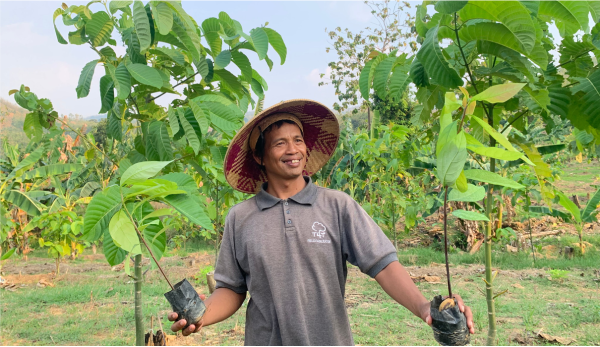
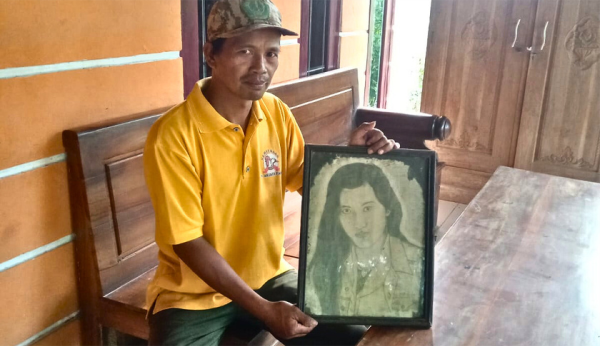
Parjono from Durensawit: From Canvas to Crops

Time is a strange thing. Some days it can feel like there’s too much time, but when you’re surrounded by the right people, and doing what you love, time has a way of feeling fleeting. That’s how it is for Pak Parjono, our 40-year-old resilience farmer. Beneath his tan skin and thick Javanese accent, he is far from ordinary. 

Behind his busy days managing his farmland, Pak Parjono is also a passionate artist. Since his youth, painting has been his escape, and even now, his artwork brings in extra income. Besides farming, he teaches religious studies at the local madrasa and raises livestock in his spare time. When exhaustion sets in, he retreats to his garden, where the greenery offers calm. 

Parjono is carrying one of his sketches.

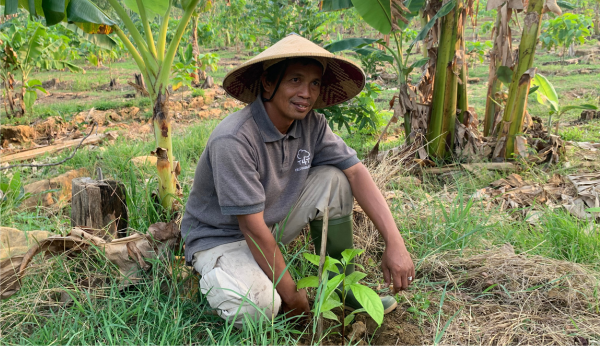
Since joining Trees4Trees in 2017, Parjono has become a senior farmer, starting with teak and fruit trees like soursop. This year, he’s planting timber trees like sengon and jabon, along with avocado trees, continuing his dedication to reforestation. 

One of the things he values most about Trees4Trees is the training they offer. He hopes that in the future, there will be additional training, such as grafting techniques or other cultivation methods to help farmers become more skilled in caring for their plants. 

Parjono’s Journey from Malaysia to a Fulfilling Life as a Farmer in Durensawit Village 

An adventurer might be a very suitable word to describe Pak Parjono. Before settling into farming, he spent five years working abroad in Malaysia, taking on jobs in welding, livestock, and construction. Yet, when he returned to Indonesia, he found that farming was his true calling. “Farming suits me better because it brings me peace, seeing my land lush and fertile,” he recalled. 

Parjono is planting a tree from Libra Palma and Trees4Trees.

Proud of his role as a farmer, Parjono believes that working with nature offers both healing and learning. “Maybe today’s generation feels ashamed to be farmers, but we contribute so much to the environment and the economy,” he added. He hopes his children will one day follow in his footsteps, helping to preserve the environment and take part in green initiatives that benefit the Earth. 

Despite challenges such as prolonged droughts and crop failures, Parjono remains optimistic. He constantly reminds his fellow farmers not to tire of planting and caring for the trees provided by Trees4Trees. “I am grateful to Libra Palma for providing seedlings and facilitating farmers to gain knowledge on greening our village,” he added. 

Parjono’s Inspiring Impact on Trees4Trees 

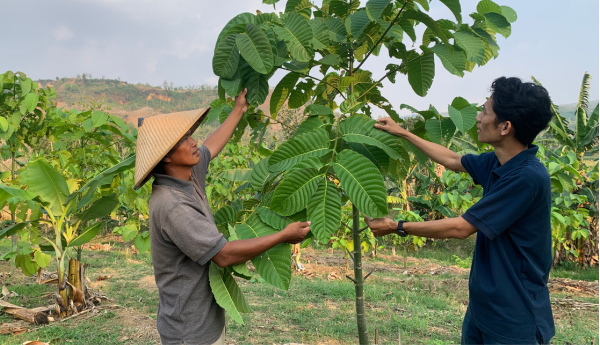
The spirit of Pak Parjono has inspired Marthan, the Trees4Trees Field Coordinator in Pati to keep spreading kindness and sharing good things around Durensawit Village. “Pak Parjono is not only a dedicated farmer but also a mentor to his peers. His perseverance and enthusiasm for learning and planting more types of trees inspire us all,” said Marthan enthusiastically. 

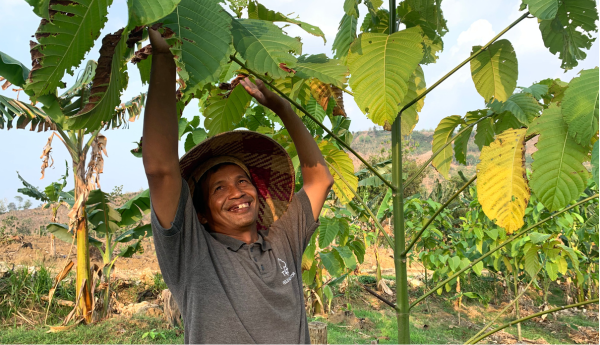
With a humble smile, Parjono shares a few jabon trees he planted with Trees4Trees in 2023, now flourishing and growing beautifully.

The harsh reality is addressing climate change and motivating farmers to be aware of and committed to greening the village. But Marthan is grateful for working side by side with Pak Parjono. He often helps Marthan to encourage other farmers to join the Trees4Trees reforestation program and even takes part in conserving the village’s water sources by planting trees around springs.  

In a world where everything is fast-paced, looking back and finding that little inspiration around our daily lives seems like a rare gift. Pak Parjono’s quiet determination show us that positive change often starts with small steps. Together, with the support from Libra Palma and Trees4Trees they remind us that no matter the challenges, the work we do today can leave a lasting impact on our environment and future generations. 


Written by Teresia Miranti | Source compiled by Marthan Saputra | Photograph by Marthan Saputra 

Muchsinun: A Farmer Driven by His Passion for Gardening

Muchsinun
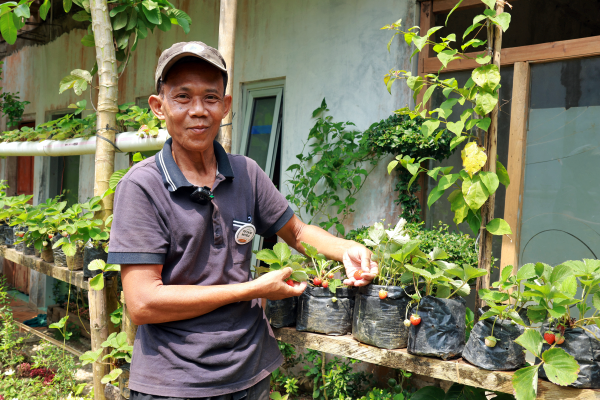
Muchsinun proudly shares the harvest from his garden, with strawberries as one of

On a sunny afternoon in Kebumen as we rode our motorcycle slowly. The atmosphere was lively, with villagers attending to their daily tasks as the endless rice fields stretched out before us. After one hour of riding toward Kenteng Village, Pak Muchsinun welcomed us with his warm smile. “Assalamualaikum! You didn’t get lost on your way here, did you?” Pak Muchsinun joked, his laugh warm and welcoming as he greeted us. 

Pak Muchsinun, or Sinun as he’s often called, began his journey with Trees4Trees in 2022 after his farmer friends mentioned it to him. The idea of receiving free seedlings and connecting with other farmers intrigued him. It felt like the perfect opportunity to tackle the pressing environmental issues in Kenteng. 

“We used to receive help, but it never truly focused on solving environmental issues.” He told us that Kenteng faces a difficult balance between landslides during the rainy season and the harsh impacts of the dry season.  

“I’m committed to using what I have to help restore the conditions in this village, and the easiest way to start is by planting trees on my own land.” Therefore, he is grateful and feels fortunate that his land is fertile enough to support trees like teak and albizia 

Muchsinun's garden
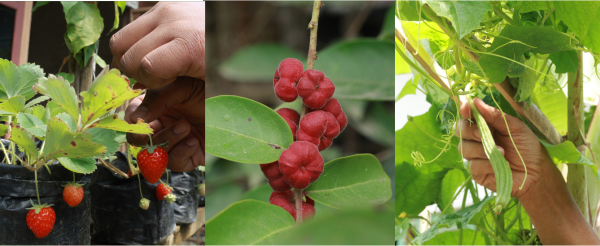
Muchsinun’s garden yields are abundantly lush.

His passion for farming inspired him to create a small garden at home, where he grows strawberries, oranges, guavas, chilies, and various horticultural plants. Just like planting trees, gardening brings peace to his heart and excites him, especially when his plants bear fruit. He often shares his harvest with neighbors.  

“The key to gardening is patience and care, especially since the plants I grow are for my consumption, so they need to be full of nutrients,” he explains. Essentially, Pak Muchsinun cannot think of any reason to not farm sustainably because it allows him to move forward and keep maintaining progress for multiple generations. 

Single Parent to His Only Daughter 

A smile rarely left Pak Muchsinun’s face as he spoke of his love for nature and the peace that gardening brings him. But beyond his garden, his biggest responsibility is raising his daughter as a single parent after losing his wife. Though farming keeps him grounded, his dedication as a father is his greatest motivation. 

Leaving behind his office job in Jakarta, Pak Muchsinun made the bold decision to return to his village, Kenteng, and farm full-time while raising his child. Over the past seven years, he’s faced various challenges, such as the long, difficult periods of drought. “I once had to carry water jugs from the village for months to keep my land alive,” he recalls. 

Despite these hardships, he is unwavering in his support of his daughter’s dreams, not necessarily expecting her to follow in his footsteps but wanting to provide her with opportunities beyond farming. 

He admitted that not every day is a good day. Some days are bad, and some days are good. It can be challenging and tough, but he always finds moments of joy in the little things. Like seeing his crops thrive after a long struggle or just by looking at his daughter studying diligently.  

Partnering with Trees4Trees has helped ease some of the burdens. Pak Muchsinun not only receives free seedlings but also fertilizers and training to help his crops flourish. He’s grateful to Trees4Trees and Soboplac for the resources that allow him to focus more on nurturing his land. “The seedlings are free, and the money I would have spent on them can now go toward maintaining the trees,” he says. 

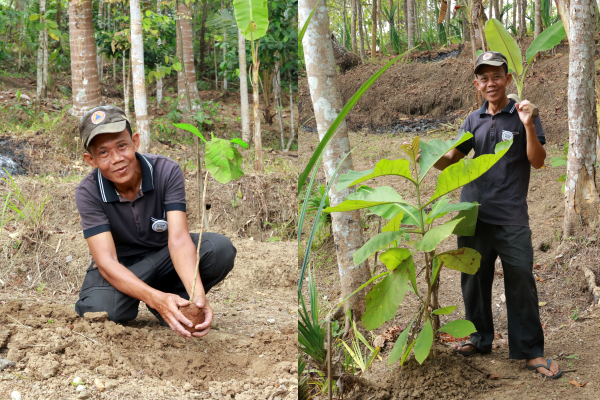
Muchsinun with trees
Muchsinun poses with a tree he planted last year with Trees4Trees.

Pak Muchsinun’s story is one of perseverance, love for the land, and dedication to a greener future. He hopes that other farmers will be inspired to advance their villages and support reforestation efforts through programs like Trees4Trees. “Planting trees teaches you patience, and that’s what keeps me going,” he adds with a thoughtful nod. 

But for Pak Muchsinun, the trees represent something much larger than his own farm. Through his work with Trees4Trees, he’s helping to build a community that shares responsibility for the environment. It’s about leaving behind not just a greener Kenteng, but a legacy of hope and stewardship for future generations. 

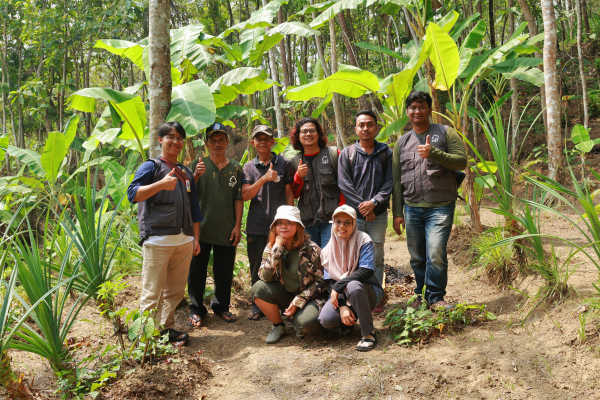
Muchsinun with the Trees4Trees team
Muchsinun with the Trees4Trees team, cultivating a greener future on his land.

Writer: Teresia Miranti | Source compiled by Lailatul KH | Photograph by Y. Desennita

Trees4Trees Joins Forces Youth: Reviving Fire-Affected Lands of Merbabu Mountain

Trees4Trees

It still resonates in our minds that last 2023 was marked by unusually hot days. According to several studies, it was recorded as the hottest year in global temperature since this data was first recorded in 1850. The year was also impacted by El Niño, a natural climate warming phenomenon that can affect global weather. Climate change exacerbated the effects of El Nino in 2023  leading to prolonged droughts and heatwaves, which triggered severe wildfires in various regions, including Indonesia. 

One of the major events linked to the phenomenon was the wildfires that devastated several forests in Indonesia’s mountainous areas, with over 140 incidents recorded throughout the year. Merbabu Mountain in Central Java Province suffered some of the worst damage, with over 480 hectares of forest burned. The fire was allegedly caused by natural leaves friction, although human actions like discarded cigarette butts or burning trash may have also played a role. 

Read also: Weathering the Storm: Natural Solutions to El Nino 

A Year After the Wildfire: Youth Community Reforests Fire-Damaged Area 

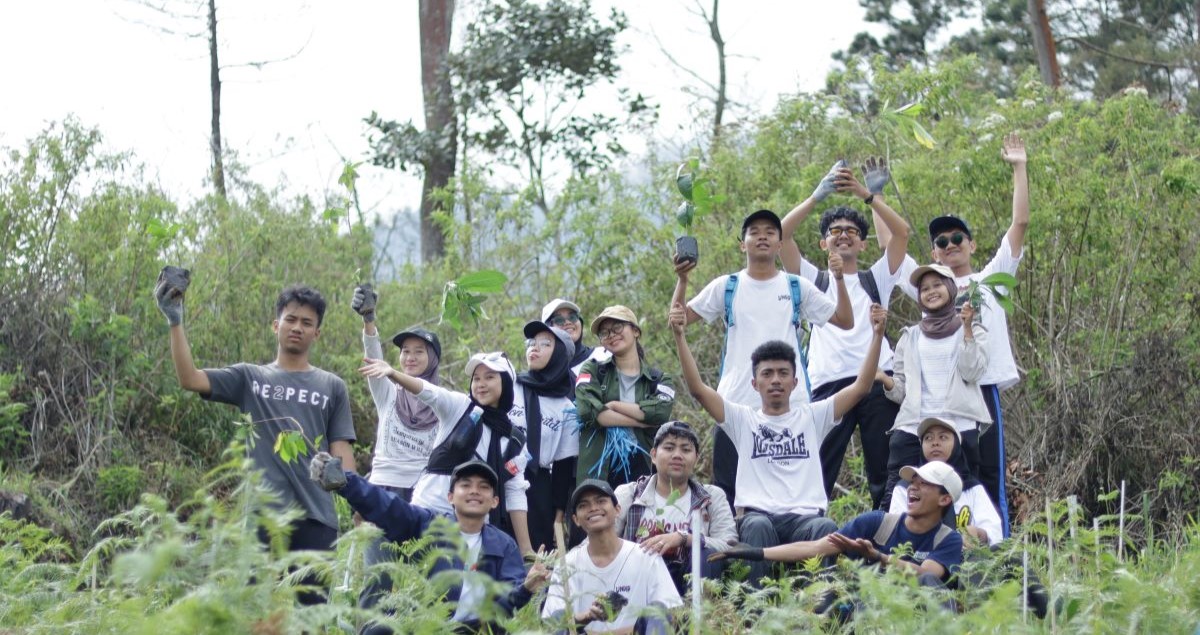
One year has passed since the devastating wildfire on Merbabu Mountain in October 2023. It destroyed much of the forest cover, including valuable vegetation, such as edelweiss, cantigi, and tree species like puspa, pines, cinnamon, and wilodo. While some parts of the forests have been reforested, other fire-affected areas remain barren. This has motivated the youth community of the Executive Student Board (BEM) Diponegoro University to take action, mobilizing youth communities to restore the land by planting trees.

Trees4Trees
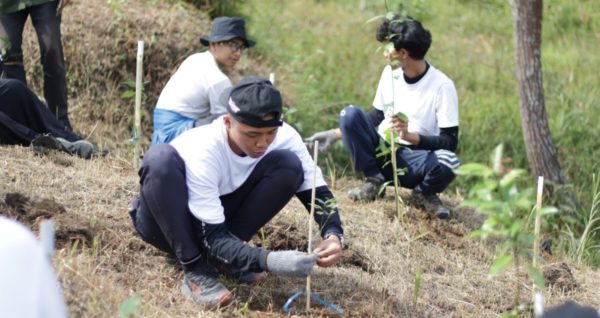
Diponegoro University students went to an altitude of 1,500 meters above sea level together to plant 500 trees in the fire-affected area of Merbabu Mountain.

Collaborating with Trees4Trees, they organized a tree-planting event through an annual environmental program, Gerakan Aksi Tanam Pohon (GESIT) or the Tree Planting Action Movement. The event took place on October 20, 2024 – exactly one year after the wildfires struck. 

“Aligned with our program in conservation, we initiated this tree-planting activity. In total, 70 volunteers from twelve faculties joined as tree-planting volunteers to help the environment, particularly by reforesting fire-affected areas,” said Jania, a student of Diponegoro University and coordinator of the tree-planting activity. 

Green Action
Three species of trees were planted in the area: puspa, cinnamon, and wilodo, all the characteristic trees of Merbabu.

A Green Collaboration to Recover the Environment 

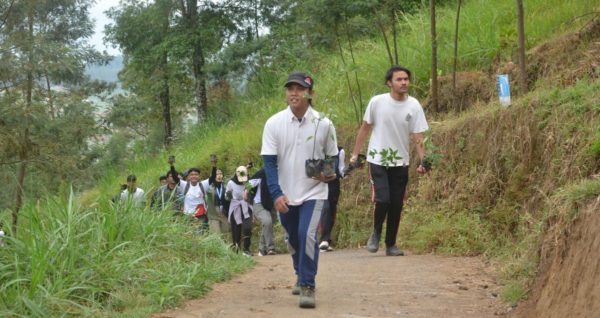
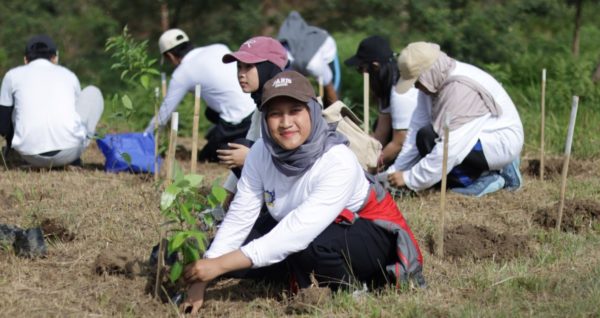
Together with Trees4Trees, the Gen Z volunteers planted 500 trees along the Thekelan hiking trail on the slope of Merbabu Mountain, in Getasan District, Semarang Regency.  

“This tree-planting aims to support ecosystem recovery, allowing the trees to produce more oxygen to benefit all living beings. This small action reflects our care as young generations for the environment,” said Izza, a Diponegoro University student and leader of the Conservation and Disaster Division. 

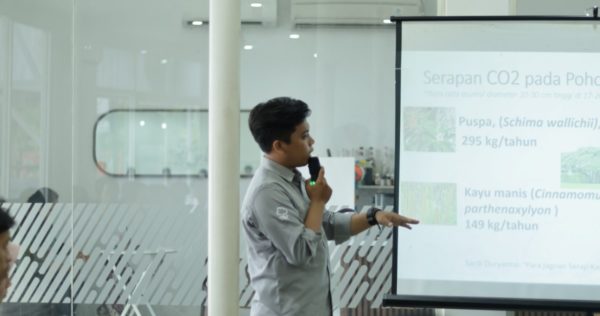
As part of its mission in education and sustainability promotion, Trees4Trees provided volunteers with essential training on tree-planting techniques and preparations a week before the event. Danang Pambudi, a Trees4Trees forester who led the training, emphasized the importance of sharing tree-planting knowledge with young people. “We hope this education encourages them not only to plant trees at this event but to continue planting more in the future, wherever they can,” he said. 

Aksi Hijau
Trees4Trees’ forester was presenting the tree-planting technique to the tree-planting volunteers.

Why Is It Important to Plant Trees in the Fire-Affected Area? 

Danang revealed, Trees4Trees supported the tree-planting event by providing three species of trees: puspa, cinnamon, and wilodo, all of which are characteristic of Merbabu Mountain. Some of them were diminished during the wildfire. 

“We selected the trees to fit the existing ecosystem. Merbabu is the natural habitat for these species, and by planting them, we help restore the ecosystem. In fact, the puspa tree is even fire-resistant,” said Danang. He also emphasized that if fire-affected areas are left neglected, they will eventually recover on their own. Birds and wind will disperse the seeds of native trees naturally, encouraging regrowth, but it takes time. “By planting these characteristic trees in their natural habitat, we help to accelerate ecosystem recovery. Additionally, we also help enhance carbon sequestration, contributing to fight climate change,” he explained. 

Penanaman
Each tree was planted in 30 cm depth with 3 meters distance from each other to ensure their growth.
Empowering Youth through Trees4Trees Youth4Change 

Trees4Trees‘ involvement in this collaborative tree-planting event was backed with the aim to raise awareness about environmental preservation among the young generation. This initiative is part of the Trees4Trees Youth4Change program, designed to empower youth to express their concerns and take action for a greener planet. 

Trees4Trees
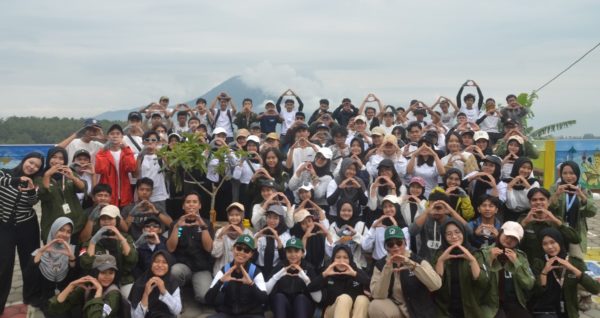
Trees4Trees Youth4Change collaborates with 70 students of Diponegoro University to make an environmental impact in the Merbabu tree-planting

Hatta Iskandar, the Trees4Trees Fundraising Manager, noted that Youth4Change offers opportunities for youth to engage in impactful actions for environmental preservation. “We are excited to collaborate with young communities, especially in tree-planting activities. We hope to continue this collaboration in the future and involve more youth in the green movement,” he stated. 

In the other hand, Danang emphasized the younger generation holds the key to a sustainable future. “It’s vital to cultivate a sense of environmental responsibility in young people. By supporting positive initiatives and sharing knowledge, we can inspire a deep commitment to protecting our planet,” he said. 

Writer: V. Arnila Wulandani. Photo: Yulianisa Dessenita & Doc. BEM UNDIP 

Nurturing the Next Generation: Support for Young Farmers in West Java

Nurturing the Next Generation


Nurturing the Next Generation
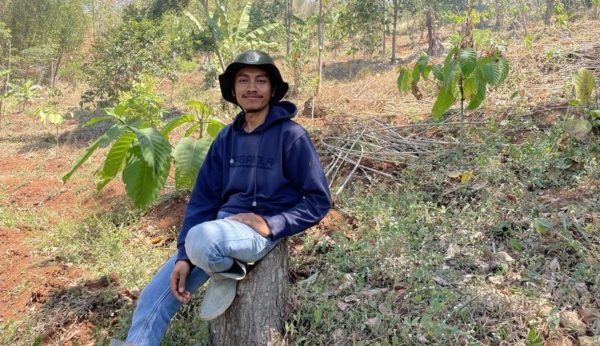
Dani, a young farmer from Pakutandang Village, next to the burflower trees he has been growing with support from Trees4Trees.

“Most people my age don’t think about getting into farming,” says Heri, a 36-year-old from Batulayang in West Bandung Regency. “They believe there’s more money to be had in city jobs, but that’s not always that case.” Heri speaks from experience. He used to be one of the majorities who took city jobs – recent government data shows that only 17% of people aged 17 to 39 in West Java are farmers.  

In recent decades, rapid development has transformed rural areas into modern landscapes, replacing farmlands with factories, shopping centers, and housing. This shift has changed job trends, with many young people choosing city-based careers over farming. Nevertheless, some young people like Heri are growing disillusioned with city life and returning to their roots.  

“From my experience in horticulture, I’ve seen how farming can lead to success and become a sustainable livelihood for many, helping them provide for their families,” says Heri. The most important thing for young people is to change their mindset and recognize that farming can lead the way to entrepreneurship,” he added. With support from Trees4Trees, this new generation is rediscovering the benefits that rural life can bring. 

Homecoming: Choosing Farm and Family

Many of the young farmers participating in Trees4Trees reforestation programs learned farming from their parents. Munawar Sidiq (21), a Gen Z farmer from Mandalawaji Village, began farming as a child. After briefly working on a construction project in the city, he returned to continue his parents’ legacy.  

“City life wasn’t for me,” he explains. I have family, land that would have gone to waste if I didn’t take care of it;. if all young people like me leave the village, who will farm, grow trees, produce food, and protect nature?”  

Similarly, Dani (32) from Pakutandang Village, developed basic farming skills under his father’s tutelage in his teenage years, before later joining a restoration project in Sumatra. He decided to return and become a full-time farmer in 2018. “This experience gave me advanced skills in farming that I can now use to transform my family’s field,” he said. 

Nurturing the Next Generation
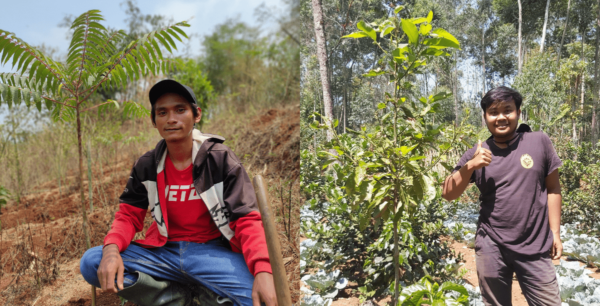
(Left) Munawar Sidiq and (Right) Aditya Swara with the trees and crops they have been growing.

New Solutions for a New Generation 

Armed with the knowledge and experience they have gained from their travels, these young farmers are committed to helping their villages develop better, more sustainable practices. Aditya Swara (20), a farmer from Girimulya Village, chose to stay home instead of moving to the city, with a mission to tackle water scarcity in his village. Like other residents, he manages vegetable plots and grows fruit trees. “We rely on growing vegetables, but water access is limited,” he says. “During the dry season, it becomes a real challenge.” To combat this, Aditya combines vegetable farming with shade trees like teak and mahogany, which also help to improve soil quality and the availability of groundwater. 

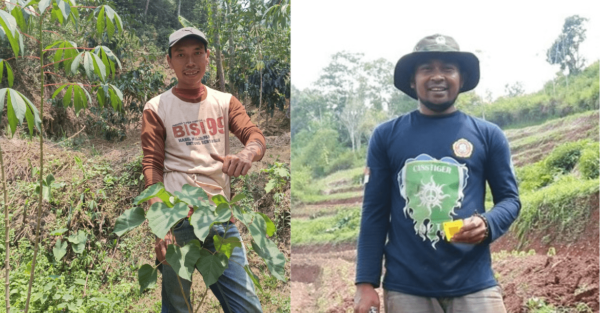
Yonan (33) from Kidangpananjung Village, also sees the value of tree planting. To prevent future water scarcity in his surrounding area, he plants trees among his crops. “Without tree cover, water disappears,” he says. “More trees mean more water.” 

Youth involvement in environmental preservation is crucial, yet interest in farming among them is still lower than needed. Recognizing this, Heri initiated Citra Muda, a farmers’ group uniting young people aged 17 to 39 and encouraging them to pursue farming. With over 46 members, the group aims to secure a future for farming in their village. “I want to motivate them to create opportunities and become agricultural entrepreneurs through farming,” he said. 

(Left) Yonan (Right) Heri

Flourishing in Farming with a Tree-planting Program 

Since 2021, Trees4Trees, together with AstraZeneca and One Tree Planted, has led a tree-planting initiative to restore the Citarum Watershed. This program has empowered young farmers with new opportunities and knowledge. Yonan and Heri shared that the program allowed them to plant various trees at no cost and gain organic farming techniques through training.  

Meanwhile, for Dani, being named one of the program’s best farmers was an honor. “I never thought I’d be recognized. I just did what was necessary, and the team acknowledged my efforts. It motivated me to keep improving my land and protecting my village environment.” 

Aditya’s field was also selected as a demonstration plot due to his impressive planting efforts and the growth of his trees. “Through the demonstration plot, it’s a great opportunity for me to showcase sustainable farming and educate other farmers in the village, especially young people,” he said. 

These young farmers are grateful for the tree-planting initiative and eager to continue working to build greener villages.  “We hope Trees4Trees and partners keep supporting young farmers like us with free seedlings and training” said Munawar. “I believe more trees and more involvement from young people will ultimately lead to a greener environment.” 


Writer: V. Arnila Wulandani. Editor: Chris Alexander. Photos: Nopan Noviana, Benyamin Harits, Fahry SK, Indra Dirjakusuma, Kemas Duga Muis 

Harry Raharja: Getting Back to Nature in Pengalengan

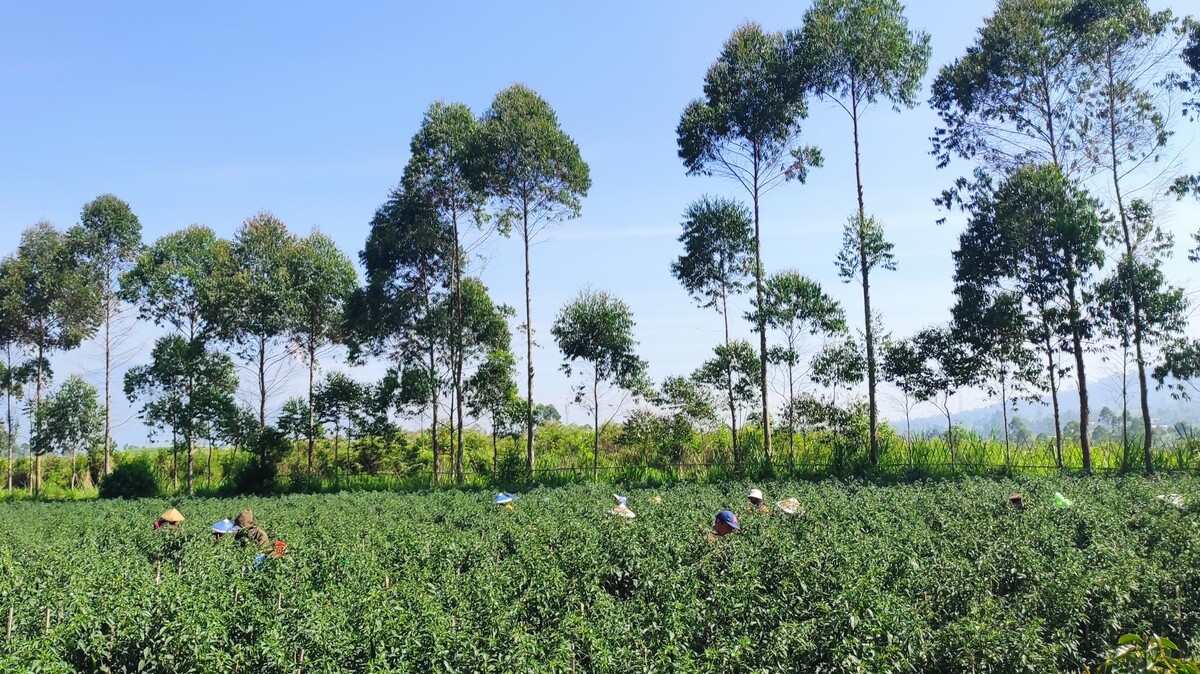
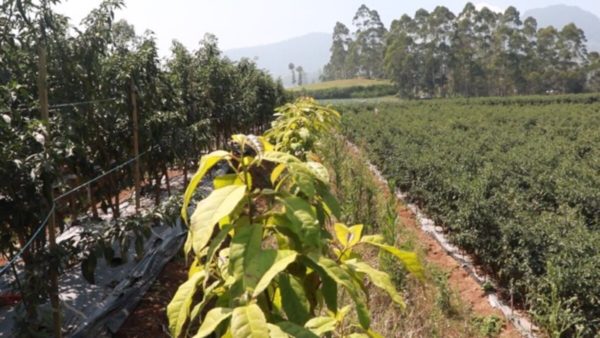
(Above) In Margamukti Village, a farm has benefitted from planting trees beside vegetable plots

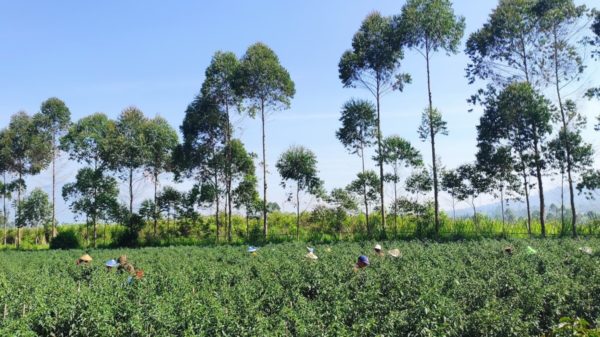
About 30 miles south of Bandung in West Java, Pengalengan District is a rolling green patchwork of dairy farms and tea plantations. Traditional villages are dotted all around, along with lakes, waterfalls, and hot springs. For the growing number of tourists who come here to enjoy the fresh air and beautiful views, the area appears serene and peaceful. But below the surface, Pengalengan has a different story to tell.  

In recent years, unsustainable farming practices, combined with unchecked land conversion, have degraded the land. Combined with natural disasters like earthquakes and extreme weather events, many farmers have begun to worry about the environmental impact these developments are having on the landscape. 

Working with nature, not against it 

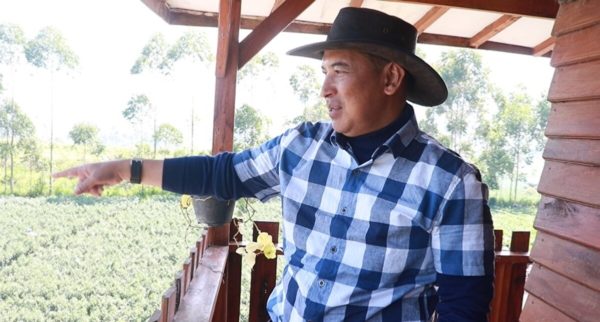
One of them is Harry Raharja, owner of Harry’s Farm in Margamukti Village. In 1990, he began planting vegetables, crops, and fruits on his family farm in the Cisangkuy sub-watershed area. At the time, some of his neighbors were selling their land to tourism developers. Those who continued to farm did so with a heavy hand – removing tree cover and using chemicals to maximize their yields. Bucking this trend, Harry continued to implement sustainable practices as his ancestors had done – working with nature, instead of only taking from it. 

For Harry, this is not just an aesthetic decision. He believes having tree cover around his farm brings benefits like shade and fresh air, while also binding the soil together and protecting his land from erosion and water shortages. “It may reduce the yield I can harvest from the farm,” he says, “because the vegetables which are covered by trees will not get as much sunlight or grow as well as those in open land. But I don’t mind. I get a greater benefit by letting trees grow at my farm.” 

Harry is working with nature to maintain fertility on his farm. To avoid monocropping, his land is planted with a range of vegetables such as chili, potatoes, carrots, and tomatoes. Then, on the borders, he has planted eucalyptus and rasamala trees to provide shade. He has also planted groves of orange trees, which stand apart from his vegetable gardens. 

Harry Raharja
(Above) Harry Raharja, owner of Harry’s Farm in Margamukti Village, where Trees4Trees has been helping plant rasamala trees (below)

Rasamala Tree

Short-term gains create long-term problems 

In the time it has taken for Harry’s trees to grow, he has seen a boom in land conversion around Pengalengan, most notably the conversion of forest areas into tourist attractions such as lodges, cafes, lookout points, and other vegetable plots to feed the ever-growing influx of visitors.  

Many of these plantations were created without environmental sustainability in mind. Their lack of terracing makes the land more vulnerable to landslides, which are triggered by flooding during the rainy season. To maximize their yield, farmers also clear away trees from the land, making it even more prone to erosion. 

The loss of tree cover has also made Pengalengan, once famed for its cooler climes, noticeably hotter during the day, and caused water shortages due to a lack of absorption and storage capacity. This cycle of flooding and drought has taken a heavy toll on the land, while weekend traffic jams have also created a new problem: Air pollution.  

Harry Raharja

Rasamala Tree
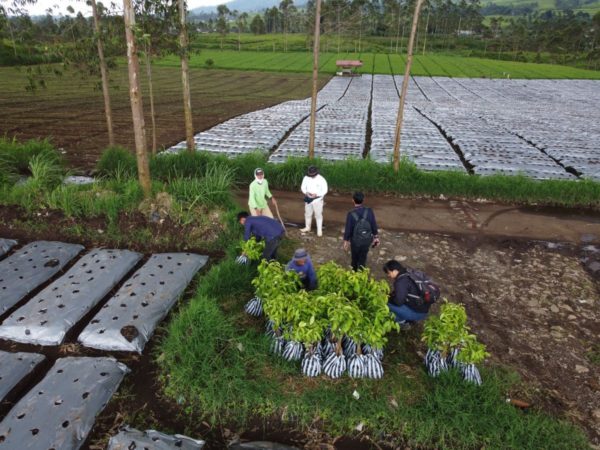
(above) Together with local workers, members of Trees4Trees help plant a new generation of trees on Harry’s Farm

Nature-based solutions for man-made problems 

Harry saw the damage being done and decided to take action. In 2022, he joined a Trees4Trees planting program which helped plant 10,000 avocado, rasamala, and mahogany trees on his 30-hectare plantation. With funding support from Astra Zeneca Forest (AZ Forest) and One Tree Planted (OTP), these activities formed part of a wider project to add 50,000 new trees to Bandung Regency, focusing on three sub-watersheds of the Citarum River Basin (Citarik, Cirasea, and Cisangkuy). 

To this day, each of the trees Harry planted with AZ Forest, OTP and Trees4Trees are standing strong. When other areas in Pengalengan experience flooding and landslides, or when water shortages hit during the dry season, Harry’s Farm stays green and productive. By maintaining tree coverage on his land and staying connected to nature, he is better able to sustain his yields and ensure the availability of water.  

These benefits have also impacted the wider community. Harry employs a team of local farmhands on his land, who always have work to – whether harvesting fruits and vegetables or caring for the trees that shelter his fields. In addition to providing them with a reliable livelihood, the environmentally conscious practices implemented at Harry’s Farm have also helped to inform and educate the wider community. With continued support from AZ Forest, Trees4Trees and OTP, the people of Pengalengan can repair the damage done in recent times and look forward to a greener, more sustainable future.  

Writer: V. Arnila Wulandani. Editor: Chris Alexander. Photos: Kemas Duga Muis/Trees4Trees