Rooted in Resilience: Women Farmers in Bali

Rooted in Resilience

Rooted in Resilience: Women Farmers in Bali
Located within two of critical Bali’s watersheds, Sangianggede and Tukad Melaya, Tuwed Village in Melaya District, Jembrana Regency is strong for its agricultural tradition closely tied to local culture. Many residents rely on farming for their livelihoods, cultivating trees and crops, such as paddy, coconut, cacao, and various vegetables.  

However, like many parts of Bali, this area is increasingly facing pressure from rapid human-driven development, transforming much land into residential and commercial areas, creating challenges for farming communities. Amid these changes, some villagers remain committed to preserving their agricultural traditions. Among them are Nurhayati and Sahliah, two women farmers who continue to cultivate the land while contributing to their families and communities. 

Breaking Village Tradition: Women as Farmers 

In Tuwed Village, farming is seen as men’s work as it requires much physical labor. Most women in the village are housewives, while some earn income by collecting coconut leaves. Only a few women choose to work directly in agriculture.  

Sahliah and Nurhayati are among the women who have broken this tradition by dedicating themselves to farming.  

“It’s rare to find women in Tuwed who farm as their main routine. Usually, women only help during harvest time,” said Nurhayati, one of the village’s woman farmers.  

Now in her forties, Nurhayati has been familiar with farming since her early marriage. “My husband is a farmer, so I have worked alongside him in the field since we got married,” she explained.   

Planting Trees
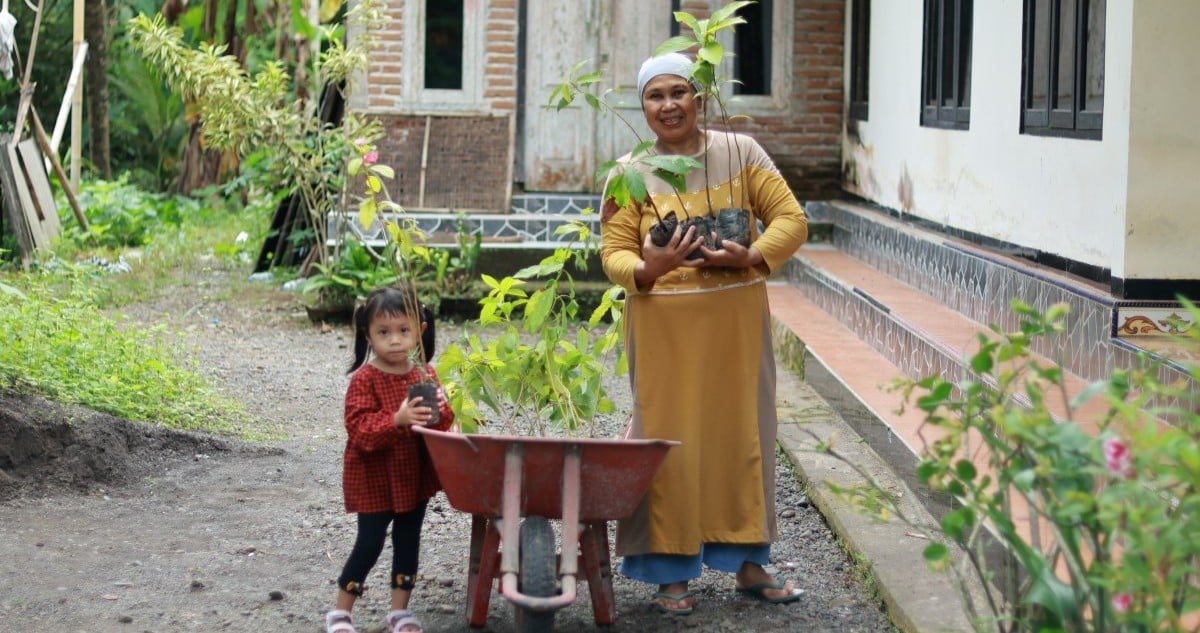
Nurhayati with tree seedlings she has already received from Trees4Trees and Faithfull tree planting program.

Together with her husband, Nurhayati manages a rice field and several plots of land where they grow corn, bananas, and vegetables. “After years of farming, I have seen how it can support my family’s needs,” she said. In 2024, they joined the Trees4Trees program receiving albizia, avocado, and cacao trees. “I hope these trees will become our savings for the future,” added Nurhayati.  

Another woman farmer, Sahliah, described farming as her side job, while her husband works as a full-time farmer managing rice fields and land planted with coconut trees and crops. Even so, Sahliah actively ensures their crops and coconut trees grow well and thrive. 

Like Nurhayati, Sahliah also received albizia, avocado, and cacao seedlings from a tree-planting program initiated by Faithfull in partnership with Trees4Trees in 2024.  “These trees are investments for the future. When I get older and am not strong enough to work, I can harvest the fruits along with crops we planted to support our needs,” she said. 

Woman planting trees
Sahliah, in front of her working place where she and other women pack young coconut leaves.

Independent and Self-sufficient Women 

Behind their persistence in farming lies a larger goal: becoming financially independence women who can contribute to their family.  

In addition to farming, Sahliah started a small business five years ago related to trees she grows: collecting young coconut leaves. The demand for young coconut leaves in Bali remains high because they are widely used in traditional ceremonies and rituals. The leaves are crafted into penjor, tall decorative bamboo poles adorned with young coconut leaves (janur), and banten, traditional Balinese Hindu offerings. 

“This business employs around 15 women who work with me to collect young coconut leaves, pack them, and send them to crafters in Denpasar,” Sahliah said. She emphasized that maintaining healthy coconut trees she has grown and continuing farming are essential to sustaining her business, as the quality of the leaves depends on the health of the trees and the ecosystem.  

“Through this business, I want more women in this village to work and earn their own income, instead of depending on their husband entirely to support their family needs,” she added. Sahliah believes that productive women can strengthen household financial stability. 

Nurhayati also pursues her own source of income. Besides farming with her husband, she runs a small snack stall in front of her house. The income she earns from selling harvests helps her add capital to her stall and create additional opportunities to support her family. “It is always satisfying to earn my own income without depending on my husband,” she said.  

Rooted in Resilience: Women Farmers in Bali
A woman from Tuwed Village packs young coconut leaves before delivering them to a crafter to be used for ceremonial and ritual decorations.

Farming for the Future 

For both Nurhayati and Sahliah, their commitment to farming and planting trees goes far beyond generating income. Their village has experienced environmental challenges, including drought during the dry season and flooding during the rainy season. For them, planting trees is also a way to help restore their village’s surrounding environment. 

“I love seeing the area around my land becoming greener. It feels cooler and makes me feel safer with more trees around,” Sahliah said. 

Through the tree-planting program initiated by Faithfull in collaboration with Trees4Trees this season, the trees planted are expected to bring long-term benefits, not only restoring the environment but also strengthening the livelihoods of local communities, especially empowering women like Sahliah and Nurhayati. 

Writer: V. Arnila Wulandani. Photos: Y. Dessenita

Basic protective measures against the new coronavirus

washing hand

Stay aware of the latest information on the COVID-19 outbreak, available on the WHO website and through your national and local public health authority. Most people who become infected experience mild illness and recover, but it can be more severe for others. Take care of your health and protect others by doing the following:

1. Wash your hands frequently
Regularly and thoroughly clean your hands with an alcohol-based hand rub or wash them with soap and water.

Why? Washing your hands with soap and water or using alcohol-based hand rub kills viruses that may be on your hands.

2. Maintain social distancing
Maintain at least 1 metre (3 feet) distance between yourself and anyone who is coughing or sneezing.

Why? When someone coughs or sneezes they spray small liquid droplets from their nose or mouth which may contain virus. If you are too close, you can breathe in the droplets, including the COVID-19 virus if the person coughing has the disease.

3. Avoid touching eyes, nose and mouth
Why? Hands touch many surfaces and can pick up viruses. Once contaminated, hands can transfer the virus to your eyes, nose or mouth. From there, the virus can enter your body and can make you sick.

4. Practice respiratory hygiene
Make sure you, and the people around you, follow good respiratory hygiene. This means covering your mouth and nose with your bent elbow or tissue when you cough or sneeze. Then dispose of the used tissue immediately.

Why? Droplets spread virus. By following good respiratory hygiene you protect the people around you from viruses such as cold, flu and COVID-19.

5. If you have fever, cough and difficulty breathing, seek medical care early
Stay home if you feel unwell. If you have a fever, cough and difficulty breathing, seek medical attention and call in advance. Follow the directions of your local health authority.

Why? National and local authorities will have the most up to date information on the situation in your area. Calling in advance will allow your health care provider to quickly direct you to the right health facility. This will also protect you and help prevent spread of viruses and other infections.

6. Stay informed and follow advice given by your healthcare provider
Stay informed on the latest developments about COVID-19. Follow advice given by your healthcare provider, your national and local public health authority or your employer on how to protect yourself and others from COVID-19.

Why? National and local authorities will have the most up to date information on whether COVID-19 is spreading in your area. They are best placed to advise on what people in your area should be doing to protect themselves.

Source: WHO – ( https://www.who.int/emergencies/diseases/novel-coronavirus-2019/advice-for-public
Image : Photo by Kelly Sikkema on Unsplash

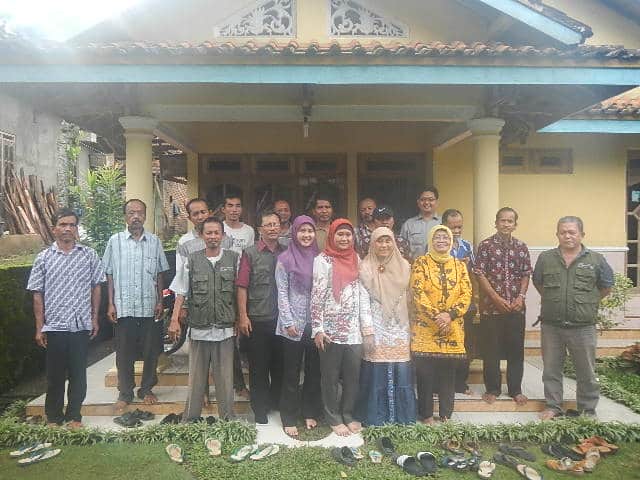
Focus Group Discussion with Trees4Trees and ACIAR in Pati

ACIAR continues to work with Trees4Trees to explore about community forests especially community-based commercial forestry (CBCF) related farmers business networks in forestry.


Last year, it was MTG (Master Tree Grower) evaluation where farmers joined the MTG program in 2015 were evaluated to know if they really practice technical guides and theory to get maximum value. The MTG evaluation is to refine the MTG courses in the future.


On February 2017, next ACIAR program was Social Dimension Analysis Survey (SDA Survey), one of colecting data on this survey, trough Focus Group Discussion (FGD), a method to explore and collect complete information from community-based forests farmers. FGD is aimed to know specifically about farmers’ perception on the importance of forests in their forests business and problems that farmers often meet in maintaining their trees. This activity was held on 16-18 February 2017 in three villages in Pati District, Giling, Payak and Gunung Sari. There were 30 farmers gathered for FGD, total 90 farmers from 3 villages. To conduct this FGD in Pati,  ACIAR  appointed Trees4Trees team and Foerdia Team from Bogor.


Community-based commercial forestry (CBCF) in Pati is dominated by small-scale farmers with integrated agricultural and forestry enterprises, mainly supplying local and provincial markets. Sengon, which farmers mostly grow, has been in high demand over the past decades. They are fast-growing trees (maturing 5-6 years), more economically valued for farmers than teak.

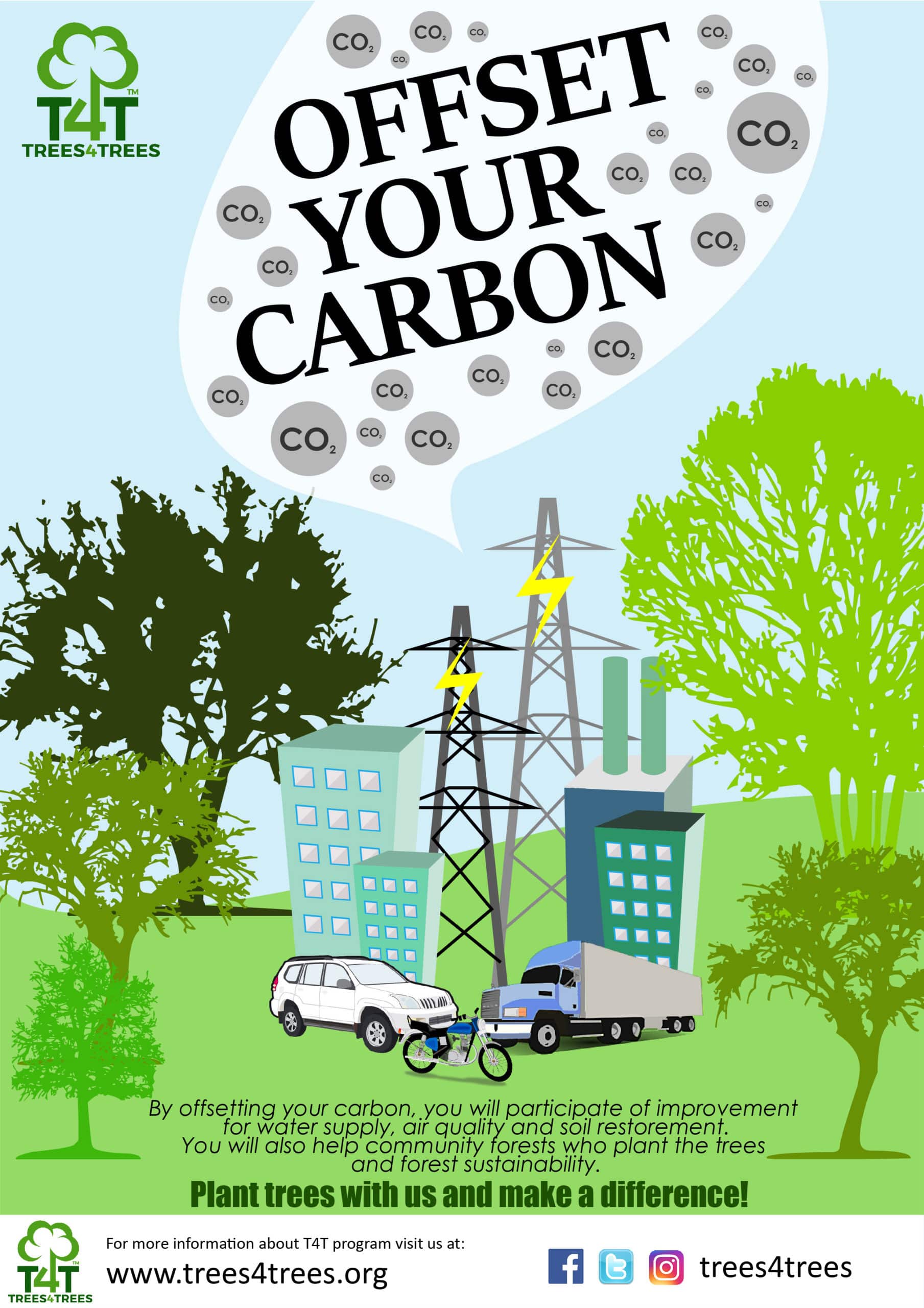
Carbon Footprints Facts And Why Everyone Should Be Aware

Carbon has been our epic issue due to global warming. Carbon levels increased since Industrial Revolution (1800s) where natural sources, especially the combustion of fossil fuels, were used massively for human activites and the process of the industry. These caused ‘greenhouse effect’ where atmosphere traps the outgoing heat from inside and makes heat goes back. This trapped heat then makes temperatures higher and changes the climate.

Today, we still contribute in producing carbon emission by doing some habits we are accustomed with.
This production of carbon directly of indirectly as effects to support human activites is called carbon footprint. Here are the lists we have collected a few habits that rise carbon footprint.


1. Transportations
Transportations like bus, car, truck, train or motocycle use fuels generated from fossil to run. This usage  releases carbon to the atmosphere. Airplane alone releases more carbon footprint and has higher impact. The reason why airplane has higher impact is that the emission is produced at cruising altitudes high in the atmosphere. This makes even more harmful impact that cause a series of chemical reactions in the atmosphere.


Contrails or condensate trails also produced by airplane, white trails that can be seen in the sky when CO and CO2produced condense with air and oxygen at high altitudes. Contrails stay in the air for hours and trap more heat from escaping the earth.


To reduce carbon footprint from transportations, try to use public transportations for your activity such as going for work, school or even for travelling and backpackers. Use personal car for 2 or more persons . Becycle can be useful too for short journeys. Try to do your weekly or monthly shopping in a single trip.


2. Electricity
The more electricity the more carbon will be produced. Electricity still uses both renewable and unrenewable sources such as fossil fuels, coals, water, wind and solar energy. Air conditioner, washing machine, computers, TV and other electronics uses electricity.


There are many things to do to save energy from simple ones to big ones. Turn off electronics when are not in use: lights, TV, air conditioner. Open you windows to get more natural lights for your house.
Use LEDs for lights, LED can save energy more than 70% than neon lights. Replace your PC with laptops, laptops can save around 40% of electricity.


3. Water
It takes a lot of energy needed to collect water and purifiy it again to be ready to use.Use water wisely for less water waste. Don’t let the water tap open while brushing teeth or washing the dishes. Don’t buy bottled water and bring your water bottle, this will save the plastic waste and money too. Wait for your washing machine in a full load and will save you the water and washing powder. Put the water as you need for cooking.


Now we know, that everyone has a carbon footprint. It can’t be avoided 100% but surely we can minimalize it and be friendly to environment.

Boyolali: A Rural City In Central Java

A city surrounded by another cities: Semarang, Grobogan in the north, Sragen and Solo in the east, Klaten and Yogyakarta in the south, Semarang and Magelang in the west. Being surrounded by big and modern cities, doesn’t make Boyolali lose its identity. Boyolali stays as the country district that depends on agriculture sector, strong culture and tradition, coupled with mountainous areas, vegetation and the cool air. This makes Boyolali to be one interesting place to visit for those who seeks peace, and explore the nature.


There are, of course, many iconic places that Boyolali offers but we list these 3 must-go places when you visit Boyolali.


1. City of Milk, New Zealand van Java


Boyolali is famously called “The city of milk” or “New Zealand van Java”. Boyolali is one of the largest producer of fresh milk in Java.


The reason of Boyolali becoming the city of milk is the topography, it is high and has mountainous area. The cold climate fits for cow dairy productio 53,43% of the needs of milk every month nationally is supplied from Boyolali, it is 120.000 liters per day or 3.600.000 liters per month.


With such high of milk production, Boyolali has numerous kind of foods and drinks generated from milk and cow meat such as hot milk with ginger and honey, yoghurt, cheese, abon or grated dried meat, milk crackers, dodol susu and stik susu.


Boyolali also has Cepogo and Selo, two sub-districts in Boyolali,  assigned as agrotourisms of dairy cows.


Around 12,5% or 12.000 of total population in Boyolali works as cow farmers. There are several sub-districts as fresh milk producers located in Boyolali: Mojosono, Musuk, Ampel, Selo, Cepogo and Boyolali, which mostly located in southern side and plateau area with cold air. Parent cattle stocks originally from sub-tropic region Australia and New Zealand.


2. Cultural Iconic Sites of Boyolali


Boyolali is a city with many historical stories that can be found. One is “Lembu Suro Statue”. Boyolali has numerous cow statues found almost every sub-district, but Lembu Suro statue is designed as a symbol and an icon for Boyolali as the city of milk. That is why Lembu Suro built in giant size with width 160 m2 and height 11 m, placed in the center of Boyolali central park and government building.


With the specification of building, Lembu Suro not only a statue, but also a building for governments or guests meeting. The interior inside Lembu Suro ia alike a theatre, with 48 seats and screen backdrop for presentations or short movies.


The unique thing about Lembu Suro is that this statue is built in sitting posture not a stand up posture, in Javanesse “ndhekem”, this is why local people call it Patung Sapi Ndhekem.


Another is Arjuna Wijaya statue.


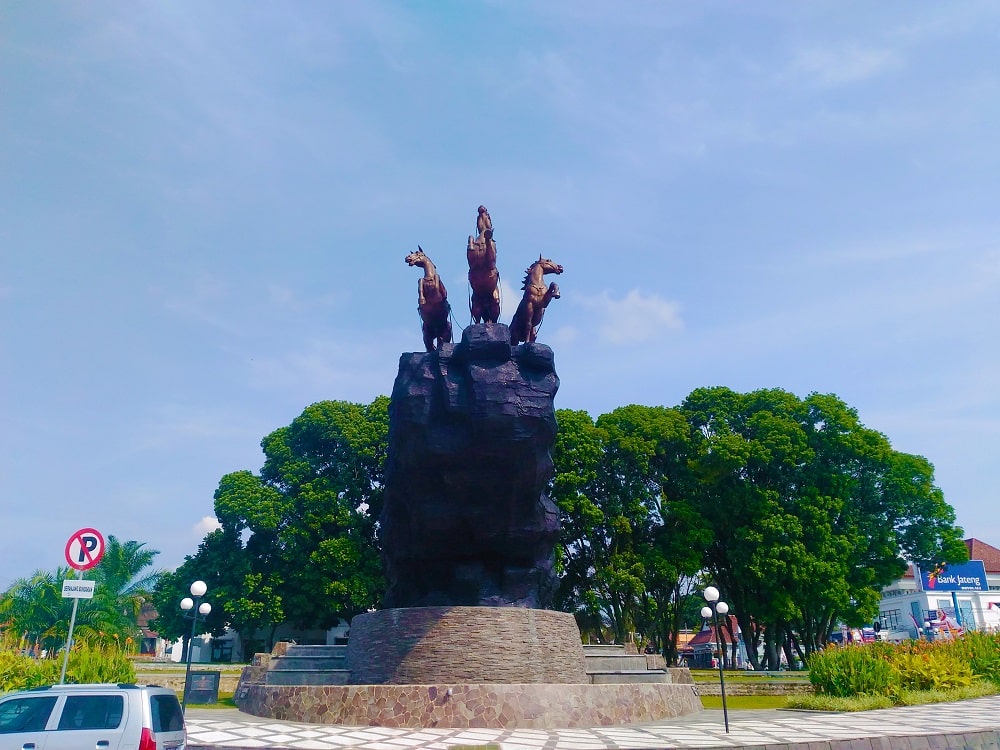
The statue located in Siaga park, simpang lima of Boyolali. The statue describes the classic story of Arjuna and Khresna fight against Kurawa from Mahabharata, complete with 13 horses. Arjuna Wijaya means Arjuna’s victory. Boyolali is close to Hindu civilization, shown with Hindunesse sites that can be found. Beside Arjuna Wijaya statue, there are several Hindunesse temples such as Lawang, Candi Sari and Candi temple.


3. Eco/Natural Trip


As a rural city, with greeny views everywhere and friendly local people, Boyolali offers many natural trips to visit. Some of them are Merbabu and Merapi.


Merbabu is one of the best place to hike in Java, with height 3.124 mdpl and has 7 tops, syarif,  kenteng songo, watugubuk, watutulis, gegersapi and ondorante. Kenteng songo summit is the highest top and syarif top is hikers’ favorit to stop.

Merbabu mountain is a favorite place to hike for beginners for its friendly long tracks with satisfying panoramas. From the begining until the end of the journey, Merbabu gives her beautiful panoramas with homogen forests, sabana and wild hills. At the top of Merbabu, it will show the view of another famous mountains like Merapi, Sumbing, Sindoro, Telomoyo, Ungaran and Lawu.

Hiking Merbabu can be started from Selo, a village in Boyolali and needs around 8-9 hours to get to the top and 6-7 hours to get back down.


Merapi is an active mountain in Indonesia in the ring of fire line. Merapi once known erupted once per 4 years, but its cycle stopped in 2010 and no eruption since then. Merapi with heigth 2.930 mdpl, also offers beautiful view from the top of the mountain. There are some reasons hiking Merapi is as exciting as Merbabu, its hiking trails is quite challenging. It takes 1-2 hours to get to the top, the trails will be rocky and uphill along the way and. But the view is paid off at the top. The starting point to hike Merapi can be from Selo, Boyolali too.

Planting, Planting, Planting!

When rain comes starting from November, it is planting time for Trees4Trees with the farmers. All seedlings has been distributed, the lands are clean from wild grass, and farmers are ready to plant. Planting time has started in several locations of T4T’s planting area: Pati, Semarang, Magelang, Klaten, Purbalingga, Banyumas, Kebumen, Tegal and Ambarawa.


100.000 total of Albizia seedlings set to plant in Trees4Trees’s 2016 planting year with 70.000 of Albizia seedlings and 30.000 of teak seedlings. Planting time for Albizia is estimated to be done in the end for December 2016, and planting for teak is scheduled in the early of January 2017.


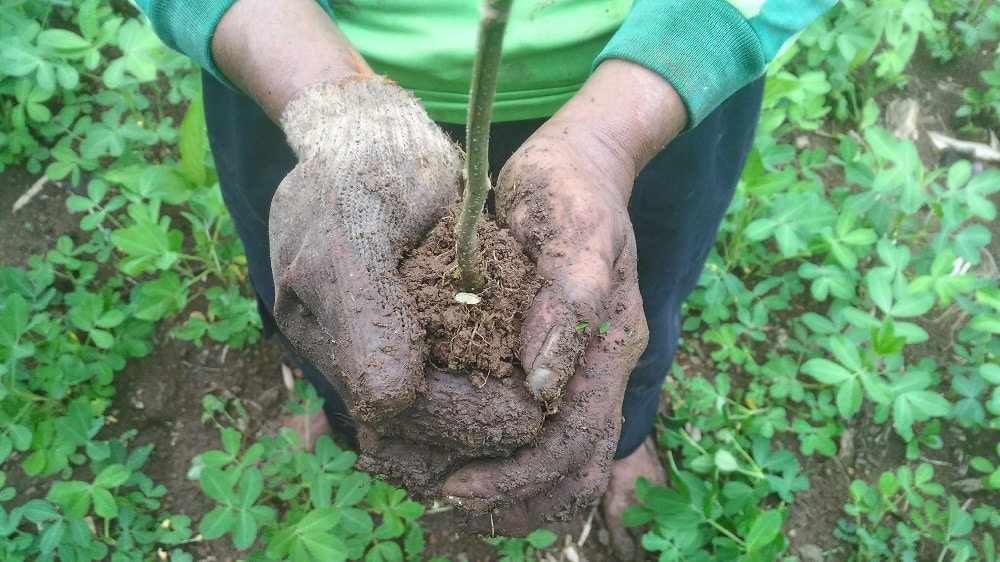
Look at the photos of our farmers planting the trees we collected from November to early December.