Four Years of Commitment: Microsoft Continues Growing Urban Forests

Planting Trees

The presence of green spaces among factories, buildings, and heavy traffic in bustling industrial zones is like an oasis in the middle of a dry, overheated desert. Beyond providing fresher oxygen and sequestering carbon emissions from the industrial activities, rows of trees offer shade, reduce heat and lower temperature, transforming the area into a more livable and comfortable environment for those who live and work nearby.  

Extensive research and studies has shown that the presence of forests in urban areas significantly improves public health and strengthens the human immune system. 

Establishing urban forests within industrial and urban areas, however, is not as simple as it sounds. It demands long-term vision, consistent effort, and strong commitment. Despite these complexities, over the past four years Microsoft, in collaboration with Trees4Trees, has consistently demonstrated that commitment by helping establish urban forests in two major industrial hubs in Jakarta’s buffer zone: Greenland International Industrial Center (GIIC) and Karawang International Industrial Center (KIIC), contributing to a healthier environment. 

Urban and Industrial Area Challenges 

Amid the rapid development of hundreds of buildings, factories, and supporting infrastructures, GIIC and KIIC – like many other urban industrial zones – face significant environmental challenges. Air pollution from factory operations and vehicle emissions continues to threaten air quality. Without serious intervention, air quality could continue to decline, potentially harming the health of surrounding communities.  

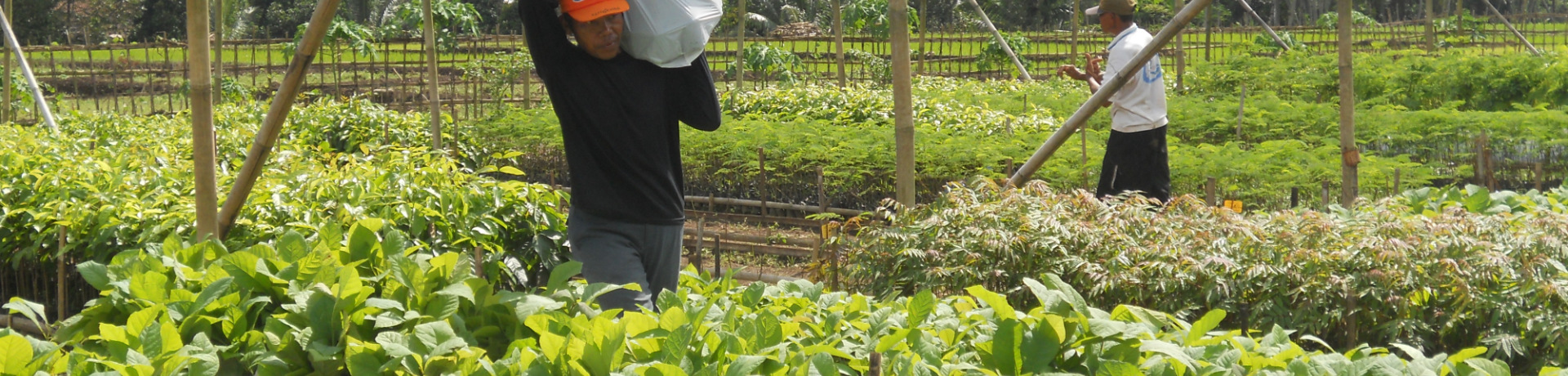
Yet the challenges go beyond polluted air. Water and soil degradation also pose serious concerns. “Industrial areas often consist of nutrient-deficient soils,” explained Pandu Budi Wahono, Director of Trees4Trees. “To address this, we prioritize planting fast-growing shade trees that are not only well-adapted to poor soil conditions but can also gradually improve soil quality by recycling nutrients – helping restore soil health and revive the ecosystem,” he added. 

Four Years of Commitment
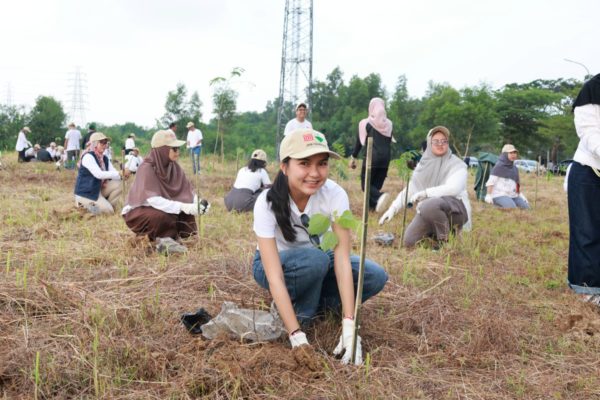
The tree planting took place near the buildings and factories of the GIIC Industrial area in Cikarang, contributing to the expansion of urban forests.

More Trees for Urban Forests 

Helping to address these challenges, Microsoft began the journey to create urban forests in 2022. As key industrial hubs, both GIIC and KIIC areas were once largely dominated by factories and infrastructures. Many areas lack tree covers and stretch of arid, compacted soil. During the dry season, the heat intensified – turning parts of the area into scorching landscapes, especially at midday. 

Four years later, the landscape has gradually transformed. These industrial zones are now increasingly woven with greenery, from shade trees lining the open land to fruit-bearing trees growing within the complexes. Together, these efforts expand the pockets of urban forests and reshape the industrial environment.  

This season, Microsoft continues to strengthen that commitment to further grow urban forest coverage. “From 2022 to 2025, Microsoft has planted around 62,000 trees in the industrial areas of Cikarang and Karawang to help establish urban forests. Today, we mark four years of tree-planting collaboration with Trees4Trees,” said Dania, Microsoft Community Engagement Lead. 

To build on this progress, she emphasized that this season, Microsoft is adding 13,000 more trees, bringing a total of 75,000 trees since 2022. “We hope to continue this effort in the years ahead, expanding the numbers each season and ensuring that the trees we plant continue to grow and deliver lasting benefits,” Dania added.  

Expanding Green
The rain even did not stop the volunteers’ spirit in planting trees.

Microsoft Commitment: Being a Good Neighbor for Community 

As the first step in expanding urban forest, Microsoft recently initiated a tree planting event, inviting its partners and community members to take part. “Around 100 volunteers who are our partners took part in the planting activity,” Dania explained. Of the total number of trees planned for this season, 1,100 trees were planted during the event – symbolizing not only environmental action, but also a shared commitment. 

“We invited everyone to plant trees together because we want to build a sense of shared responsibility, as one big family working together in creating a better environment,” said Dania. She said that the urban forest tree planting initiative also reflects Microsoft’s awareness of its presence within the industrial area, particularly with its data center operating there. “This is part of our commitment to being a responsible and good neighbor to the surrounding communities,” she continued. 

Planting Trees
(Above) Arina Dafir, Microsoft’s Community Affairs Manager – Southeast Asia, joined the tree-planting event. (Below) Together with its partners, Microsoft continues to grow urban forests.

Four Years of Commitment

Expanding Impacts, Planting with Local Community 

Khoirum Minan, Trees4Trees Project Manager, explained that the urban forest initiative focuses on strengthening soil and water conservation while contributing to carbon sequestration. Over time, those growing urban forests are expected to improve air quality, reduce heat, enhance water and soil health, and support local livelihoods.  

“Like in previous season, this year, we’re planting species suited to drought-prone industrial conditions, including fast-growing hardwoods such as cadamba, albizia, gmelina, and mindi, alongside fruit trees like jackfruit and mango,” he said. 

Four Years of Commitment
Microsoft engaged its business and community partners, including organizations and school representatives from nearby industrial areas to plant trees together during a dedicated planting event.

The tree-planting efforts also extend to community-owned lands in the surrounding industrial zones to broaden environmental and social impacts. The program will continue through April 2026, involving local farmers as planting partners, ensuring that the initiative not only restores the environment but also supports the surrounding communities.  

“We see this tree planting as an investment in the future,” Dania emphasized. “We plant trees today, knowing that in ten or twenty years, those trees will grow strong and give back, caring for us and providing lasting benefits for all living beings,” she added. 

Writer: V. Arnila Wulandani. Photo: Y. Dessenita

Balancing Industrial Growth with Urban Forest Planting

From electricity consumption and infrastructure development to manufacturing and distribution, the industrial sector stands among the world’s largest contributors to greenhouse gas emissions. According to the United Nations Industrial Development Organization (UNIDO), direct industrial emissions account for nearly 22% of total global emissions, while indirect emissions – from electricity and industrial heat – contribute another 31%. This places the industrial sector at the center of the climate challenge and makes it a priority for emission reduction. 

Recognizing this responsibility, Jaya Obayashi has strengthened its commitment to balancing industrial growth with environmental protection through sustainability-driven initiatives. Hardy Tekyawan, a member of the company’s Board of Directors, explained the company not only complies with ISO 14001 international environmental management, but also strives to go beyond compliance by taking direct action. 

“Our parent company is deeply committed to sustainability and, as a construction subsidiary, we are encouraged to actively contribute as well. It’s no longer just about meeting regulations, but about taking part in real environmental action,” he said

Turing Commitment into Action: 500 Trees for Urban Forest Expansion 

As part of their ongoing sustainability efforts, Jaya Obayashi has committed to expanding the urban forest located within the Greenland International Industrial Center (GIIC) area in Cikarang, West Java – one of Indonesia’s largest and most active industrial hubs in the Greater Jakarta region. With support from Trees4Trees, Jaya Obayashi recently planted 500 trees in this location. 

Kentaro Miyashita, Jaya Obayashi’s General Affairs Admin Advisor, confirmed that over 50 employees from various divisions took part in this initiative as planting volunteers. “Every year, we improve and strengthen our sustainability program, while also encouraging more staff to connect to environmental protection efforts,” he said. 

Hardy added that the company’s approach to sustainability applies across all business levels, from head office to project sites. “Our internal engagement must be strong, so everyone consciously participates in environmental responsibility.” 

Balancing Industrial Growth with Urban Forest Planting
Hardy (left), a member of the Jaya Obayashi Board of Directors, receives a tree-planting certificate from Trees4Trees’ Director, Pandu Budi Wahono.

Beyond Compliance: Annual Sustainable Programs 

Ramdan and Tasya, from the Jaya Obayashi Corporate Communications and Legal team, also explained that urban reforestation is one of several environmental programs which the Company carries out on a regular basis. “In addition to this tree-planting activity,” explained Ramdan, “we also conducted mangrove planting from 2022 to 2024 and have continued our upcycling program for old employee uniforms.” 

Both went on to emphasize that these efforts are designed, not only to address environmental impact, but also to build a culture of awareness within the organization. By engaging and involving employees, the company aims to strengthen environmental consciousness through practical action. 

Jaya Obayashi staff plant trees
(Above) Ramdan (crouching in the center) and Tasya (second from the right), together with other Jaya Obayashi employees finish planting trees in a plot of land within the GIIC industrial area. (Below) Over 50 members of staff from Jaya Obayashi join in the tree-planting activity.

Jaya Obayashi staff plant trees

Reversing the Damage, Contributing to Climate Action 

The urban forest planting initiative forms part of Jaya Obayashi’s broader vision to help restore the ecological function of industrial landscapes – areas often exposed to higher temperatures, increased emissions, and land degradation. Tree planting serves as a way to mitigate ecological stress while contributing to positive climate action.

“We all know that global warming is worsening,” says Ramdan. “Through initiatives like this, we are aligning our efforts with the UN SDGs by taking real action.” The company hopes the newly planted trees will provide long-term environmental improvements, while converting unused areas into green buffer zones. 

Tomi Bustomi, Trees4Trees’ Regional Manager for West Java, explained that a mix of tree species was selected to accelerate canopy formation. “These trees sequester emissions and produce oxygen,” he said. “We use a combination of shade trees like rain trees along with fast-growing species such as gmelina, albizia, and cadamba to speed up greening and ecological recovery.” 

The event was also joined by Trees4Trees Green Ambassadors Tantri (Kotak) and Arda Hatna, whose presence brought extra excitement to the initiative. “The energy and enthusiasm were incredible,” said Tantri. “We hope these trees will help ease today’s climate challenges, growing into shade and absorbing emissions in this industrial area.” 

Their participation shows how collective action can inspire more people to take part in real climate solutions. 

Balancing Industrial Growth with Urban Forest Planting
Tomi Bustomi helps a volunteer with the hands-on aspect of Jaya Obayashi’s tree-planting program.
Arda and Tantri plant trees with Trees4Trees
Arda and Tantri, Trees4Trees green ambassadors joined the tree-planting as volunteers.
A Sense of Peace and Purpose 

Hardy emphasized that the initiative is meant, not only to restore the environment, but also to demonstrate the value of trees to human life. “We love trees because they give us oxygen and support the well-being of humankind and all living creatures. I hope this program inspires others to follow a similar path,” he said. 

Jaya Obayashi staff plant trees
(Above) After planting each seedling, Kentaro braces them with a supporting stake, which will help them to grow tall and strong. (Below) Trees4Trees and Jaya Obayashi staff members, working together in the GIIC industrial area.

Balancing Industrial Growth with Urban Forest Planting

Sharing the same sentiment, Kentaro highlighted the cultural perspectives rooted in the company’s Japanese heritage. “Wooden houses are traditionally very common in Japan, so we naturally feel a cultural closeness to trees,” he explained. Trees, he noted, symbolize both beauty and life. “When we look at trees, they bring a sense of peace. The greenery is soothing to the eyes.”  

In closing, he emphasized that protecting trees today means protecting the future. Continuing planting and protecting trees is not just an environmental responsibility, but also a way of preserving life and culture for future generations. 

Writer: V. Arnila Wulandani. Photos: Yulianisa Dessenita