All My Efforts Were Worth It: Planting Mangroves, Protecting Livelihoods in Pati

All My Effort

All My Efforts Were Worth It: Planting Mangroves, Protecting Livelihoods in Pati
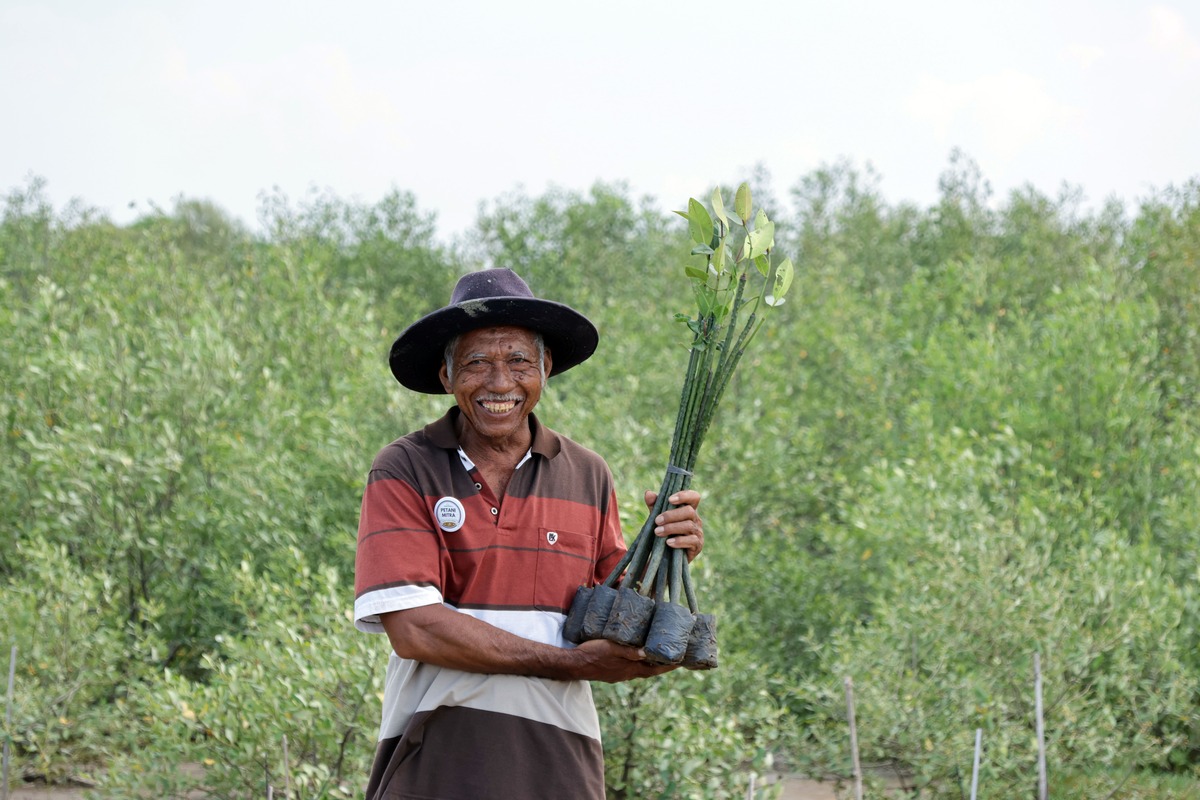
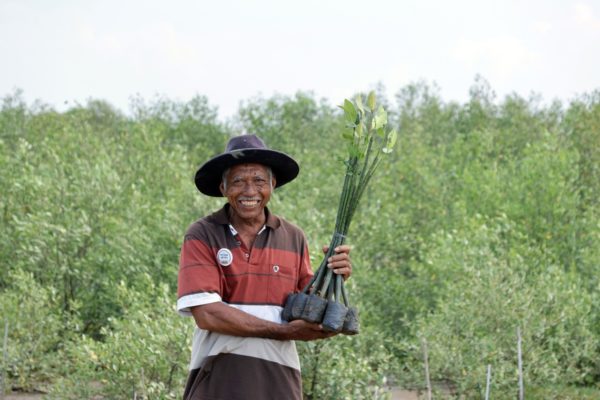
As the fifth of eleven siblings, Parmi missed out on a formal education in his youth. Instead, he and his two older brothers learned how to manage fishponds from their father. Parmi quickly turned this passion into a profession and now, more than 50 years later, continues to make a living in this way. 

Fishponds at the center of community life 

Central Java’s Pati Regency, where Parmi lives, is well known for its milkfish (ikan bandeng). “I manage two fishponds covering a total of 1.25 hectares,” he explains. “During the harvesting season, I can yield around a ton of milkfish per hectare, and we harvest two or three times a year.”  

With the income he makes from fishponds, Parmi can provide for his family. “This work allows me to give my son and daughter the education opportunities I never had,” he says.
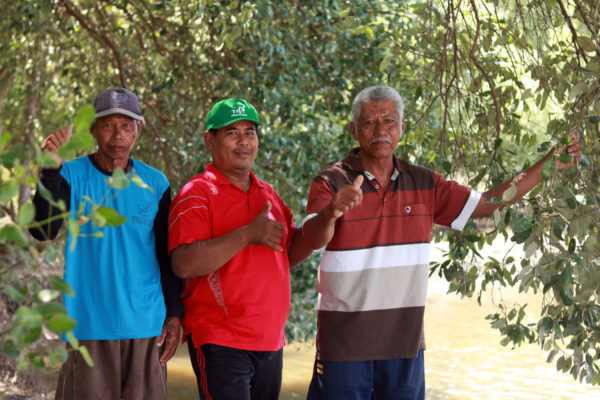
Farmer mangrove
(Above) Parmi (right) with his fellow fishpond farmers, inspecting the mangroves he planted in 2001

Planting trees for protection 

Parmi’s fishponds are located in the coastal village of Dukuhseti, around 100 meters from the shoreline. In 2001, huge waves flooded the coast, destroying ponds and causing enormous damage. “I lost hundreds of millions of rupiahs,” he recalls. At that time, there were no protective barriers along the coast, leaving fishponds vulnerable to floods.  

In response, Parmi and his fellow fishpond farmers took steps to ensure this disaster would not happen again. They planted mangroves along the shoreline to provide a natural buffer against the waves. Now, 23 years later, those mangroves have grown big and strong. But there are not enough of them to guarantee protection. 

In 2022, there was another huge ocean surge. “I lost around 100 million rupiahs (USD 6,190),” Parmi remembers. But he was relatively unscathed, compared to other farmers further up the coast. “Our neighboring village suffered even greater losses because they didn’t have as many mangroves protecting their coast,” he explains. 
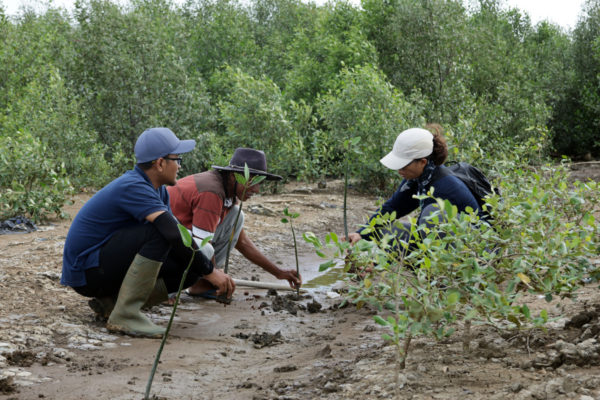
All My Efforts Were Worth It: Planting Mangroves
(above) Parmi plants new mangroves with members of the Trees4Trees team

Grab and EcoMatcher team up to plant mangroves 

Back in 2021, Parmi and other members of the Tani Makmur Mandiri farmers’ group were invited to join a mangrove planting initiative run by Trees4Trees, EcoMatcher, and Grab. A total of 30,000 mangrove trees were planted, creating a green belt covering 3.8 hectares along the Dukuhseti shoreline. 

Now, three years later, Parmi and his fellow farmers are reaping the rewards of their efforts. “Planting mangroves is not easy,” he says, remembering how he and his team would work waist-deep in muddy ground. “But seeing these trees grow big and strong (almost all of them are now at least three meters tall), I feel all my efforts were worth it.”  

Ocean waves no longer threaten Parmi’s fishponds as they once did. And the flourishing mangroves offer a range of other, unexpected benefits to the community – the leaves provide a sustainable source of organic fertilizer for the fishponds and the fruits, known locally as brayuh or brayo, can be sold at markets. 

“Local people often come to pick the fruits,” explains Parmi, “which they can sell for 5,000 Rupiah (about thirty US cents) per bucket (500 grams). These fruits are highly in demand here, given their importance to local dishes.”  
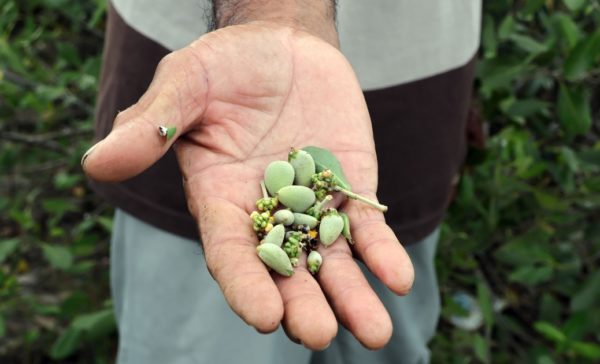
Mangrove fruits

Parmi has seen first-hand the protective power and economic potential of mangroves in his community. He insists that caring for these trees and using them sustainably is essential to environmental health and social well-being. “Everyone in the village can freely pick the fruits or leaves, but cutting them down is strictly prohibited,” he says.  

“We would like to thank Grab, Trees4Trees, and EcoMatcher for providing us with these mangroves and the many benefits they offer,” says Parmi.We will continue working to protect and appreciate these mangroves, just as they protect our homes and safeguard our livelihoods.
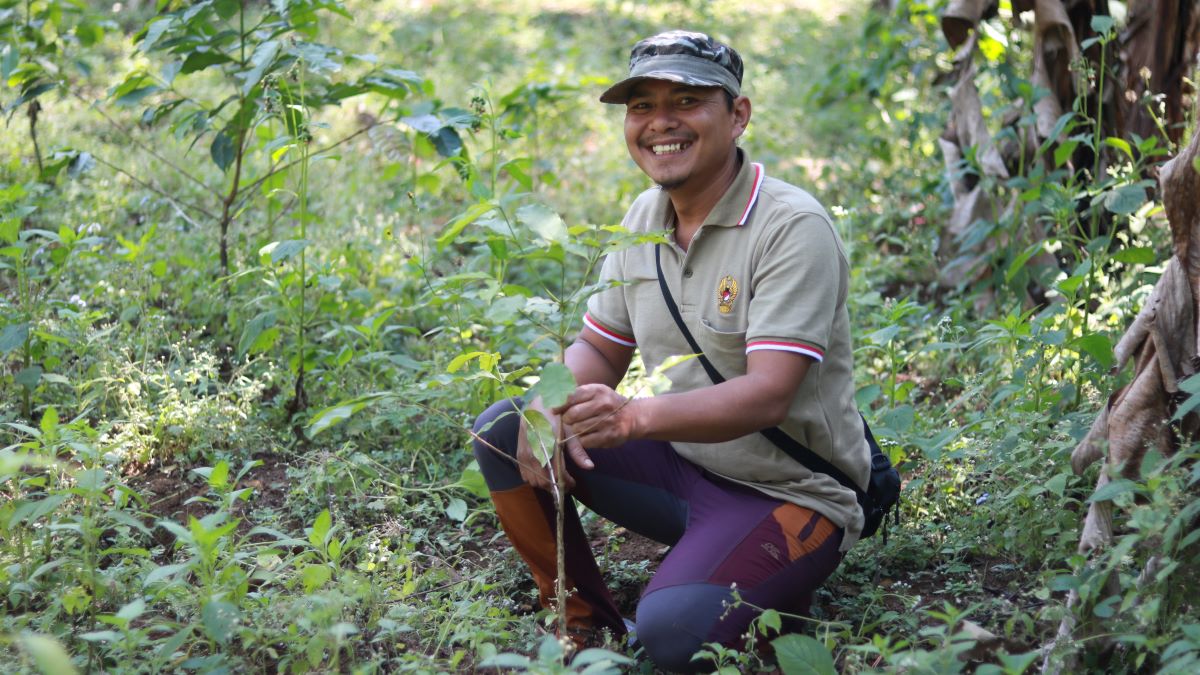
 

Sutajaya: Planting Trees, Preserving Biodiversity and Heritage in West Java

Planting Trees

One of our main tree-planting locations in West Java is the Citarum River basin, home to over 1,000 tree species and 3,000 flowering plants. These plants are central to ecosystem health and form the basis for many livelihoods in the region. However, in the wake of rapid development, many of these tree species are now threatened by deforestation. In response, a local forest farmer named Sutajaya is determined to reverse the damage. 

Six years ago, Sutajaya was granted free leasehold by the government to manage 2 hectares of land in the foothills of Sangar Mountain near Mekarjaya Village, the village in Bandung Regency that he calls home. “We are allowed to plant crops and manage the land,” says Sutajaya. “But the mandate is that we must plant hardwood trees that we never cut down.”  

Traditional roots, bearing new fruits 

At first, Sutajaya planted coffee trees. However, he quickly noticed that many of the trees he remembered from his childhood were becoming more scarce. He started planting native Indonesian species like rasamala, saninten, damar, kisireum, and tarum areuy. And this process reconnected him to his roots. 

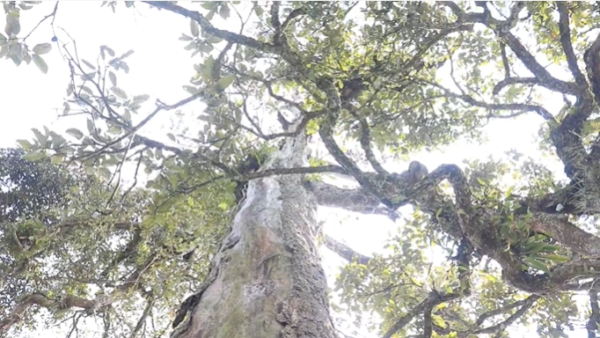
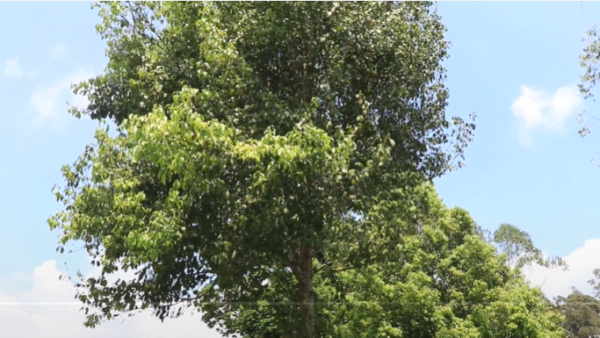
Saninten trees
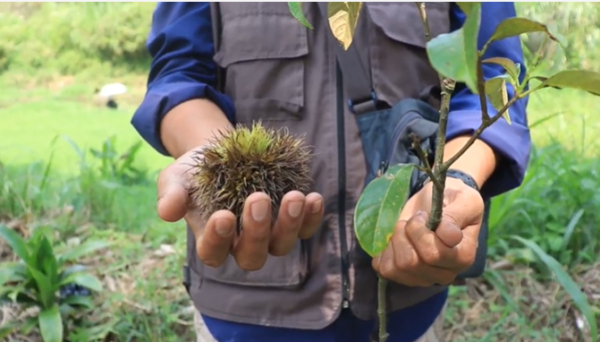
Figure 1 The Saninten tree, one of several native species making a comeback in West Java. Figure 2 The fruit and branches of Saninten tree.

fruits

“This land used to be the home of the powerful Tarumanegara kingdom,” explains Sutajaya, remembering a story passed down from his ancestors. “Their name came from the tarum areuy tree, which used to grow all around – the tree. also gave its name to the river that flows through the region, the Citarum.”. The kingdom was known throughout Southeast Asia for their production of distinctive blue fabrics, made using dye from tarum areuy trees.  

Today, the blue cloth is long forgotten, and the trees are disappearing too. “I don’t want my children to grow up without seeing the native trees so deeply rooted in our culture. So I will do all I can to stop them from disappearing,” said Sutajaya. 

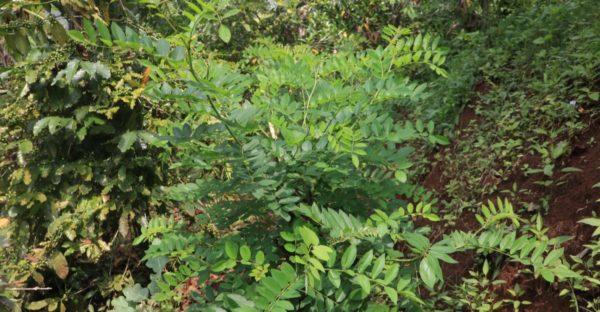
Tarum Tree
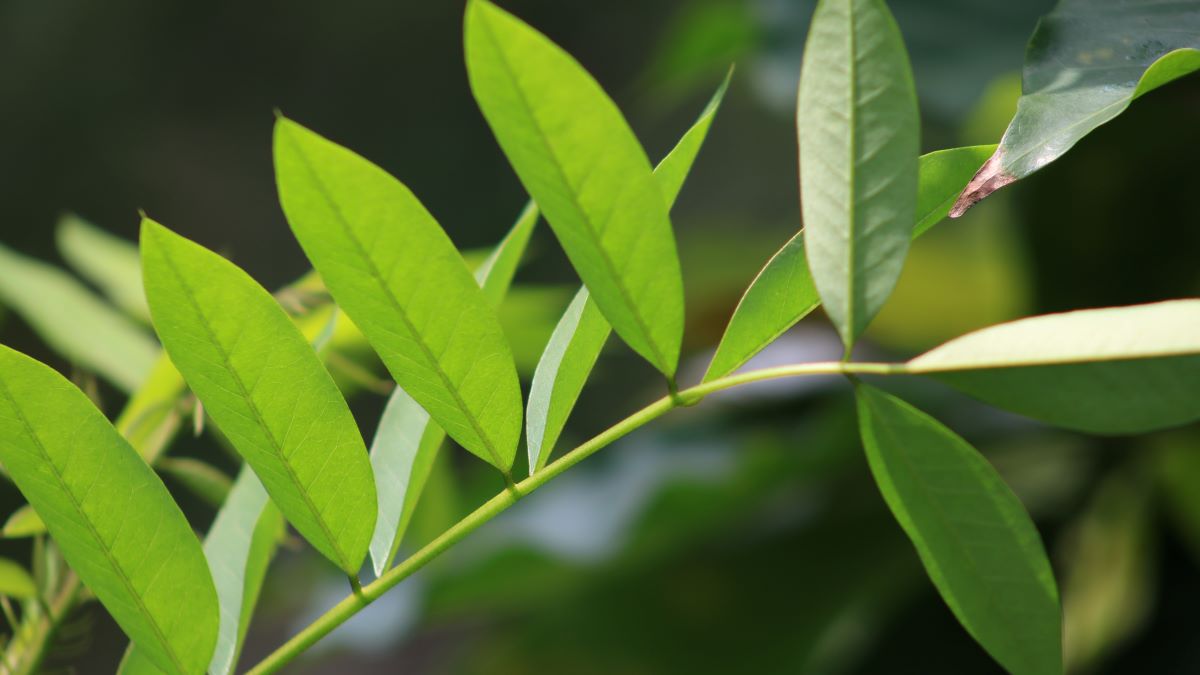
Figure 3 Leaves of the tarum tree

Planting the seeds of knowledge 

Unlike most forest farmers in Mekarjaya Village, who manage the land primarily to plant crops and then reap the results, Sutajaya’s main goal in planting native trees is to create an educational forest, or arboretum. “My intention is to safeguard native trees, particularly those of West Java, and prevent further loss in the future,” he explains. “With the arboretum, I want to preserve biodiversity and educate people about the abundance of native trees that form part of our shared culture,” he added. 

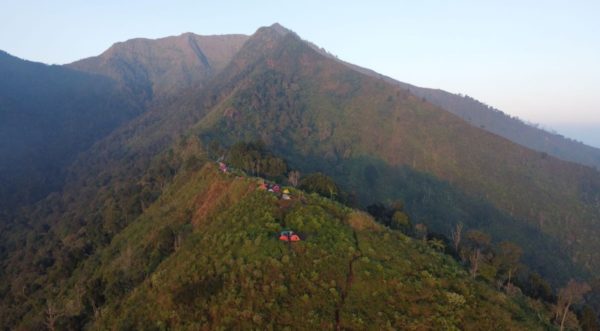
sangar mountain
Figure 4 Sangar Mountain, the location of Sutajaya’s arboretum

He plants these trees in the foothills of Sangar Mountain, a popular hiking track among  young hikers, especially at weekends. He hopes these groups will stop by his arboretum to learn more about native tree species. 

Support from Trees4Trees and TREEO 

Sutajaya is well on his way towards his goal. In 2021, he took a big step forward by joining a tree-planting project with Trees4Trees in collaboration with TREEO. “That was a great opportunity for me to add to my tree collection,” he remembers, “and I really thank Trees4Trees for helping me realize my dream.” 

Planting Trees
Figure 5 Sutajaya, on the ancestral lands he has almost single-handedly helped to re-green.

Together with Trees4Trees, he planted 1,600 sawo, damar, rasamala, and avocado trees, most of which have survived and are growing well to this day. From the sawo and avocado trees, he can harvest fruits to sell. From the damar trees, he collects sap, which also has economic value. The tarum areuy he planted provides leaves for organic fertilizer and fodder for his cattle. But the real value of these trees is something that can’t be bought or sold: a connection to heritage, and a glimpse of a greener future in the Citarum River basin. 

In spite of everything he has achieved, Sutajaya is not satisfied. “There are still many native trees out there that I haven’t inventoried yet,” he says. “I hope I can find them soon.”  

Trees4Trees is working closely with local forest farmers like Sutajaya to restore biodiversity and preserve natural heritage in West Java and beyond. To learn more about our tree-planting activities and get involved, please visit the Trees4Trees website.  

 Writer: V. Arnila Wulandani. Photo: Kemas Duga Muis

10 Iconic Flora & Fauna of the Citarum River Basin: A Showcase of Biodiversity (Part 2)

10 Iconic Flora & Fauna of the Citarum River Basin

Read the previous article on: 10 Iconic Flora & Fauna of the Citarum River Basin: A Showcase of Biodiversity (Part 1)

Trees and Plants 

The landscape of the Citarum Basin boasts a rich diversity with at least 1,000 tree species and 3,000 flowering plants. Some of these species are deeply woven into the local culture, passed down through generations. Many of them also hold significant value that supports the local people’s livelihoods. 

Tarum areuy (Indigofera) 

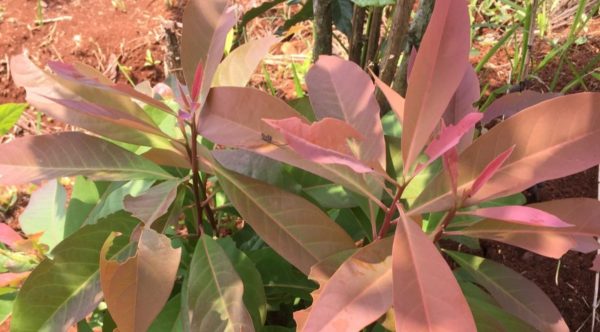
This species refers to the indigo tree, from which the name Citarum is derived. Once abundant along the riverbanks, locals used it as a natural dye for fabrics. They also used the leaves as organic fertilizer and livestock fodder, while the root network was effective in preventing soil erosion. However, the tree is now slowly disappearing due to environmental degradation and extensive development. 

Flora in citarum river basin

Sugar palm (Aren) 

The sugar palm tree (known locally as aren or tangkal kawung) thrives abundantly in the basin. Apart from its ecological function of conserving water, the tree provides communities with income derived from its sap, fruit, palm fibers, and leaves. The locals in the areas surrounding Trees4Trees’ tree-planting sites benefit from making traditional sugar from the sap. 

Rasamala 

The rasamala tree is an evergreen that grows plentifully in the mountainous areas of West Java, including Trees4Trees’ planting sites. Several mountains in West Java are habitats for rasamala trees. These trees provide homes for more than 20 bird species, including the rare bird species like Javan hawk-eagle, and endemic primate, the Javan gibbon (owa jawa). The trees also produce aromatic resin commonly used as a room fragrance, providing a source of income for local people. 

Tree

Saninten  

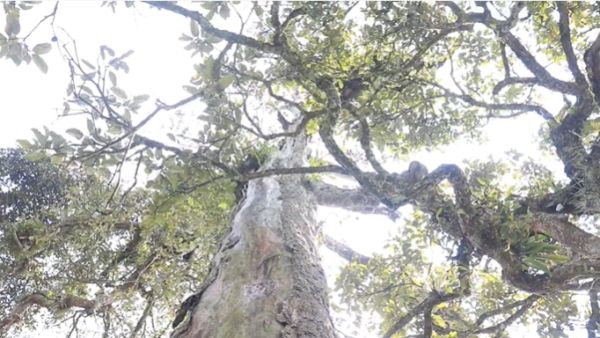
The saninten tree, or forest rambutan tree, is an endemic species endemic to Indonesia, particularly found on the islands of Java and Sumatra. It thrives in mountainous regions. The nuts hold significant economic value, often processed into traditional snacks and sold by local communities. The trees are still relatively abundant in West Java, including in areas where Trees4Trees plants. Unfortunately, in Sumatra, the tree is listed as endangered due to deforestation and land conversion into plantations. 

Saninten tree

Puspa  

The puspa tree belongs to the tea family. People also call it needle wood or Chinese guger tree. It is renowned for its resistance to various soil conditions, climates, and habitats, making it a popular choice for land degradation restoration projects. The puspa tree is native to South Asia, China, and Southeast Asia. In Indonesia, the dispersion of puspa trees spread in Java island, particularly in West Java, making them an iconic tree of the region. 

10 Iconic Flora & Fauna

Trees4Trees’ reforestation efforts in the Citarum Basin aim to enhance the environment through tree planting and local community education, thereby improving habitats for flora and fauna. Through these initiatives, we hope to contribute to the preservation of rare and endangered species. We invite you to join us in planting trees to support and enhance biodiversity preservation. 

10 Iconic Flora & Fauna of the Citarum River Basin: A Showcase of Biodiversity (Part 1)

10 Iconic Flora & Fauna of the Citarum River Basin

The Citarum River Basin in West Java, one of Trees4Trees’ tree-planting sites, encompasses diverse ecosystems ranging from mountainous regions to coastal areas, supporting a rich tapestry of flora and fauna. While the river shelters numerous fish species, the Citarum River Basin is a home to a wide variety of animals as well as an array of trees and flowering plants, some of which are endemic and iconic to West Java. 

Unfortunately, some of these species are listed as endangered and need our contribution to preserve them. Here are some of the iconic flora and fauna that contribute to the biodiversity of the Citarum River Basin. 

Animals

The Citarum River shelters over 20 fish species and is home to a wide variety of animals. Birds are the most abundant, with over 300 species residing in the forested areas of the basin. Additionally, the ecosystem also provides habitat for amphibians, reptiles, mammals, and insects.   

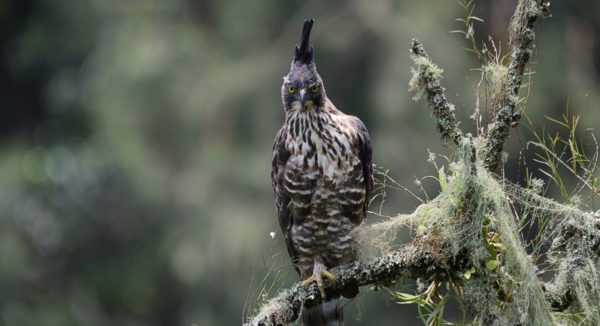
Javan hawk-eagle (Elang Jawa) 

The Javan hawk-eagle is a medium-sized raptor bird with dark brown feathers and a magnificent crest on its head. It holds the distinction of being Indonesia’s national bird and is the emblematic symbol of Garuda Pancasila. Commonly referred to as Garuda, reminiscent of the bird-like creature in Hindu and Buddhist mythology, this species is one of the rarest raptors and is classified as endangered. The Javan hawk-eagle prefers habitats with rasamala trees and primarily feeds on rats. 

Javan hawk-eagle (Elang Jawa) 

Black-crowned night heron  

This nocturnal bird is characterized by its black bluish head, resembling a crown. Its diet includes fish, frogs, water insects, small snakes, and rats, which reside in river streams, ponds, rice fields, and swamps. These birds commonly live alongside the Javan pond heron (blekok sawah) and cattle egret (kuntul kerbau), which also inhabit the Citarum Basin. Unfortunately, the species is now rarely found, and their existence cannot be traced due to habitat loss caused by the devastation surrounding the Citarum Basin. 

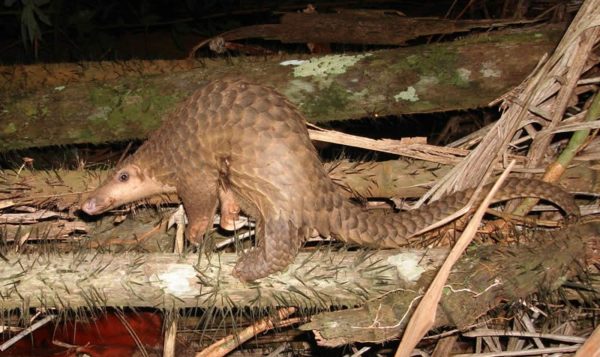
Sunda pangolin (Trenggiling) 

This mammal has distinctive keratin scales covering its skin, resembling armor. Its diet consists of insects, particularly ants and termites, and it lives in hollow trees or burrows, relying on tree cover for its habitat. The Sunda pangolin is currently classified as critically endangered due to facing dual threats: habitat loss and being highly hunted and eaten. 

Sunda pangolin (Trenggiling) 

Sunda slow loris  

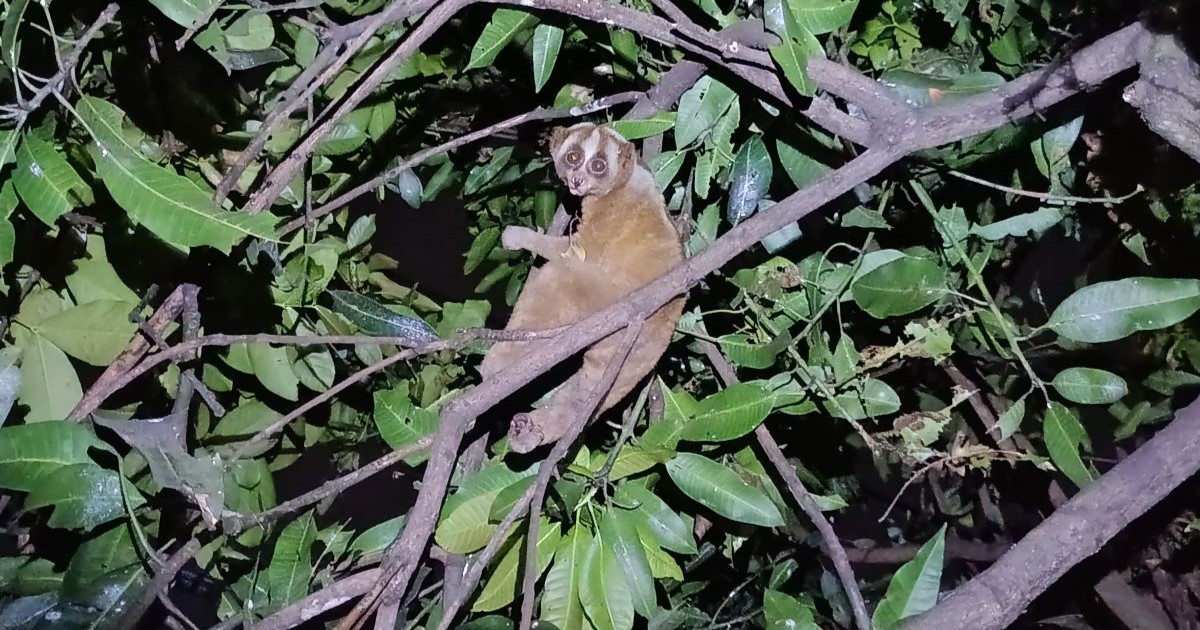
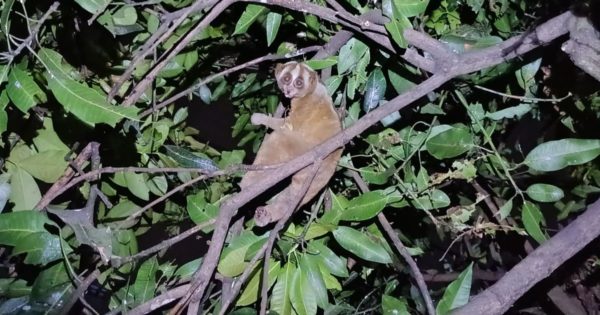
This mammal, the Sunda slow loris, is a protected primate listed as vulnerable by the IUCN. Its existence in the wild is primarily threatened by habitat loss and hunting for the pet trade. The species has a slow reproductive rate and prefers forests with high, dense canopies, such as rainforests, bamboo groves, and mangrove forests. As climbers, they are highly dependent on trees for their behavior and survival. 

sunda slow rosis

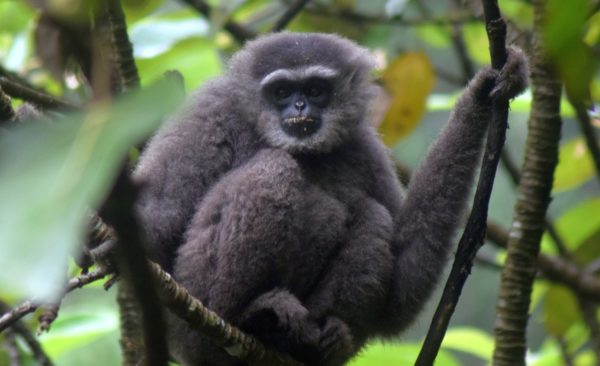
 Javan gibbon 

The silvery gibbon, or Javan gibbon, is a native primate to the island of Java, Indonesia. This species prefers to inhabit undisturbed rainforests at altitudes of up to 2,450 meters. It is listed as an endangered species. Habitat destruction on densely populated Java, including the Citarum Basin, continues to reduce the natural range of this species. Many gibbons are also lost to the illegal pet trade. 

10 Iconic Flora & Fauna in Citarum river


Continue to read the article on: 10 Iconic Flora & Fauna of the Citarum River Basin: A Showcase of Biodiversity (Part 2)

One Woman’s Story: Ratiyem the Farmer and Devoted Housewife

In Indonesia, social convention often dictates that a women’s place is in the home. But Ratiyem doesn’t care about convention. This 46-year-old farmer from Gunungsari Village in Kebumen, Central Java believes women have a right to work and follow their dreams. During her life, she has taken a long, hard road to independence. 

Nothing ever came easy for Ratiyem. Trapped in a cycle of poverty from an early age, her education was cut short when her family couldn’t pay the school fees. Ever since then, she’s been working hard to make ends meet. As a teenager, she took a job as a housemaid in Semarang, 170 kilometers away from her home and family.  

She worked hard in the big city for more than 10 years, but always felt like it wasn’t where she was meant to be. “I liked working in Semarang, because I could make a living,” explains Ratiyem. “But if I kept working there, there would be no-one to take care of my kids and my husband. I knew I had to return to my village,” she added.  

A woman’s work is never done 

After returning to her village, Ratiyem was determined to provide for her children with the education she never had. Together with her husband, she put her time, her heart and soul into working the soil. 

“I had a field measuring about 500 sqm and thought I could make some money by planting cassava and taro, as they’re always in high demand,” she explains. “My happiest moment as a farmer came when harvesting that first crop and the price was good. It made all the effort worthwhile.” 

Ratiyem balances her work as a farmer with her role as a mother and member of her community. “Early in the morning, after taking care of breakfast and getting the kids ready for school, I walk around the village to collect grass for my cattle. Then, I tend to my field and nurture the growing plants.” 

Growing stronger through the tree-planting program 

In 2022, Ratiyem was contacted by Trees4Trees, who invited her to become a grower for a tree-planting program in collaboration with Hong Kong – based TREE Ltd. Through this program, she received free seedlings and organic fertilizer, and was able to develop her farming skills with access to new knowledge.  

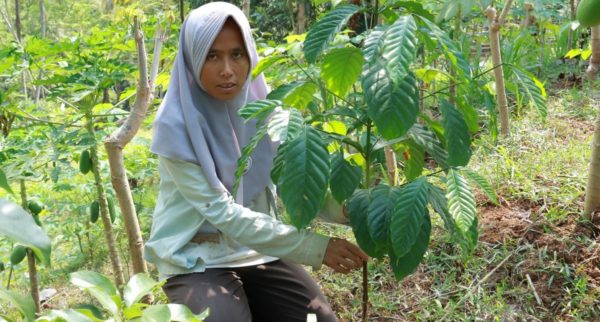
“I received 200 trees, including sengon, suren, and coffee,” remembers Ratiyem, who believes her own personal development will soon be reflected in the growth of her crops and the increased income it brings. “Being part of this program has provided me with a wealth of new farming knowledge through training, especially organic farming methods. This knowledge has made a big difference, as it guides farmers like me in managing our fields more effectively,” she added. 

The importance of independence 

Ratiyem takes great pleasure in being close to nature, living off the land she was born in. “Unlike the big city, where I had to buy all my food, here my fields provide me with everything I need,” she says, before adding that in her role as farmer she also has a responsibility to support food security. 

Through the Trees4Trees program, Ratiyem hopes to provide food for her community and earn extra income to support her family. Looking to the future, she wants to put more food on more tables, by starting up a catering business with ingredients sourced directly from her field. 

“I want to continue working and being productive,” she explains. “To me, it’s vital for women to work and generate income, so we don’t just rely on men to meet daily expenses. As working women, we can play a role in supporting the family financially,” she added. 

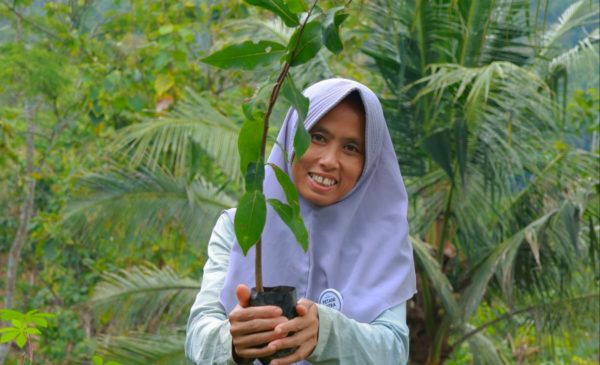
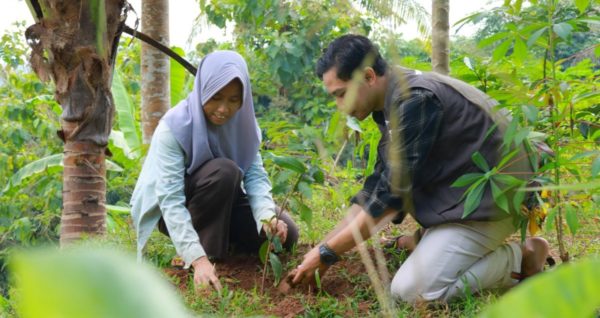
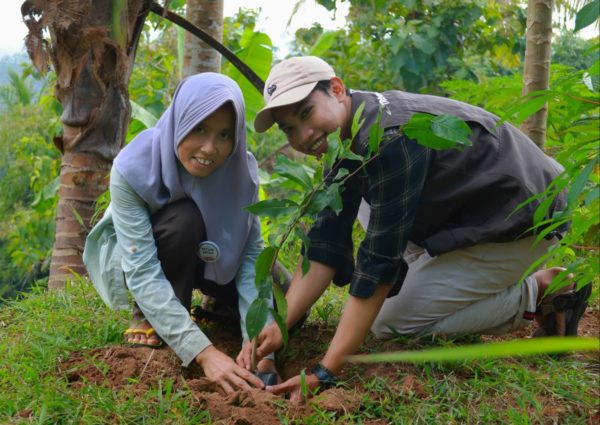
For Ratiyem and the many women farmers like her, independence means more than just following your own path. It is about overcoming obstacles, leading by example, and doing whatever it takes to provide for those who rely on you. With support from Trees4Trees, inspirational women like Ratiyem will continue to be a source of pride to their families and leaders in their communities. 

Writer: V. Arnila Wulandani. Photo: Yulianisa Dessenita

Green Harmony: 6 Ways to Celebrate Earth Day Surrounded by Greenery


Forest

Every day presents an opportunity to support our environment, but Earth Day calls for something special. Observed annually on April 22nd, Earth Day signifies global unity for environmental protection. April also isn’t just about Earth Day; it’s Earth Month, dedicated to promoting environmental preservation. 

While this moment often focuses on raising awareness about safeguarding our surrounding environment, we believe celebrating Earth Day is more than that—it’s about taking action. It’s also not just about doing eco-friendly activities during the celebration; it’s about committing to sustainable habits every day. 

Below, we present ideas to celebrate Earth Day in harmony with trees and greenery, honoring their essential role as the foundation of life on Earth. These suggestions can be seamlessly integrated into your daily habits and lifestyle, spanning from activities at home to outdoor endeavors. Let’s take steps to protect them!

Embracing green hobbies at home 

Contributing to a heathier planet can be done from home by embracing green hobbies. It offers a profound connection to the Earth while enjoying the therapeutic benefits of nature in the comfort of your own space. You can dig into the soil, start gardening, and cultivating vegetables, fruits, or ornamental plants and flowers.  

You can also get creative with eco-friendly art projects using materials from nature like fallen leaves, twigs, and flowers. Create unique décor pieces such as wall hangings and room accents while respecting and preserving the environment.

Green Harmony: 6 Ways to Celebrate Earth Day
Photo: Pexel

Engaging sport within nature

Discovering serenity in nature while nurturing your health is one of the best activities to partake in during Earth Month. Immerse yourself in outdoor activities like mountain hiking, forest jogging, or outdoor yoga to enhance both your physical and mental well-being, while deepening your connection to nature. It can also be easily integrated into our daily lifestyle. 

Commit to growing trees, not just planting

Planting trees may be simple but growing them requires commitment. Committing to plant and nurture trees until they mature is crucial for better supporting our Earth. As we know, mature trees offer immense benefits, from carbon capture to supporting biodiversity and stimulating local economies. Choose for growing native trees to enhance biodiversity habitats.  

If space is limited, consider donating trees with us. We’ll not only plant them on your behalf, but also ensure their thriving growth, enriching the environment. We also partner with local tree growers from the community, bolstering local economies with every tree planted. Whether you plant and grow trees solo or join our initiative, it’s a meaningful way to support our Earth better.

Trees4Trees’ Planting Season 2023-2024

Be a responsible consumer to environment 

When you’re buying nature-based items, such as forest products like honey, wooden furniture, or paper, prioritize products that are responsibly sourced and don’t harm forests or the environment. Look for labels that verify this.  

We are excited to share that products with the Trees4Trees hang tag indicate responsible manufacturing practices, as Trees4Trees plants a tree for each item produced. If you’re a business owner needing environmentally friendly verification for your products, consider teaming up with us to plant trees. Contact us for more information! Contact us to learn more!

Trees4Trees

Leisure time surrounded by greenery 

Spend leisure time in nature for proven physical and mental health benefits. Whether strolling through a nearby park or forest bathing, it’s a serene way to celebrate Earth Day, reducing stress, anxiety, and boosting your immune system. Find a forested area to immerse yourself in the natural setting, surrounded by trees, and listen to the soothing sounds of nature.

Volunteering and applying tree-planting practices

Help maintain forest density by participating in tree-planting events. Thicker forest cover means more carbon sequestration. Volunteer to learn proper tree-planting techniques and contribute to reforestation efforts. Afterwards, you can apply the techniques and knowledge to plant trees in your surroundings to sustain the practice sustainably. 

If you’re interested in hosting a tree-planting event with your community, you can also organize one with us to green our Earth. Contact us for more information! 

Green Harmony: Plant a trees