How do Trees Help Conserve Water on Earth?
(Conserve Water) Water is fundamental for humans and all living creatures. While trees are key players in maintaining water cycles and supplies. They capture rainwater, mitigating natural disasters like floods and landslides. Consequently, the tree cover within healthy forests is crucial for preserving water resources, as it positively impacts the quantity, quality, and filtration of water. Forests help control the water cycle by managing the rainfall, water evaporation, and how it flows through the environment. 

So how exactly do trees help in conserving water, ensuring water availability on Earth, and support our life? 

Incredible ways of trees in conserving and managing water 

  • Trees’ intricate root system removes pollutants and slows the water absorption into the ground. As the result, this process prevents soil erosion near water. It also reduces the risk of sedimentation and floods. 
  • By mitigating soil erosion and prevent sediment from infiltrating storm drains and streams, trees help to clean and enhance water quality. 
  • Trees manage rainwater by intercepting rainfall in their leaves, preventing water runoff, absorbing and stabilizing stream banks with their roots. 
  • According to the Food and Agriculture Association of the United Nations, a mature evergreen tree can intercept more than 15,000 litres of water every year. 
  • When rain falls through the tree canopy, it soaks into the ground and is absorbed by the tree roots. This helps to add soil capacity to hold more stormwater. 
  • The layers of forest canopy, branches, and roots store and release water vapor, which influence rainfall patterns. 


However, when deforestation occurs, this natural water cycle process is disrupted. Sediment flows into streams, polluting the water. Without dense and healthy tree covers which control water evaporation, irregular rainfall patterns may occur, leading to droughts and floods. Consequently, this exacerbates water scarcity and environmental degradation.

Read more: 7 Forests Facts You Need to Know
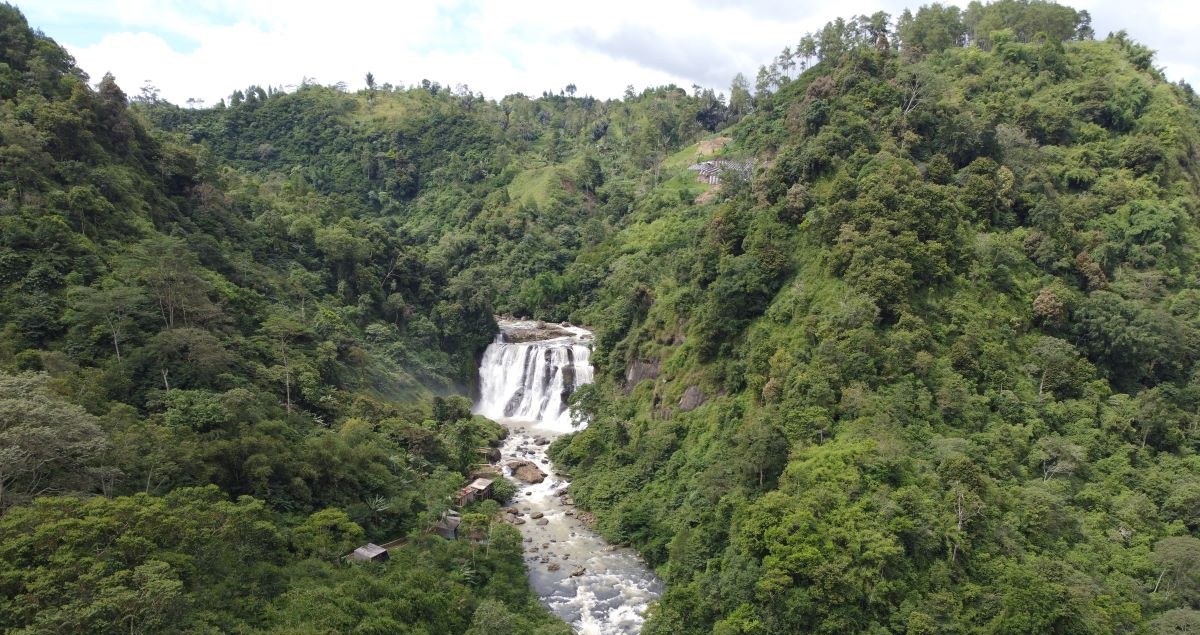
forest
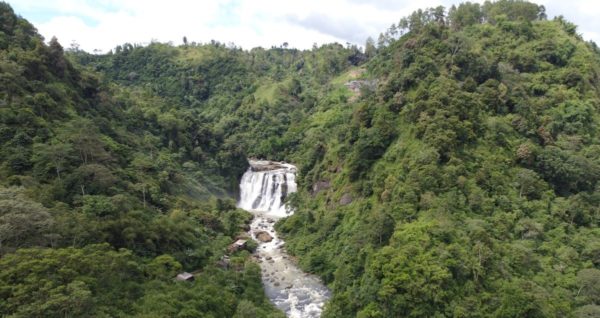
A stream of Curug Buana flows in the middle of forest. It is located in Ciminyak sub-watershed, part of Citarum watershed – one of Trees4Trees planting area. The waterfall is one of the highest in West Java, with 100-metres in height.

Trees for Water Conservation

The rich tapestry of biodiversity in Indonesia—our working area—offers a diverse range of tree species, some of which are essential for water conservation. These species excel in dry conditions, thanks to their deep root systems, drought tolerance, and ability to capture and retain moisture. In addition to the environmental benefit, some trees also bring economic benefits, providing fruits that can be harvested by local communities. Here are some of water conservation tree species that we plant across our working area:  

Sugar palm  

The Sugar Palm belongs to the large palm tree family and can reach a height of 25 meters. It has strong stems and is commonly found near the river and downhill due to its ability to store water.  

Its root system can stabilize the soil and prevent erosion while also having a great ability to hold water from rainfall. Each root can reach a length of 3 meters and each leaf can hold one to two liters of water, giving the soil beneath the tree more time to absorb more water.  In Indonesia, the sugar palm is prized for its sap, used in sugar production, and its fruits, known as kolang-kaling, are popularly consumed as dessert. 
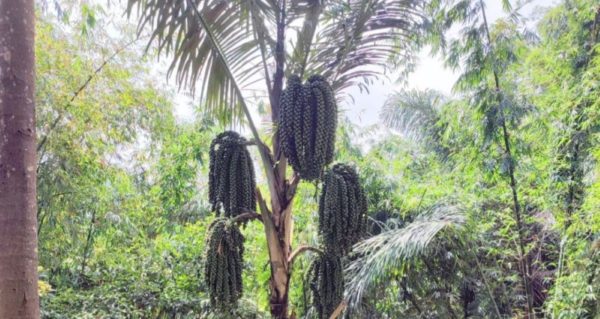
Conserve Water trees
A sugar palm tree in the middle of forest. It is bearing fruits.

Tahitian chestnut  

The Tahitian Chestnut is a multi-beneficial tree with an impressive root system, capable of reaching a height of 30 meters. Tahitian chestnut’s strong and deep roots are useful for absorbing rainwater and protecting water sources.  

The tree also could store large amounts of water near ground level, making it a good water conservation tree for maintaining the availability of water. The Tahitian Chestnut is a symbol of peace and tranquility due to its shading properties. 

Pangi  

The Pangi tree can reach a height of 40 meters and has dense leaves. Its original habitat is in wet tropical rainforests, including those in Indonesia.  

The tree is commonly found in lowlands, particularly on riverbanks. Due to its strong root system, the Pangi tree can prevent erosion on degraded lands as well as protect and green the river basin. It is also popular with its fruit in Indonesia, called kluwak.  

The fruits are widely used in Indonesia as a traditional spice to add flavor and color to soups, making them rich and delicious. 

Trees4Trees Water Conservation Tree-Planting 

Water conservation is one of the key objectives in our reforestation efforts. We’ve planted diverse tree species to advance water conservation, focusing especially on the Kebumen and Boyolali regions of Central Java.
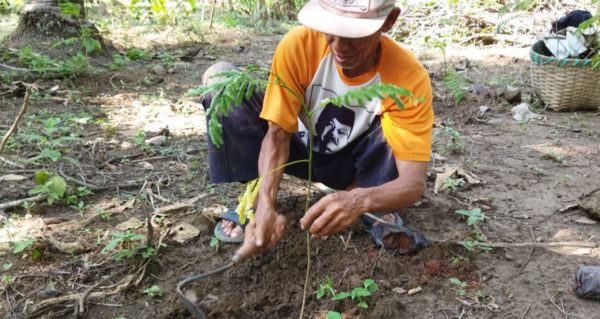
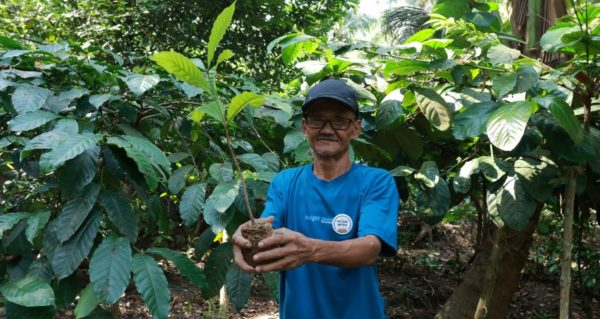
Conserve Water by planting trees
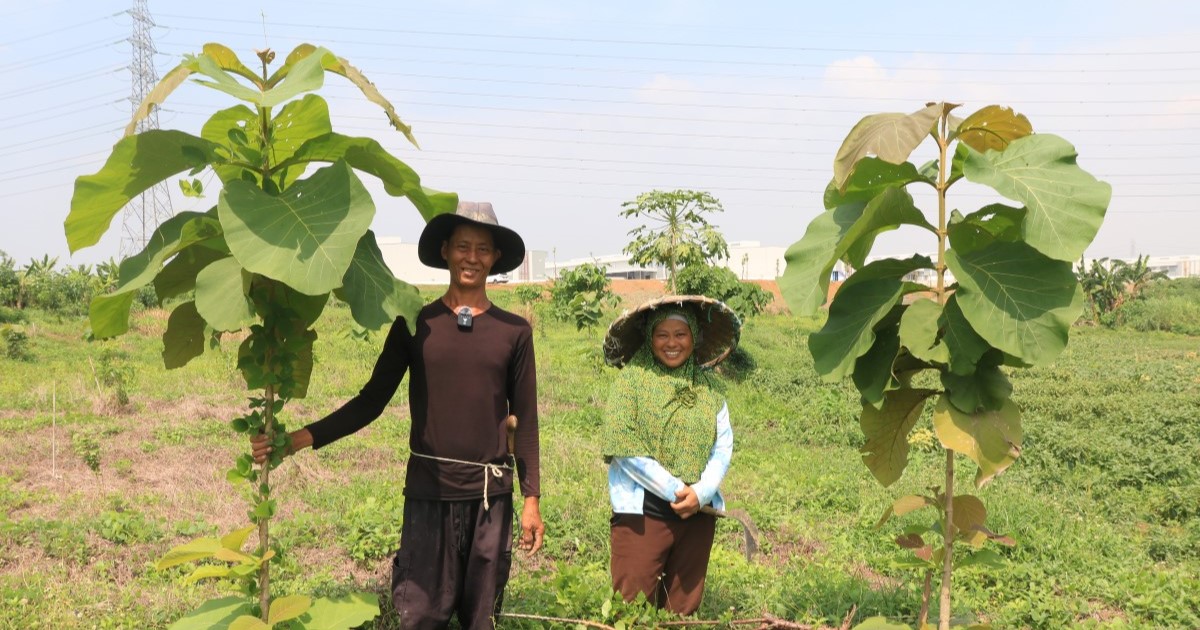
(Above) A tree grower in Boyolali is planting a tree-seedling received from Trees4Trees. (Below) Wasis is one of our tree-grower who successfully restore water spring near his house in Kebumen through planting trees.

Farmer 

Read also: The Story of Wasis: Making a Difference in Water Conservation

The tree-planting aims to help improve the environment, especially by enhancing water sources, ensuring clean water availability for the local community, and achieving the long-term goal of access to clean water. Here, we highlight our water conservation tree-planting efforts. 
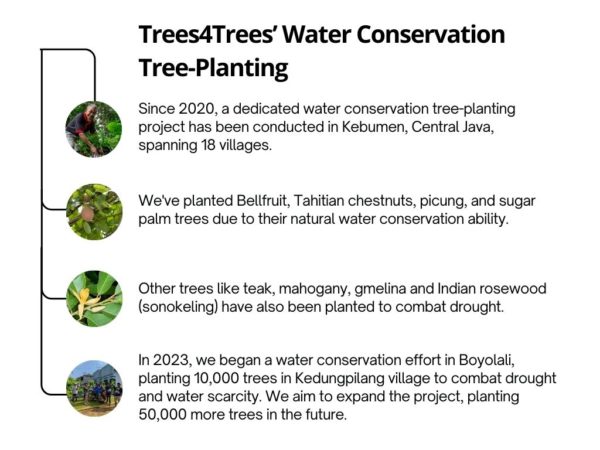
Conserve Water pict

Read more: Trees4Trees tree-seedlings distribution in Central Java and Yogyakarta

As we celebrate World Water Day, let’s acknowledge the important role of trees and forests in protecting our water. Join Trees4Trees in planting trees to conserve water resources! 

Together, we can help the environment and support villages facing drought and water scarcity. Your support is crucial in our mission to restore forests and improve water resources for the future. Let’s work together for a sustainable future. Join us in planting trees today! 

Learn more about Boyolali tree-planting project at this link or contact us through email: info@trees4trees.treesforplant.com
7 Forests Facts You Need to Know

7 Forests Facts
Foto: Pexels

Forests are vital to every aspect of our lives. They provide the air we breathe, the food we eat, the water we drink, and even the furniture we use. As nature’s greatest providers, forests offer invaluable benefits to all living beings on Earth. While forests may thrive without human intervention, we rely on them for essential elements of life. Oxygen and water. 

Every March 21st, we celebrate the International Day of Forests. This celebration aims to raise awareness about protecting forests in our communities. In recognition of forests’ important role, we present fascinating forest facts to highlight the importance of forest conservation.

1. Approximately 31% land surface of Earth is forest cover

According to the UN, as of 2020, forests cover 31% of the total land surface on Earth. It is equivalent to around 4.06 billion hectares. More than a half of the world’s forest cover is spread across Russia, Brazil, Canada, USA, and China. The remaining forest cover is scattered across Australia, Congo, Indonesia, Peru, and India.  

Compared to the previous decade, surprisingly, forest cover has decreased by an estimated 420 million hectares. This is equivalent with the total land mass of the European Union!

2. Different types of forests around the world

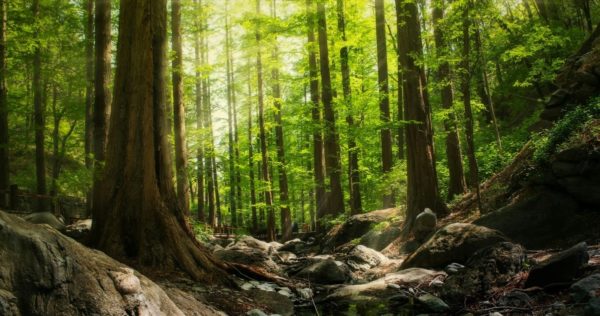
Globally, forests take on various forms influenced by factors such as rainfall, sunlight, latitude, and temperature, which shape their ecosystem. They are broadly classified into three main categories—boreal, temperate, and tropical. Each varying widely based on these factors. 

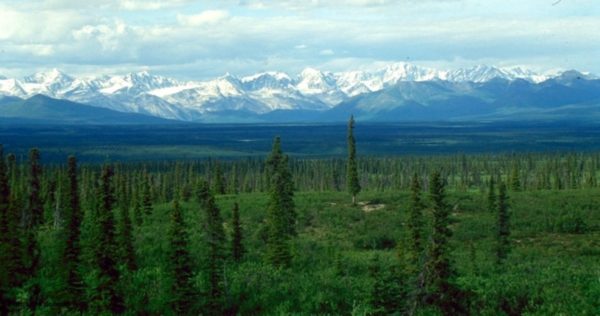
The boreal or taiga forest lies between 50 and 60 degrees north latitude. With a cold climate and short growing season, it’s characterized by low species diversity, dominated by conifers. Temperate forests, found at mid-latitudes, experience four distinct seasons. They are less diverse than tropical forests, with typical trees including oak, maple, cottonwood, and willow. Tropical forests are at 23 degrees latitude near the equator. They are the warmest and wettest forests and represent the most diverse ecosystems on Earth. 

Boreal forest ini Alaska
Boreal Forest in Alaska. Photo: Wikipedia

3. Forests support clean water

Healthy forests play a crucial role in providing clean water. They positively influence its quantity, quality, and filtration. They act as natural filters, preventing pollution from entering the global water system, while their strong roots combat soil erosion. However, when forests are disturbed or degraded, sediment flows into streams, polluting the water. 

Forests also regulate the water cycle. The layers of forest canopy, branches, and roots store and release water vapor, influencing rainfall patterns. Furthermore, forests mitigate flood impacts by slowing runoff flow during storms. However, deforestation will disrupt this process, leading to irregular rainfall patterns, causing droughts and floods. 

4. Forests are storehouses of biodiversity 

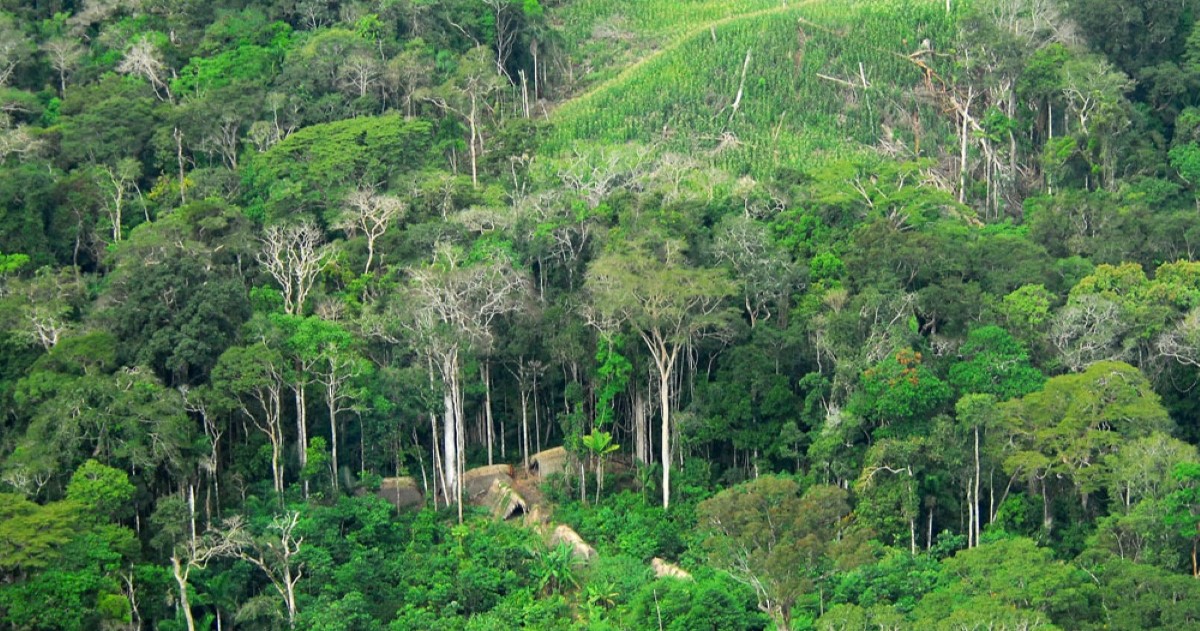
Forests are home to over 50% of the world’s species of animals, plants, and insects. The highest biodiversity ever recorded on land is in the Amazone rainforest, which is also a home for 400 different indigenous groups.  

Other biodiversity hotspots include forests in Borneo, Papua and New Guinea, northwestern South America, and Central America, and the Congo Basin. Some of these forests may be home to more than 300 species of trees per hectare.  

Read also: A Hub of Biodiversity: Exploring Citarum 

5. Amazon Rainforest: The largest forest in the world

The Amazon River Basin, spanning over 6,600 km, hosts the world’s largest forest, the Amazon rainforest. Covering more than half of the total rainforests globally, it spans 6.7 million square kilometers, roughly twice the size of India. 

Nearly 60% of this rainforest is in Brazil, with the remainder shared among eight countries—Bolivia, Colombia, Ecuador, Guyana, Peru, Suriname, Venezuela, and French Guiana.

Forest and Green
Amazon Rainforest. Photo: Wikipedia

Read also: Indonesian Forest One of the Largest in the World 

6. Forests as sources of food and medicine 

Forests are home to a wide array of trees and plants that provide humans with fruits, nuts, seeds, leaves, roots, and barks. These make them crucial sources of food and medicine. In addition, forests provide habitats for insects and a wide range of animals, which also contribute to our sustenance and provide medicinal resources.  

Indigenous communities living in forested areas consider these ecosystems to be their natural supermarkets, as they provide everything they need to survive. By extracting food and medicine from the forest, these communities possess traditional knowledge that has been passed down through generations. Therefore, protecting forests not only preserves biodiversity but also safeguards cultural heritage and improves food security. 

7 Forests Facts
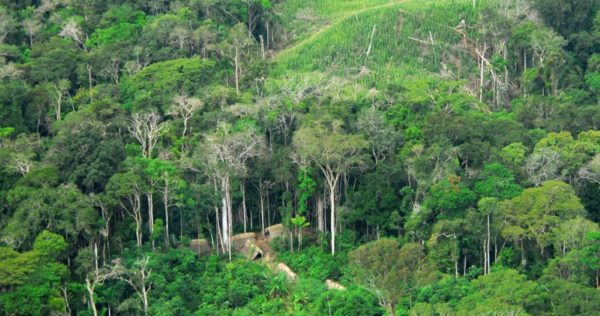
Indonesia Rainforest. Photo: Pexels

7. Forests store massive amounts of carbon 

Forests serve as powerful carbon sinks. They play a crucial role in regulating the global climate by sequestering carbon from the atmosphere. Annually, the world’s forests absorb approximately 15.6 gigatonnes of carbon dioxide, contributing to global climate stabilization.  

Tropical forests are renowned for their diversity and density, containing more kinds of trees compared to other forests. Research shows they are effective at carbon absorption, capable of sequestering four times more carbon than other forest types. However, when forests are burned or cleared, the stored carbon is released into the atmosphere, exacerbating global warming and climate change.  

Read also: Trees That Absorb the Most Carbon Dioxide 

Therefore, engaging in tree-planting initiatives in tropical regions, such as Indonesia where Trees4Trees operates, is vital. Tropical areas offer optimal conditions for tree growth, with extended daylight and conducive environments enabling faster and larger tree growth, aiding in climate change mitigation. Learn more about planting trees with us! 

Farmer Story: Dayat Discovers a New Sense of Purpose in Saguling

Farmer story Partner of trees4Trees from Bandung

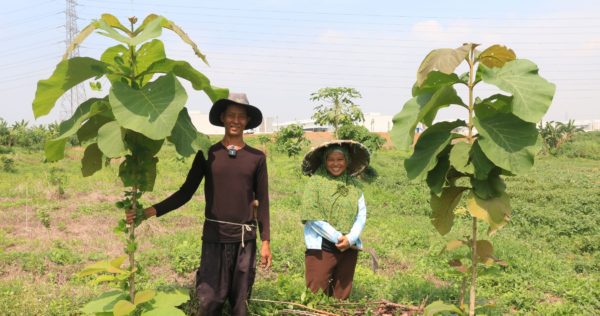
Farming is therapy for me when I am alone,” explains 75-year-old Dayat, as we explore his little plantation at the edge of Batulayang Village.  Since his wife passed away, Dayat spends most of his time alone nowadays. Most of his six children live far from home and rarely come to visit.  

Dayat owns a plot of land spanning about 0.12 hectares and overlooking the Saguling reservoir in Bandung, West Java. The bananas and Albizia trees he grows here have long been his main source of income. But this income is anything but certain. “As I am getting older, I want to find a more stable way to make a living,” he explains. 

Dayat recently joined the Trees4Trees planting program., He was given seeds, fertilizer, and training, and then began planting Jabon, Manglid, Gmelina, and Durian trees. “These plants thrive in my land and are worth more than bananas,” he says. Funded by AstraZeneca Forest and supported by Trees4Trees and One Tree Planted, this program is helping change lives and rejuvenate landscapes in West Java.

Branching out, but rooted in local tradition 

Dayat has been farming the fields around Cililin, Bandung, since he was a young man. Since then, he’s seen many people leave the village and head for the big city. But he prefers to stay put, caring for the land he inherited from his parents. He says the tree-planting program has given this land a new lease of life. 

“What I most appreciate is that all the tree seedlings and organic fertilizer I received were provided free of charge,” explains Dayat. I can’t help but wonder how I would have managed if I’d had to purchase them myself, as my income barely covers my daily living expenses,” he added. 

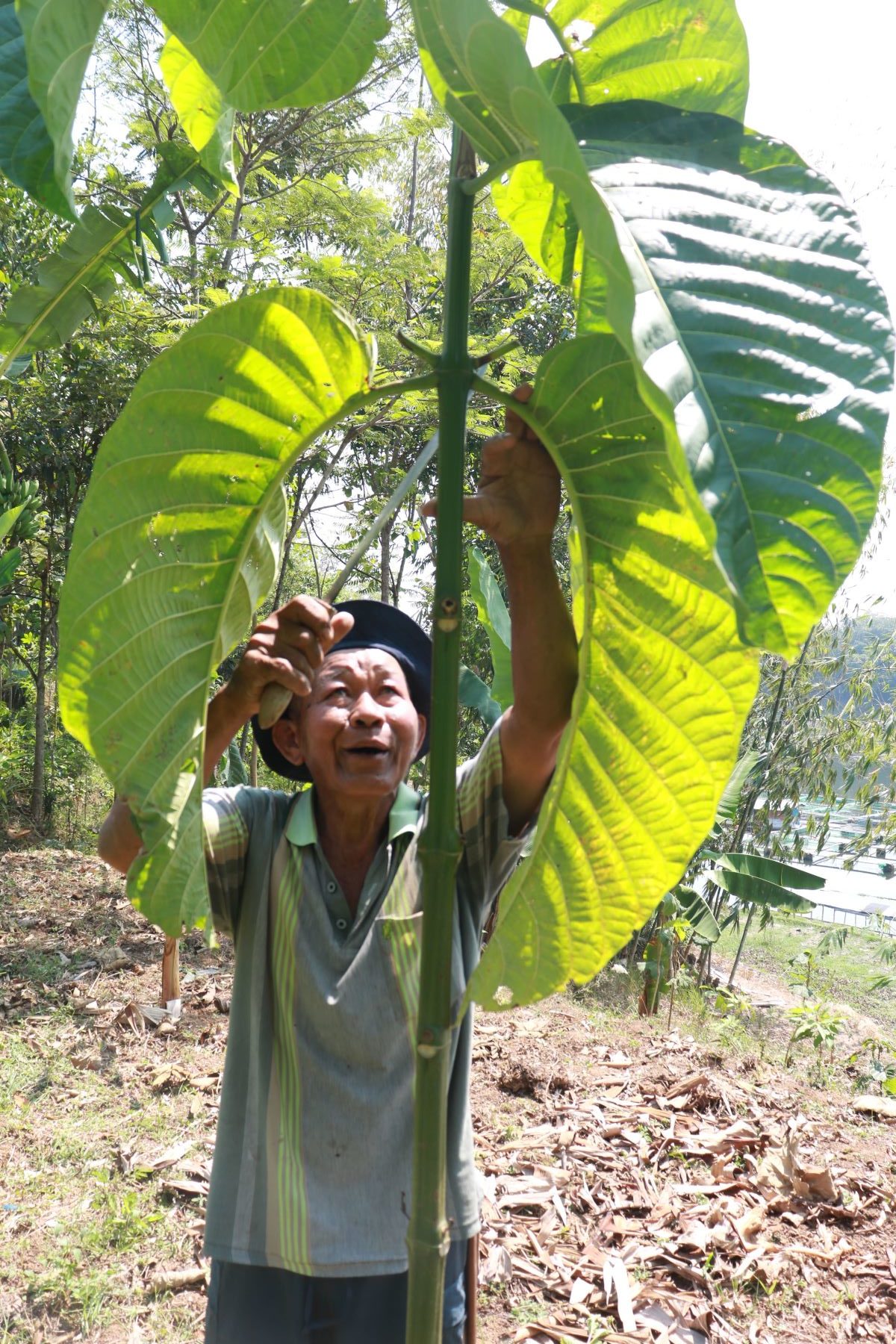
Daat and his tree

Farmer story; Dayat
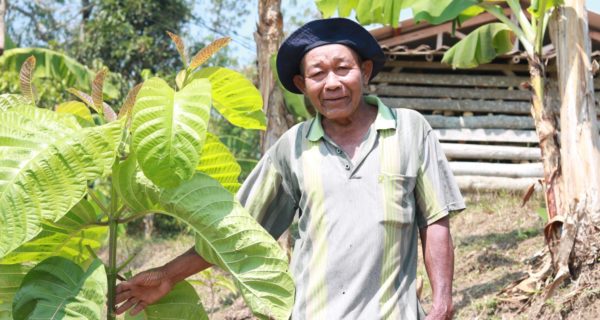
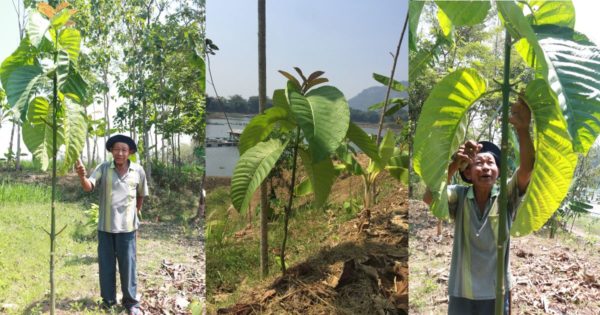
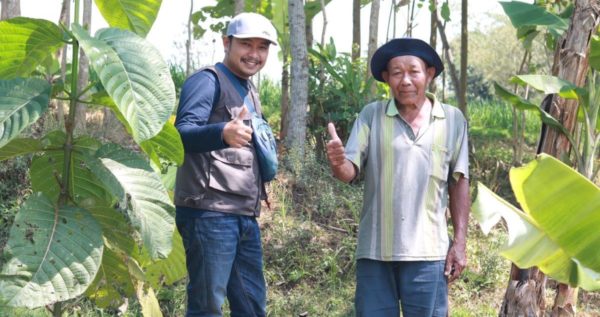
(Above) Dayat shows off his new crop of Burflower-tree (Jabon) 

New growth, new opportunities for development 

Of all the new seedlings, Dayat says jabon (Burflower) trees are best suited to his land,. as they grows quickly and offer income from timber. “After being cut, (the tree) regenerates from new shoots on the stems all by themselves,” says Dayat.  

Since witnessing the fruits of his recent labor, Dayat is already making big plans for the future. “If I’m fortunate enough to enjoy a longer life,” he says, “I look forward to harvesting and selling durian fruits.”  

Farmer story
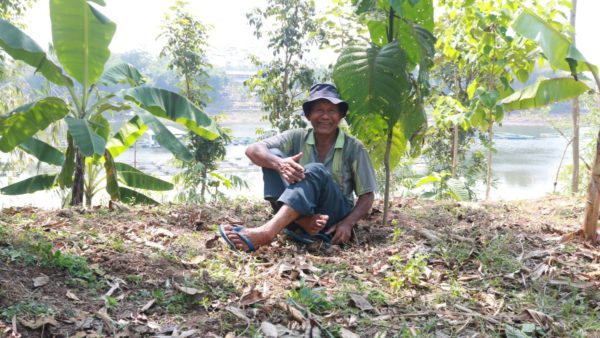
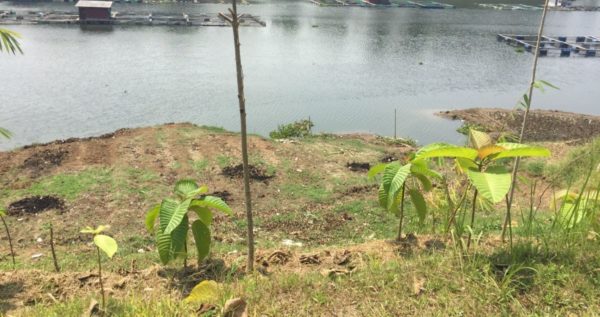
(Above) Dayat’s trees line the banks of West Java’s Saguling Reservoir

Providing benefits to the surrounding landscape 

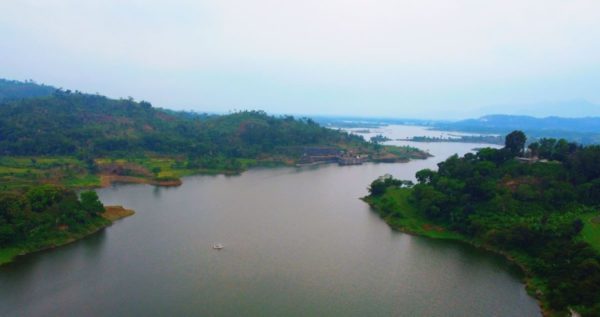
Covering an area of over 5,000 hectares, the Saguling reservoir generates electricity that supplies power to Java and Bali. On its banks are agricultural lands owned by local communities and smallholders like Dayat. 

Over the years, erosion has become increasingly common in these lands, causing soil to be carried away by the current and increasing sedimentation within the dam. This has a knock-on effect for local fisheries and jeopardizes the energy supply. Dayat sees tree planting as a way to counter these issues. 

“My motivation for planting trees extends beyond the economic benefits,” says Dayat, whose new trees are helping combat erosion along the banks of the Saguling. “I believe I am making a meaningful contribution to the well-being of many people whose livelihoods depend on this dam,” he added. 

Waduk Saguling
(Above) The Saguling Dam, one of three reservoirs on the Citarum River, and (Below) Dayat is visited by the Trees4Trees Unit Manager.

Farmer story

Remarkable skill and valuable experience 

Ever since he joined the tree-planting program, Dayat has demonstrated his commitment to caring for trees. He’s also applied the knowledge gained from farmer training, which covered the use of organic fertilizers. 

“Out of the 375 trees Dayat received, more than 90% have gone on to thrive,” explains Dian Wardana, Trees4Trees Unit Manager for the Ciminyak 1 working area, where Dayat’s plantation is located. “This is a testament to his remarkable skill and dedication.”  

Dayat attributes this success to his meticulous care for all his trees. “I treat them like my own children and only use organic fertilizers that are gentle to my land,” he says. Being recognized as a top farmer is a great honor – I am grateful to Trees4Trees and their supporters, who have provided me with free seedlings, free organic fertilizers, and the knowledge, especially at my age,” he said. 

Writer: V. Arnila Wulandani. Editor: Christopher Alexander

Tips: Easy Ways to Show Love Languages to Mother Earth

Are you familiar with the concept of love languages? If you haven’t heard it before, you may learn about this concept here. Valentine's Day – which is just around the corner – might be a great moment to express affection using one of these preferred languages to our special someone. Love languages, as defined by Dr. Gary Chapman in his book "The Five Love Languages," encompass the distinct ways individuals express and interpret love. These languages include physical touch, words of affirmation, acts of service, receiving gifts, and quality time. While people commonly employ these five love languages to demonstrate love and affection to family, partner, friends, and others, we can also extend these expressions of love to showcase care for our Mother Earth and the environment that surrounds us. Here, we share our top tips for expressing love to our beloved planet through the five love languages!

Photo: Freepik

Are you familiar with the concept of love languages? If you haven’t heard it before, you may learn about this concept here. Valentine’s Day, Anniversary Day, or other momentous day like Birthday – might be a great moment to express affection using one of these preferred languages to our special someone.  

Love languages, as defined by Dr. Gary Chapman in his book “The Five Love Languages,” encompass the distinct ways individuals express and interpret love. These languages include physical touch, words of affirmation, acts of service, receiving gifts, and quality time. 

While people commonly employ these five love languages to demonstrate love and affection to family, partner, friends, and others, we can also extend these expressions of love to showcase care for our Mother Earth and the environment that surrounds us.  

Here, we share our top tips for expressing love to our beloved planet through the five love languages! 

Physical touch  

For people who express love through physical touch, gestures like hugs, kisses, or holding hands make them feel safe and comfortable. While we can’t physically touch the planet in the same way, there are alternative ways to connect. Here are some ways to use this love language and engage with the Earth: 

1. Gardening or planting trees and plants at home 

2. Engage in environmental events, such as tree-planting events. You and your community can conduct a tree-planting event with Trees4Trees. Contact us to plan your event! 

3. Feel the texture of soil, water, or plants by running your hands through them when you are in nature  

4. Immersing ourselves in bodies of water, whether for swimming or canoeing 

tips; planting a tree

Photo: Freepik

Words of affirmation  

Praise, appreciation, and other verbal compliments are part of the words of affirmation love language. These affirming words encourage those around you to actively engage in caring for our Earth. Here are ways to apply the words of affirmation love language to our planet: 

1. Sharing eco-friendly tips on your social media  

2. Recommend sustainable reads, movies, or documentaries to your friends  

3. Engage in discussions about sustainable living habits with friends and family 

Quality time  

Enjoying quality time with our Earth can be one of the most delightful ways to do it. It’s also a highly visible way to demonstrate our love for the environment. This involves being fully present, engaged, and attentive while spending time in nature to deepen our connection. Utilize the quality time love language to express love for the planet by: 

1. Spending hours on outdoor activities, such as hiking trails, seeking scenic views, exercise, or birdwatching.  

2. Having a zero-waste picnic with friends or family  

3. Journaling or reading outdoors in the garden or amidst greenery. 

outdoor activities

Photo: Freepik

Receiving gifts  

The joy of receiving gifts is something that resonates with everyone. Expressing love through a gift goes beyond the tangible item; it encompasses the time, thought, and effort invested. While we can’t directly buy a gift to bring happiness to the planet as we do for our friends or family, we can consider these thoughtful gifts for our Mother Earth: 

1. Reduce the waste we generate that ends up in landfills and oceans. It will be a truly meaningful gift to Mother Earth! 

2. Instill a love for nature and the environment in our children and grandchildren. 

3. Donating to eco-organizations or green movements to support causes such as tree-planting, endangered species protection, or climate action. You can also give a gift of planted trees to your loved ones with us. Learn more here how to get involved. 

Tips; plant a tree

Photo: Freepik

Acts of Service  

Indeed, actions speak louder than words. While acts of service towards other people make them feel loved and appreciated, extending acts of service to our planet contributes to the well-being of the environment, ensuring its safety and protection. These actions can have both direct and indirect impacts. Consider the following ways to apply this love language to the planet: 

1. Clean the streets and pick up litter in your neighborhood. 

2. Compost all your food waste and other organic waste 

3. Embrace eco-friendly and sustainable changes in your life, such as starting to reuse, recycle items or using organic materials 

4. Volunteering to conservation group or environmental community, such as cleanup or tree-planting community 

Love is a language universally spoken, and each person has their preferred love languages and strengths in expressing themselves comfortably. So, which love language have you recently shown to the planet? Remember to share more love languages this Valentine’s Day to make it even more meaningful. 

Read more: 10 Eco Friendly Activity Ideas to Enjoy with Loved Ones

Trees4Trees 2023 Green Journey

Reforestation_urban forest_trees4trees

Green Journey; Reforestation_urban forest_trees4trees

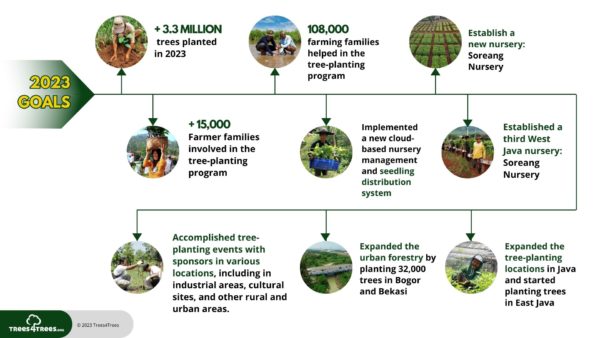
Green Journey; The year 2023 is coming to an end, and a new year is on the horizon! Despite facing challenges such as a prolonged dry season and the impact of the El Nino phenomenon, Trees4Trees remains steadfast in its mission to green the environment. It includes supporting areas affected by drought and water scarcity through tree planting.  

The Trees4Trees planting season is currently in progress and is scheduled to continue until early 2024, leading to the planting of more trees. This initiative is expected to generate larger impacts on the environment, social aspects, and the economy.  

Therefore, we express our gratitude to the individuals, companies, and organizations that have supported our green mission throughout the year. Your remarkable support as sponsors and donors has enabled us to achieve new milestones in 2023, and we are eager to share them with you. 

TREES4TREES 2023 REFORESTATION JOURNEY 


Green journey; reforestation goals_trees4trees

Looking ahead to 2024, we are steadfast in our commitment to expanding tree planting efforts. This involves over 20,000 farmers in 231 villages across various regions in Indonesia. You, your organization, or company can actively contribute by becoming sponsors and donating trees to support this cause. For more details, please reach out to us at info@trees4trees.treesforplant.com. 

 As the new year approaches, it provides a timely opportunity to adopt green resolutions and resetting habits that promote a sustainable lifestyle. Through these changes, we collectively contribute to the well-being of our planet and secure a better future. Additionally, consider gifting trees as a meaningful and eco-friendly New Year’s present. 

 GIFT TREES

Wishing you a joyful New Year! Continue making a positive impact on Earth by participating in Trees4Trees tree planting initiatives.  


Travels in Java: Take a Dip in the Cibolang Hot Spring

Cibolang Hotpsring Pengalengan

Cibolang Hotpsring Pengalengan

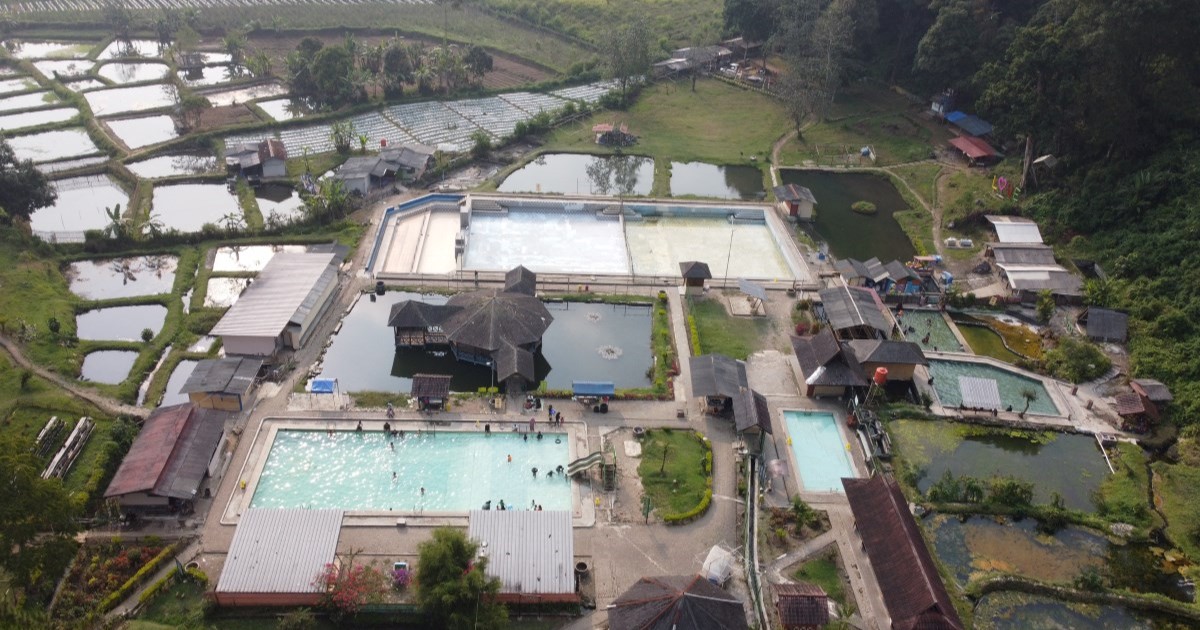
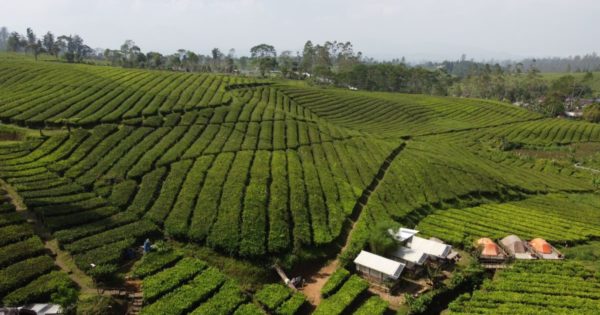
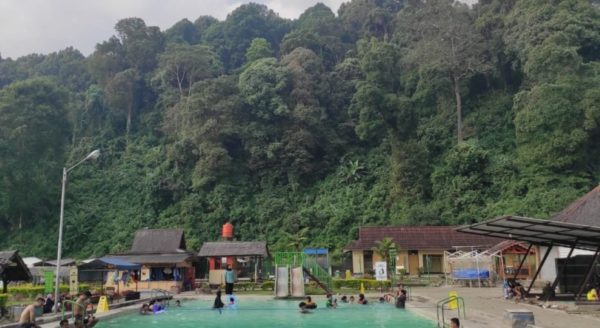
Travels in Java; Located around 30 miles (50 km) south of Bandung in Pengalengan, West Java, the Cibolang hot spring is surrounded by the beauty of nature. Now, with its growing reputation among tourists, Cibolang is bringing new meaning to the term ‘hot spot’.  

In the surrounding landscape, visitors can roam around scenic tea plantations, dial up the adrenaline with river rafting trips, hike in the misty mountains, or simply unwind in the warm, volcanic water of the hot springs.  

Perched at an altitude of 4,750 feet (1,450 meters) above sea level, Wanasuka Village is home to the 2-hectare Cibolang hot spring. It takes about two hours to get there from Bandung by car, on a journey through the verdant landscapes of West Java.  

Cibolang Hotpsring Pengalengan

Tucked away between two mountains 

At journey’s end, the Cibolang hot spring sits in the foothills of twin mountains, called Wayang and Windu. Up here, the air is cool and fresh, with temperatures rarely edging over 68 degrees Fahrenheit (20 Celsius). All around, fragrant pine trees and colorful calliandra combine to create the feeling of a secret glade in the forest. 

According to local traditions, the mountains here are sacred places where gods reside. They are also the wellspring of the Citarum River, which flows from seven springs in Wayang mountain to a lake called Situ Cisanti, before joining the Citarum tributaries. Peoples say the water that trickles down from the mountain is divine, as it comes direct from the gods. 

And the Cibolang hot spring is certainly a heavenly place to spend the day. The volcanic heart of the mountain warms the spring waters to temperatures between 104 and 115°F (40-46°C), creating a kind of natural bath or jacuzzi, tucked away in the forest.  

Travels in Java Cibolang Hotpsring Pengalengan

What to do in Cibolang Hot Spring  

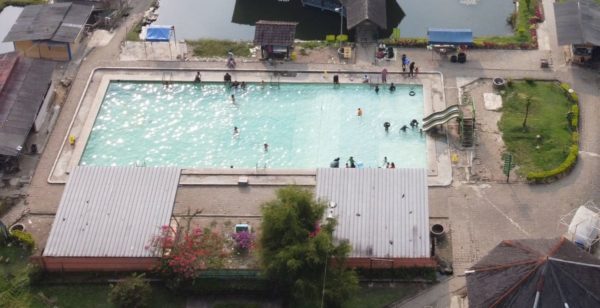
Established in 1990, the Cibolang hot spring complex provides visitors with access to three main pools, each filled with natural hot water that flows direct from the mountains.  

Entrance tickets are just Rp25,000 (US$ 1.60) per person, and you can even grab yourself a private pool ticket for Rp40,000 (US$ 2.58) per person. This is a great way to let off steam with family and friends. 

Travels in Java

The Cibolang hot springs are open 24 hours a day, seven days a week. To get the most out of your trip, follow our top tips: 

 Top Tips: Visiting Cibolang Hot Spring 

  • Visit in the early morning and late afternoon, when the atmosphere is serene and magical 
  • The water is like a hot bath, so dip your toes first and acclimatize to the temperature 
  • Rent a mat and enjoy a picnic with friends and family 
  • Grab yourself private pool, then sit back and enjoy the view  
  • Don’t forget to bring a swimsuit! 

Keeping Cibolang Green 

Travels in Java: Take a Dip in the Cibolang Hot Spring

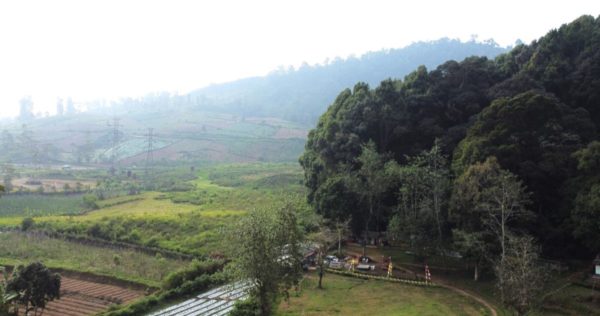
Forest and farmland surrounding the hot springs. (Photo: Trees4Trees/Kemas Duga Muis) 

As part of our commitment to preserving the upstream regions of the Citarum River, which includes the Cibolang hot springs, Trees4Trees has been busy planting trees to keep the area green and healthy. 

Since 2022, our replanting program has been hard at work around the villages of Wanasuka and Banjarsari, with 54,000 trees planted in strategic locations. “We specifically planted trees on local farmland, to help the environment while also supporting local farmers,” explains Muhammad Anggy, Trees4Trees’ Cisangkuy Unit Manager.  

These activities provide a range of benefits to the local landscape, from ensuring the availability of water sources, to preventing erosion, and preserving the hot springs, which provide a source of income for many people living in the area. But this is just the beginning. Around 61,000 trees will be planted in Wanasuka and Banjarsari village by the beginning of next year (2024).

Zeni is Trees4Trees’ Field Coordinator for these two villages in Cisangkuy. He hopes these replanting efforts can make a big difference in the near future. “By adding more trees, we aim to preserve the hot spring and the foothills of the twin mountains that form part of the upstream Citarum river,” says Zeni. “By improving upstream areas at the source of the river, we also hope to benefit downstream areas, bringing prosperity to local communities and returning the Citarum to its natural state.” 

Writer: V. Arnila Wulandani. Editor: Christopher Alexander