From Rural to Urban: Expanding Green Commitment Across Jakarta’s Buffer Zone
From Rural to Urban

Tree Planting in Curug Cibingbing_Trees4Trees

As the largest metropolitan city and Indonesia’s capital, Jakarta’s hustle bustle comes with significant environmental challenges – from air pollution to declining of water and soil quality. However, the intense development pressures extend beyond the city itself, affecting surrounding buffer zones both in rural and urban areas, including Bogor to the south and Tangerang to the west. 

About 60 kilometers from the center of Jakarta City lies Mount Pancar in Sentul, Bogor – a mountainous landscape where many Jakartans escape their routines to break for a while, just to enjoy the nature and scenic view. Unfortunately, the area’s growing popularity has created a new pressure. Not only does the rapid development by the business and shopping centers occur, but every weekend, traffic becomes congested and the site is flooded with visitors, making it increasingly urgent to preserve the natural integrity.  
From Rural to Urban
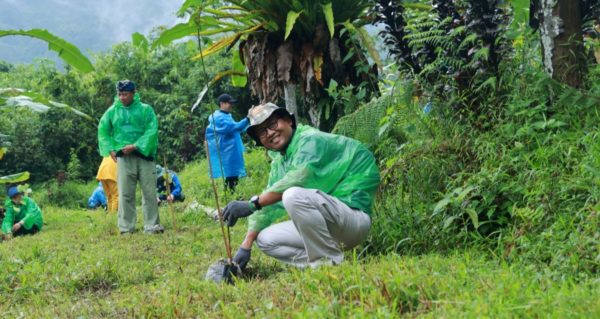
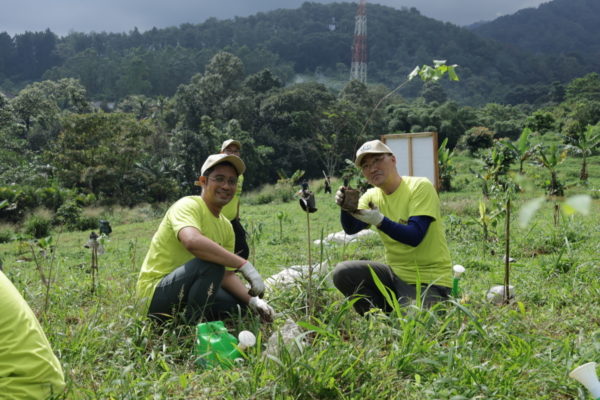
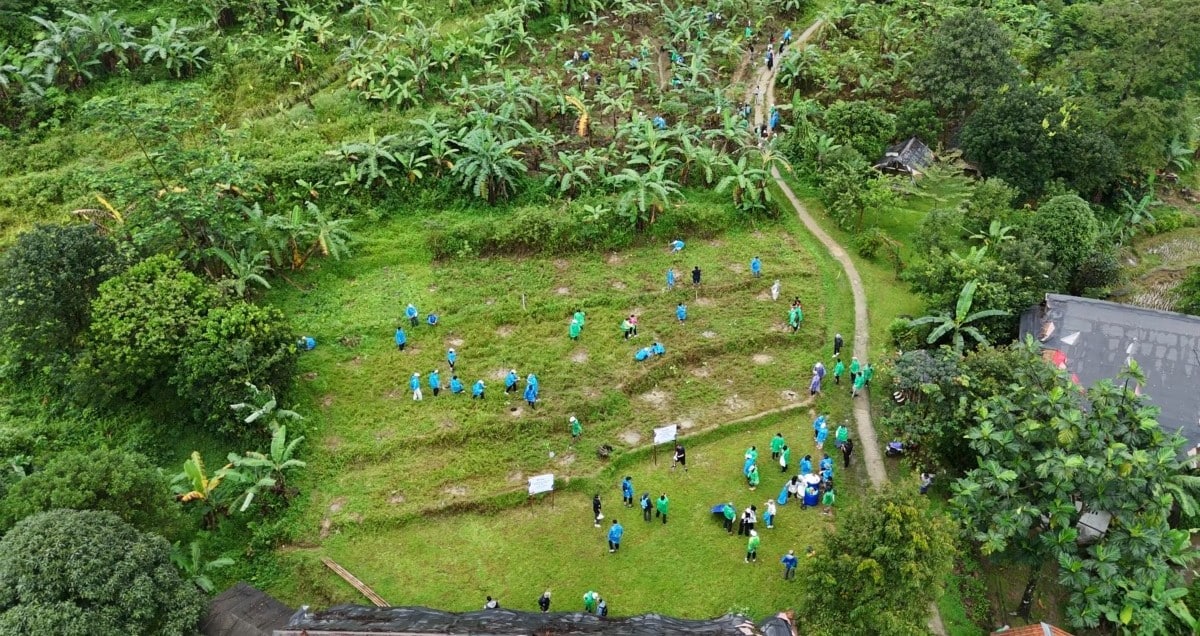
Sumitomo Group together with Trees4Trees planted trees along the hiking trails of Cibingbing Waterfall in Bogor, West Java.

Strengthening Rural Erosion Prone and Sloping Area 

Cibingbing waterfall, part of Mount Pancar complex, attracts large numbers of visitors every weekend with its hiking trails and river activities. The waterfall is one of four waterfalls in the area, all known for their strong water discharge. Yet its steep slopes and terrain make the area highly susceptible to erosion and landslides. As human activities increase in the area, the risk of tree cover loss also rises, heightening the threat of landslide and flooding.  

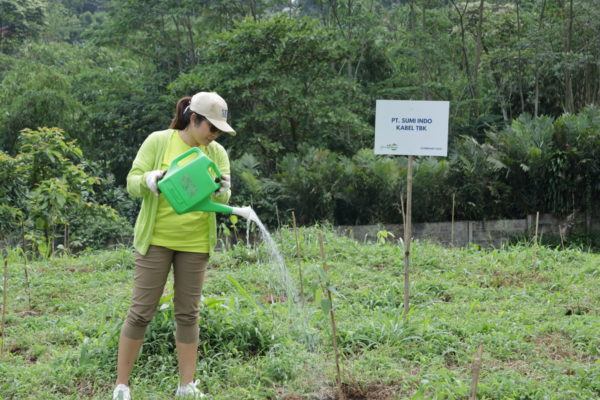
To support this area, Sumitomo Electric Group Indonesia and Sumi Indo Kabel, together with Trees4Trees, planted 300 trees on vulnerable slopes near the waterfall. “The planting focuses on erosion control and water conservation,” said Khoirum Minan, Trees4Trees Project Manager. According to him, the trees are also expected to help protect river streams and maintain water reserves during the dry season, enhance oxygen supply, provide shade, improve the landscape, and offer non-timber benefits for local communities. 

This effort continues the companies’ environmental commitment, following last year’s planting of 2,000 trees in the foothills of Mount Salak, another rural area of Bogor. 
Tree Planting in Curug Cibingbing_Trees4Trees
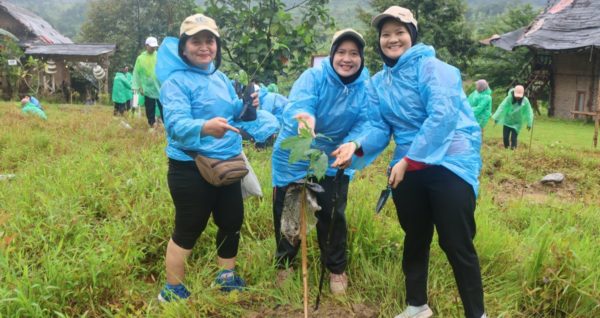
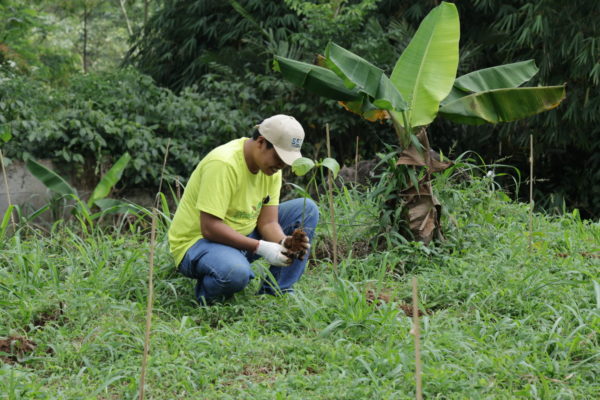
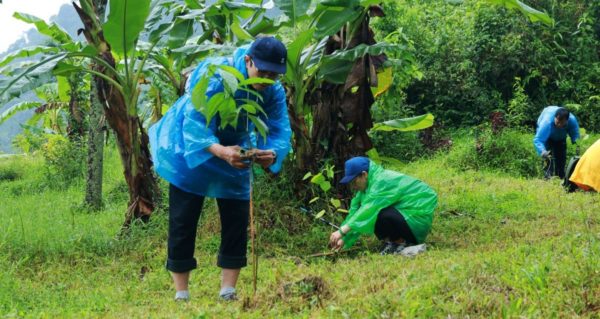
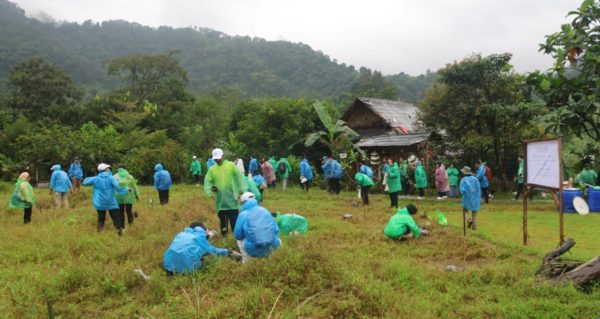
(Above) Both fruit and hardwood trees were planted to offer benefits to the environment, tourism, and local communities. (Below) All day hard rain had not stopped the spirit of volunteers from planting trees.

Tree Planting in Curug Cibingbing_Trees4Trees

Planting Trees Together, Nurturing Well-Being in Nature with Hiking 

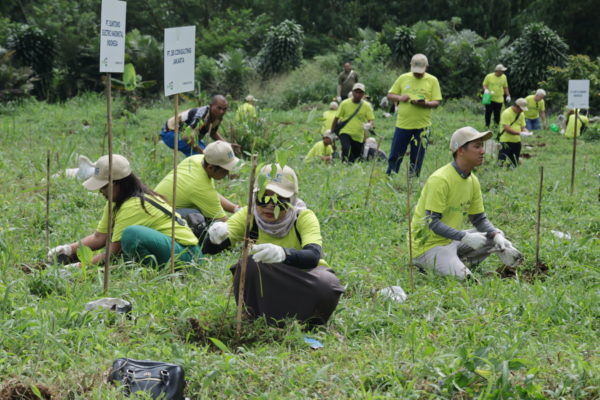
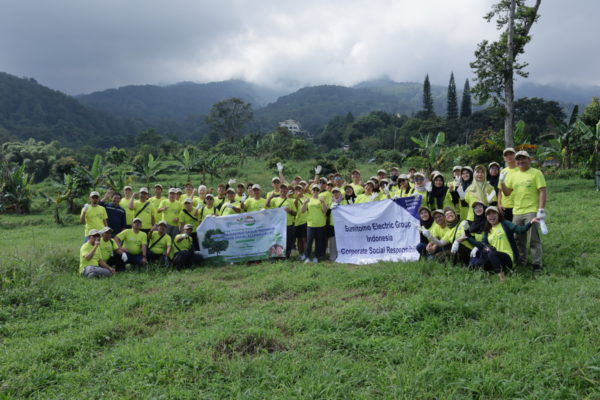
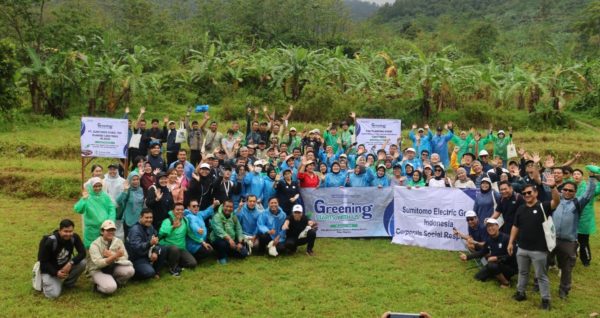
Taking place along the waterfall hiking trail, the tree planting involved employees from nine subsidiaries of Sumitomo Group, with over 100 participants joining as tree planting volunteers. “Albizia, cadamba, avocado, and nutmeg were selected as the area is well suited to these species, accelerating their chances of healthy growth and survival,” said Khoirum Minan. 

Eva, the Sumi Indo Kabel HR emphasized that representatives from most subsidiaries took part in the tree planting, as engaging employees is an integral part of their sustainability program. “By involving them to this activity, we hope to raise awareness and instill both knowledge and a spirit of environmental stewardship among our staff,” she said.  
From Rural to Urban
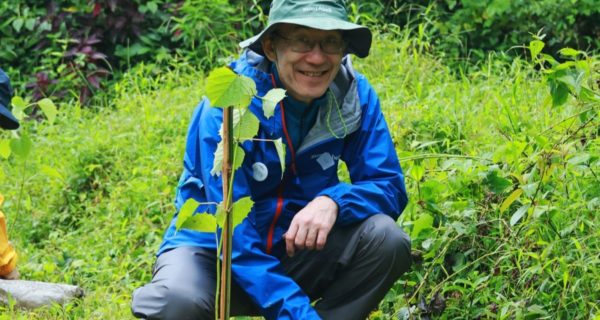
(Above) Employees of the Sumitomo group joined the tree planting event. (Below) Masashi Fukui, the Sumitomo’s global sustainability program person in charge, joined the tree planting event.

In line with Eva’s statement, Masashi Fukui, Executive Officer of Sumitomo Electric Indonesia and the person in charge for Sumitomo’s global sustainability program, emphasized the involvement of team members is crucial to achieving their sustainability goal. “At Sumitomo, we go beyond generating profits – we are committed to giving back to society and the environment. This tree-planting event is part of our global CSR program, engaging employees in caring for nature and supporting local communities,” he said. 

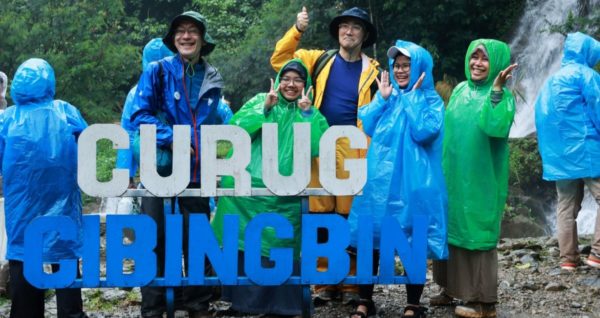
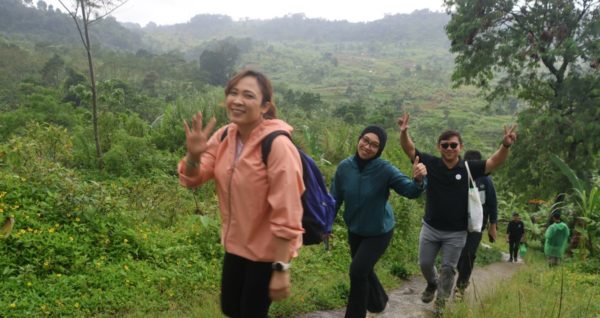
Alongside the tree-planting activity, the program also included a two kilometer-hiking trip to the waterfall, offering staff members wellness experience immerse in nature and a moment to reflect on how deeply human life depend on nature “This is not only about contributing to nature, but also about giving our volunteers the opportunity to reconnect with and enjoy nature itself,” said Eva. 
Tree Planting in Curug Cibingbing_Trees4Trees
Hiking to Cibingbing Waterfall after tree planting, offering volunteers an outdoor activity by immersing in nature.

Tree Planting in Curug Cibingbing_Trees4Trees

Expanding Green Commitment: Creating Urban Forest 

As carbon reduction is one of Sumitomo Group’s global sustainability goals, the tree-planting program goes beyond greening rural areas. After planting in rural Bogor, the initiative expanded to Tangerang City, where the Sumi Indo Kabel office is located.  

In this urban area, the program focuses on creating an urban forest by planting an additional 2,300 trees. Serving as the company responsibility to the surrounding environment, the initiative aims to increase green spaces to help address air pollution, urban heat, and declining water and soil quality – environmental pressures facing Tangerang as one of Jakarta’s rapidly developing buffer zones.  
Tree Planting in Curug Cibingbing_Trees4Trees
Engaging employees is an integral part of Sumitomo’s global sustainability program, achieving carbon reduction through rural and urban tree planting.

Mario Eko Cumentas, Chairperson of the Sumitomo Electric Group Indonesia Area Committee, emphasized that both rural and urban tree planting reflect the long-term company’s strong commitment to environmental sustainability. 

“Tree planting is essential for the future of our planet, and we are committed to continuing this effort,” he said. “We also encourage other communities and companies to take similar action, as caring for the environment is our shared responsibility. Trees are vital for all living beings – including us.” 

Writer: V. Arnila Wulandani. Photos: Y. Dessenita & M. Elly Nezar
Preventing Disasters, Empowering Communities of the Slopes of Mount Salak

Preventing Disasters

Mount Salak in Bogor, part of the Halimun-Salak National Park in West Java, serves as a key water catchment area, a significant carbon sink, and a habitat for at least 200 species of flora and fauna. This includes the Javan hawk eagle, a bird of prey that is threatened by extinction. Spanning over 113,000 hectares of conservation land, Mount Salak’s ecosystem not only protects the largest lowland rainforest in the region and supports biodiversity but also provides for communities in the surrounding area.  

However, heavy rainfall on the mountain can make its slopes highly susceptible to erosion, which can cause disastrous landslides and flooding. The surrounding Tamansari District is one of Mount Salak’s buffer areas most affected and is especially at risk during the rainy season. While the landscape may appear green at first glance, several open areas in and around the villages lack tree cover, leaving them vulnerable to environmental degradation. 

To help local communities address these issues and mitigate future impacts, and as part of their ongoing corporate sustainability program. Sumitomo Electric Group Indonesia teamed up with Trees4Treesto implement a tree-planting project in the region.

CSR Sumitomo Group
Over 50 Sumitomo Electric Group Indonesia employees planted trees to help prevent erosion in Tamansari Village, a Mount Salak buffer zone. 

Erosion Control and Improved Carbon Sequestration 

These actions are both timely and sorely needed. Just last year, Tamansari District was hit by a major landslide and flash flood. This followed similar disasters in 2021 and 2023, which seriously threatened the lives of villagers and uprooted local livelihoods. 

In response, Sumitomo Electric Group Indonesia has committed to planting 2,000 trees around Tamansari Village in Tamansari District. This project aims to increase tree cover and reduce the risk of future landslides by controlling the erosion that can trigger potentially deadly disasters. 

Preventing Disasters
Five tree species including eucalyptus, burflower-tree, avocado, jackfruits, and langsat tree, were planted to enhance the environment and support local communities’ livelihoods.

“We chose the slopes of Mount Salak, part of the Citiis River watershed, due to their critical condition,” explains Adi Gani, Trees4Trees’ Project Manager, noting that several degraded open lands need to be restored. “We hope the trees we have planted will help reduce disaster risks, improve water catchment, and benefit local communities,” he says. 

Preventing Disasters
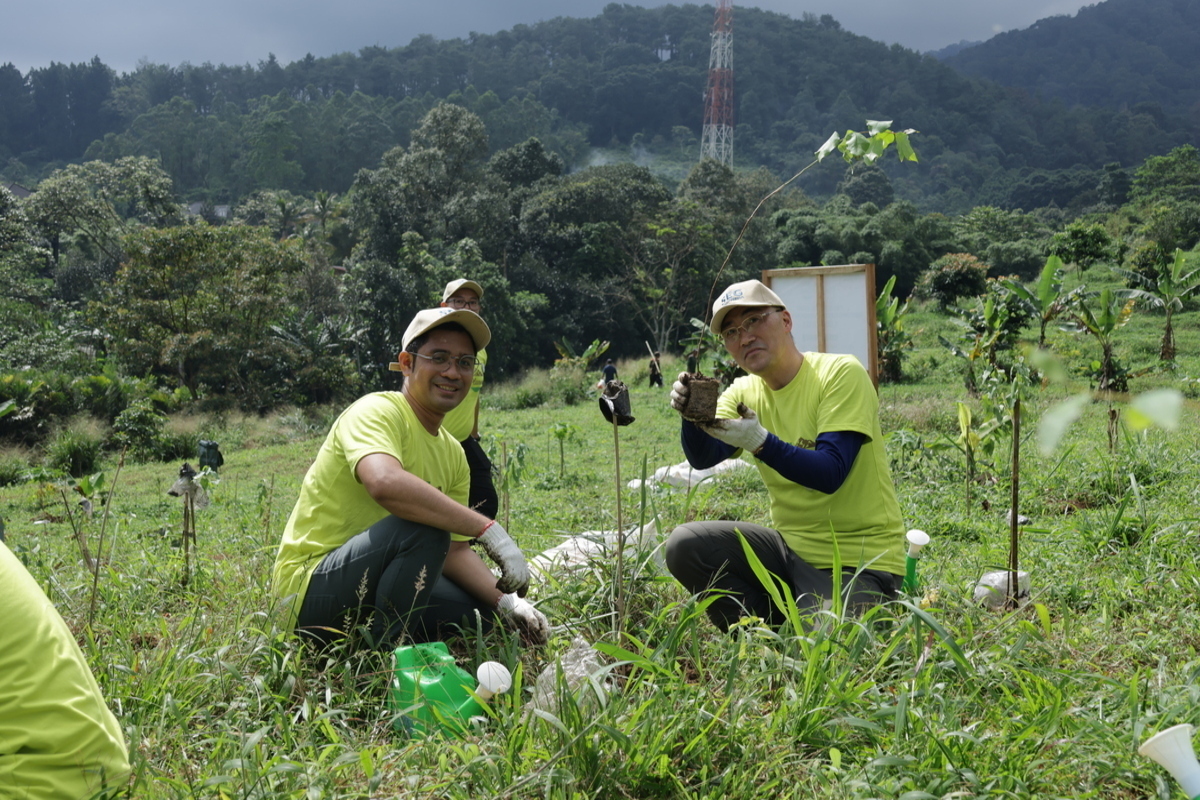
Joining as volunteers, the employees gain valuable knowledge on proper tree planting techniques, including watering and fertilizing.

Another major benefit of this program is its support for Mount Salak’s environmental role as a major carbon sink, thereby contributing to climate change mitigation in line with Sumitomo Group’s corporate sustainability goals. 

“We have a goal to reduce CO₂ emissions,” says Koji Imakita, President Director of Sumiden Serasi Wire Product, a subsidiary of Sumitomo Electric Group Indonesia, who participated as a tree-planting volunteer. “While we recognize that the number of trees we have planted is relatively small, this is a significant step forward in our mission to reduce greenhouse gas emissions.”  

Plant a Planet: Seeding a More Sustainable Future 

Various employees of Sumitomo Electric Group Indonesia and its subsidiaries joined together to volunteer in tree-planting activities coordinated by Trees4Trees. The program, themed ‘Plant a Planet’, demonstrates the company’s dedication to environmental sustainability as part of its corporate responsibility commitments. 

Preventing Disasters
Hand in hand, Sumitomo Electric Group Indonesia successfully planted 800 trees, while another 1,200 trees were planted with the involvement of local communities.

“Previously, we planted mangroves, and now we’re expanding to tree planting in a different location,” said Mulyadi, a volunteer and HR Community Representative from one of Sumitomo Electric Group Indonesia’s subsidiaries. “We hope this initiative will make positive impacts, because a healthy planet is the greatest legacy we can leave behind for future generations.” 

Mario Eko Cumentas is the Chairperson of Sumitomo Electric Group Indonesia Area Committee. He confirmed that the current initiative forms part of the company’s global commitment to environmental preservation and its support for local communities. “Our main goal is to contribute to environmental sustainability so that nature, in turn, continues to support life for future generations,” said Mario. “This includes local communities living in the vicinity,” he added. 

Gohoyoshi: A Commitment to Positive Community Impact 

As a company with Japanese roots, Sumitomo Group upholds a core principle of Gohoyoshi, also known as the ‘five-way win’ approach, which represents the company’s commitment to create positive outcomes for all stakeholders. This includes employees, suppliers, customers, stockholders, and socially vulnerable communities. A key aspect of this tree-planting initiative is the central role of local communities.  

“This tree-planting initiative is very important to us,” explains Koji Imakita. “At Sumitomo Group Indonesia, we follow Gohoyoshi, or the Five-Way Win, as our business philosophy, which prioritizes community well-being. And that’s why we strive to contribute as much as we can to the local communities around us.” 

Guided by the spirit of Gohoyoshi, the company’s sustainability programs not only aim to benefit stakeholders, including local communities, but also to support a healthier environment. This, in turn, supports long-term success and business sustainability. Together with Trees4Trees, Sumitomo Group is helping turn these commitments into tangible impacts for people and planet. 

Writer: V. Arnila Wulandani. Editor: Chris Alexander. Photos: Yulianisa Dessenita