Four Years of Commitment: Microsoft Continues Growing Urban Forests

Planting Trees

The presence of green spaces among factories, buildings, and heavy traffic in bustling industrial zones is like an oasis in the middle of a dry, overheated desert. Beyond providing fresher oxygen and sequestering carbon emissions from the industrial activities, rows of trees offer shade, reduce heat and lower temperature, transforming the area into a more livable and comfortable environment for those who live and work nearby.  

Extensive research and studies has shown that the presence of forests in urban areas significantly improves public health and strengthens the human immune system. 

Establishing urban forests within industrial and urban areas, however, is not as simple as it sounds. It demands long-term vision, consistent effort, and strong commitment. Despite these complexities, over the past four years Microsoft, in collaboration with Trees4Trees, has consistently demonstrated that commitment by helping establish urban forests in two major industrial hubs in Jakarta’s buffer zone: Greenland International Industrial Center (GIIC) and Karawang International Industrial Center (KIIC), contributing to a healthier environment. 

Urban and Industrial Area Challenges 

Amid the rapid development of hundreds of buildings, factories, and supporting infrastructures, GIIC and KIIC – like many other urban industrial zones – face significant environmental challenges. Air pollution from factory operations and vehicle emissions continues to threaten air quality. Without serious intervention, air quality could continue to decline, potentially harming the health of surrounding communities.  

Yet the challenges go beyond polluted air. Water and soil degradation also pose serious concerns. “Industrial areas often consist of nutrient-deficient soils,” explained Pandu Budi Wahono, Director of Trees4Trees. “To address this, we prioritize planting fast-growing shade trees that are not only well-adapted to poor soil conditions but can also gradually improve soil quality by recycling nutrients – helping restore soil health and revive the ecosystem,” he added. 

Four Years of Commitment
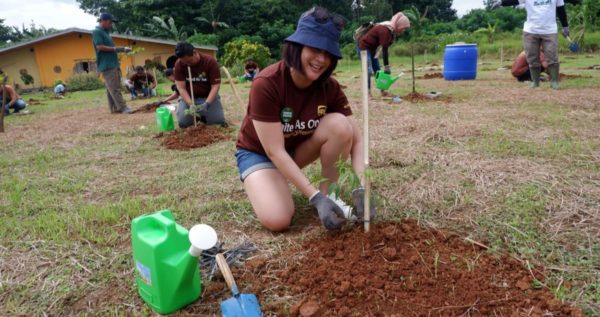
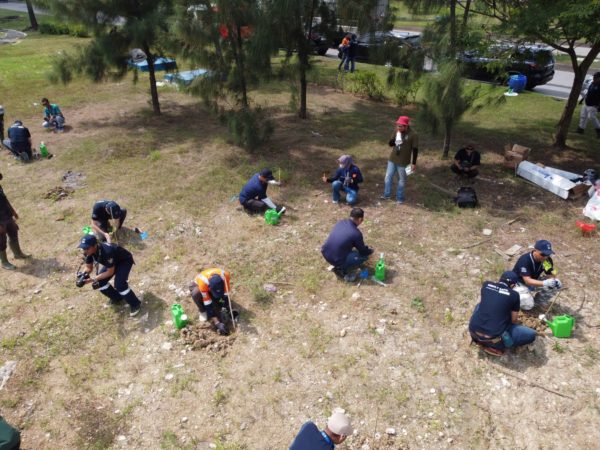
The tree planting took place near the buildings and factories of the GIIC Industrial area in Cikarang, contributing to the expansion of urban forests.

More Trees for Urban Forests 

Helping to address these challenges, Microsoft began the journey to create urban forests in 2022. As key industrial hubs, both GIIC and KIIC areas were once largely dominated by factories and infrastructures. Many areas lack tree covers and stretch of arid, compacted soil. During the dry season, the heat intensified – turning parts of the area into scorching landscapes, especially at midday. 

Four years later, the landscape has gradually transformed. These industrial zones are now increasingly woven with greenery, from shade trees lining the open land to fruit-bearing trees growing within the complexes. Together, these efforts expand the pockets of urban forests and reshape the industrial environment.  

This season, Microsoft continues to strengthen that commitment to further grow urban forest coverage. “From 2022 to 2025, Microsoft has planted around 62,000 trees in the industrial areas of Cikarang and Karawang to help establish urban forests. Today, we mark four years of tree-planting collaboration with Trees4Trees,” said Dania, Microsoft Community Engagement Lead. 

To build on this progress, she emphasized that this season, Microsoft is adding 13,000 more trees, bringing a total of 75,000 trees since 2022. “We hope to continue this effort in the years ahead, expanding the numbers each season and ensuring that the trees we plant continue to grow and deliver lasting benefits,” Dania added.  

Expanding Green
The rain even did not stop the volunteers’ spirit in planting trees.

Microsoft Commitment: Being a Good Neighbor for Community 

As the first step in expanding urban forest, Microsoft recently initiated a tree planting event, inviting its partners and community members to take part. “Around 100 volunteers who are our partners took part in the planting activity,” Dania explained. Of the total number of trees planned for this season, 1,100 trees were planted during the event – symbolizing not only environmental action, but also a shared commitment. 

“We invited everyone to plant trees together because we want to build a sense of shared responsibility, as one big family working together in creating a better environment,” said Dania. She said that the urban forest tree planting initiative also reflects Microsoft’s awareness of its presence within the industrial area, particularly with its data center operating there. “This is part of our commitment to being a responsible and good neighbor to the surrounding communities,” she continued. 

Planting Trees
(Above) Arina Dafir, Microsoft’s Community Affairs Manager – Southeast Asia, joined the tree-planting event. (Below) Together with its partners, Microsoft continues to grow urban forests.

Four Years of Commitment

Expanding Impacts, Planting with Local Community 

Khoirum Minan, Trees4Trees Project Manager, explained that the urban forest initiative focuses on strengthening soil and water conservation while contributing to carbon sequestration. Over time, those growing urban forests are expected to improve air quality, reduce heat, enhance water and soil health, and support local livelihoods.  

“Like in previous season, this year, we’re planting species suited to drought-prone industrial conditions, including fast-growing hardwoods such as cadamba, albizia, gmelina, and mindi, alongside fruit trees like jackfruit and mango,” he said. 

Four Years of Commitment
Microsoft engaged its business and community partners, including organizations and school representatives from nearby industrial areas to plant trees together during a dedicated planting event.

The tree-planting efforts also extend to community-owned lands in the surrounding industrial zones to broaden environmental and social impacts. The program will continue through April 2026, involving local farmers as planting partners, ensuring that the initiative not only restores the environment but also supports the surrounding communities.  

“We see this tree planting as an investment in the future,” Dania emphasized. “We plant trees today, knowing that in ten or twenty years, those trees will grow strong and give back, caring for us and providing lasting benefits for all living beings,” she added. 

Writer: V. Arnila Wulandani. Photo: Y. Dessenita

From Rural to Urban: Expanding Green Commitment Across Jakarta’s Buffer Zone

From Rural to Urban

Tree Planting in Curug Cibingbing_Trees4Trees

As the largest metropolitan city and Indonesia’s capital, Jakarta’s hustle bustle comes with significant environmental challenges – from air pollution to declining of water and soil quality. However, the intense development pressures extend beyond the city itself, affecting surrounding buffer zones both in rural and urban areas, including Bogor to the south and Tangerang to the west. 

About 60 kilometers from the center of Jakarta City lies Mount Pancar in Sentul, Bogor – a mountainous landscape where many Jakartans escape their routines to break for a while, just to enjoy the nature and scenic view. Unfortunately, the area’s growing popularity has created a new pressure. Not only does the rapid development by the business and shopping centers occur, but every weekend, traffic becomes congested and the site is flooded with visitors, making it increasingly urgent to preserve the natural integrity.  

From Rural to Urban
Sumitomo Group together with Trees4Trees planted trees along the hiking trails of Cibingbing Waterfall in Bogor, West Java.

Strengthening Rural Erosion Prone and Sloping Area 

Cibingbing waterfall, part of Mount Pancar complex, attracts large numbers of visitors every weekend with its hiking trails and river activities. The waterfall is one of four waterfalls in the area, all known for their strong water discharge. Yet its steep slopes and terrain make the area highly susceptible to erosion and landslides. As human activities increase in the area, the risk of tree cover loss also rises, heightening the threat of landslide and flooding.  

To support this area, Sumitomo Electric Group Indonesia and Sumi Indo Kabel, together with Trees4Trees, planted 300 trees on vulnerable slopes near the waterfall. “The planting focuses on erosion control and water conservation,” said Khoirum Minan, Trees4Trees Project Manager. According to him, the trees are also expected to help protect river streams and maintain water reserves during the dry season, enhance oxygen supply, provide shade, improve the landscape, and offer non-timber benefits for local communities. 

This effort continues the companies’ environmental commitment, following last year’s planting of 2,000 trees in the foothills of Mount Salak, another rural area of Bogor. 

Tree Planting in Curug Cibingbing_Trees4Trees
(Above) Both fruit and hardwood trees were planted to offer benefits to the environment, tourism, and local communities. (Below) All day hard rain had not stopped the spirit of volunteers from planting trees.

Tree Planting in Curug Cibingbing_Trees4Trees

Planting Trees Together, Nurturing Well-Being in Nature with Hiking 

Taking place along the waterfall hiking trail, the tree planting involved employees from nine subsidiaries of Sumitomo Group, with over 100 participants joining as tree planting volunteers. “Albizia, cadamba, avocado, and nutmeg were selected as the area is well suited to these species, accelerating their chances of healthy growth and survival,” said Khoirum Minan. 

Eva, the Sumi Indo Kabel HR emphasized that representatives from most subsidiaries took part in the tree planting, as engaging employees is an integral part of their sustainability program. “By involving them to this activity, we hope to raise awareness and instill both knowledge and a spirit of environmental stewardship among our staff,” she said.  

From Rural to Urban
(Above) Employees of the Sumitomo group joined the tree planting event. (Below) Masashi Fukui, the Sumitomo’s global sustainability program person in charge, joined the tree planting event.

In line with Eva’s statement, Masashi Fukui, Executive Officer of Sumitomo Electric Indonesia and the person in charge for Sumitomo’s global sustainability program, emphasized the involvement of team members is crucial to achieving their sustainability goal. “At Sumitomo, we go beyond generating profits – we are committed to giving back to society and the environment. This tree-planting event is part of our global CSR program, engaging employees in caring for nature and supporting local communities,” he said. 

Alongside the tree-planting activity, the program also included a two kilometer-hiking trip to the waterfall, offering staff members wellness experience immerse in nature and a moment to reflect on how deeply human life depend on nature “This is not only about contributing to nature, but also about giving our volunteers the opportunity to reconnect with and enjoy nature itself,” said Eva. 

Tree Planting in Curug Cibingbing_Trees4Trees
Hiking to Cibingbing Waterfall after tree planting, offering volunteers an outdoor activity by immersing in nature.

Tree Planting in Curug Cibingbing_Trees4Trees

Expanding Green Commitment: Creating Urban Forest 

As carbon reduction is one of Sumitomo Group’s global sustainability goals, the tree-planting program goes beyond greening rural areas. After planting in rural Bogor, the initiative expanded to Tangerang City, where the Sumi Indo Kabel office is located.  

In this urban area, the program focuses on creating an urban forest by planting an additional 2,300 trees. Serving as the company responsibility to the surrounding environment, the initiative aims to increase green spaces to help address air pollution, urban heat, and declining water and soil quality – environmental pressures facing Tangerang as one of Jakarta’s rapidly developing buffer zones.  

Tree Planting in Curug Cibingbing_Trees4Trees
Engaging employees is an integral part of Sumitomo’s global sustainability program, achieving carbon reduction through rural and urban tree planting.

Mario Eko Cumentas, Chairperson of the Sumitomo Electric Group Indonesia Area Committee, emphasized that both rural and urban tree planting reflect the long-term company’s strong commitment to environmental sustainability. 

“Tree planting is essential for the future of our planet, and we are committed to continuing this effort,” he said. “We also encourage other communities and companies to take similar action, as caring for the environment is our shared responsibility. Trees are vital for all living beings – including us.” 

Writer: V. Arnila Wulandani. Photos: Y. Dessenita & M. Elly Nezar

UPS: Delivering Positive Environment Impacts

Search for Setu District on Google Earth, and the satellite throws up a lonely patch of green, squeezed between Bogor and the two major industrial centers of Jakarta and Bekasi.  

In recent years, the forested fringes of Setu have been giving way to new residential areas, shopping centers, buildings, and other infrastructure projects. The roads are increasingly clogged with cars, chugging to work in a cloud of petrol fumes.  

But solutions are on the way. Working in collaboration with Trees4Trees and the International Tree Foundation, the United Parcel Service (UPS) recently began a tree-planting program in Setu District that is bringing a breath of fresh air back to this important buffer zone. 

UPS contributions to the global sustainability movement 

On March 9, 2024, UPS set up camp at Hobbit Hills Eco Village for their second Indonesian tree planting project in the past year. According to Maya Sarininta, General Manager of UPS Indonesia, the latest initiative reflects the company’s ongoing commitment to environmental improvement.  

Maya Sarininta, General Manager of UPS Indonesia, leads the way in the company’s recent tree-planting activities

“This tree-planting event is part of our global sustainability program, which aims to plant 50 million trees worldwide by 2030,” said Maya during the event at Hobbit Hills. “Last year, we planted 1,200 mangroves in the coastal area of Jakarta. This year, we will continue the tree-planting program by planting various trees in terrestrial areas to enhance Jakarta’s buffer zone. We hope to plant more trees next year with the participation of our staff, working towards our global goal,” she added. 

The many benefits of an urban forest 

UPS’ program successfully planted 600 trees, comprising eight different species that will eventually grow into a new urban forest. These include local hardwood trees such as jabon, sengon, suren, and trembesi, which provide shade and can even help reduce temperatures in urban areas.  

Multi-purpose trees like durian, petai, and clove were also planted at the site. These trees support the environment by sucking up carbon dioxide, while also helping keep a lid on pollution and heat. Even better, their fruits can provide local communities with sustainable new livelihoods. 

Pandu Budi Wahono is Trees4Trees Program Manager. Speaking at the event, he noted that all partners involved in the project were excited about the long-term changes a bit of green could bring to the neighborhood. “We hope all the trees planted today on this farm will be properly nurtured and beneficial to the next generation, particularly in this area,” said Pandu. 

The GM of UPS Indonesia (left) receives a tree-planting certificate from Trees4Trees Program Manager (right)

It takes a village: Working together for a greener future 

The tree-planting event brought together staff from UPS and Hobbit Hills Eco Village, along with members of the local community as volunteers. “We involved UPS staff from all departments and invited families, including children, who were eager to join,” explained Mohammed Akbar, Chief of Community UPS Indonesia who was the tree-planting event coordinator. 

“I planted over ten trees today,” giggled Misha, one of several children who joined in. “It was exciting to know the correct ways to plant trees, and of course, to get my hands dirty without any complaints from my mom! I hope I can come back here to pick their fruits,” she added.  

UPS staff and their families learn how to plant trees using a sustainable, organic approach.

Misha’s Mom, Ira, is a member of UPS Indonesia staff. She believes kids should be engaged in environmental education from a young age. “I brought my two children here to teach them about nature, how trees give us life and essential elements like oxygen. It’s crucial for the next generation to learn and contribute to nature preservation,” said Ira. 

A UPS staff member planted trees with her children. Involving children in the tree-planting event as volunteers was part of the early education to introduce the importance of protecting nature and planting trees to the next generation

The latest tree planting program from UPS is a small part of their global sustainability goals. “UPS supports any environmental movement that makes a positive impact on the environment, especially efforts to reduce carbon emissions and combat global warming for a better future,” noted Farah, the UPS Co Chief of Community who was the assistance coordinator of the tree-planting event at the end of a long day’s planting on Hobbit Hill Eco Village. 

From Setu District to the rest of West Java, UPS Indonesia is working to positively impact communities and the environment as part of their global sustainability commitments. Through fruitful partnerships with Trees4Trees and the International Tree Foundation, UPS is determined to deliver on its green initiative.  

Regreening Jakarta’s Concrete Jungle through Urban Forestry

Regreening Jakarta’s Concrete Jungle
With support from Microsoft, and in collaboration with local farmers, schools, and communities, Trees4Trees will continue replanting urban areas around Jakarta.

In terms of urban area, Jakarta is the second biggest city in the world. And it’s still growing; areas on the outskirts are quickly swallowed by the urban sprawl, and the increasing number of industrial centers is already having an environmental impact. But in the satellite towns of Bekasi and Karawang, locals are finding ways to push back against the concrete tide: by planting more trees. 

Replanting urban forests offers all kinds of benefits. Trees combat pollution and lower temperatures. They provide habitats for animals and livelihoods for people. They filter drinking water, protect against flooding and prevent soil erosion. On a larger scale, urban forests are proven to mitigate the negative impacts of climate change by sucking carbon dioxide out of the atmosphere.  

Going Green in Greenland: Trees4Trees’ Replanting Program   

Recognizing the importance of urban forests, and with support from Microsoft and One Tree Planted, Trees4Trees kicked off a tree-planting initiative in the Greenland International Industrial Center (GIIC) in Bekasi and the Karawang International Industrial Center (KIIC) in Karawang. The program, which began in November 2022, has already covered an area of 25 hectares.  

Regreening Jakarta’s Concrete Jungle
(Above) Since November 2022, Trees4Trees has planted 17,778 new trees around Bekasi and Karawang

“With this project, our goal is to plant 25,000 trees in GIIC and KIIC,” explains Anto Wartono, Planning Manager at Trees4Trees. “We hope these trees will soon grow into urban forests.”  

According to Anto, Trees4Trees has already planted 17,778 trees around GIIC and KIIC. Around 8,000 more trees are expected to be planted in the area over the next few weeks.  

The program actually went beyond planting. To raise public awareness about the importance of green spaces in urban areas, Trees4Trees engaged with local women farmers and ran an environmental campaign in local schools and communities.  

Rehabilitating the Riverbanks 

One of the main goals of the project is to restore areas around rivers. In recent years, the riverbanks have been eroding away due to land conversion. Trees4Trees focused on areas either side of the Cipamingkis and Cikalapa rivers, which flow through the GIIC area in Bekasi and the KIIC in Karawang, respectively.   

Regreening Jakarta’s Concrete Jungle
(Above) The Cipamingkis River in Bekasi, where Trees4Trees has been active recently

In Jakarta, temporary shelters are a common sight on the city’s riverbanks. During the rainy season, rising water levels can lead to floods and landslides. Adding trees to the banks of rivers is an effective defense against these dangers. 

“Many riverbanks have been converted into residential areas and semi-permanent buildings,” says Anto, who has experienced plenty of obstacles to urban planting. “Unlike in rural areas, planting trees in urban areas is more challenging – there are only a few spaces we can use as green areas.”    

Greening Industrial Areas, Supporting Farmers 

The process of urbanization and land conversion is also squeezing farmers off their land. As part of the urban forest project, Trees4Trees has been working with displaced farmers, helping them establish plantations in the newly reforested areas. By planting trees with high economic value – like durian, avocado, and caqui – we are helping devise new and sustainable ways to support local livelihoods. 

“We have planted 3,085 trees in two villages around KIIC, Puseurjaya and Margamulya village,” says Anto. “While in the GIIC buffer zone, we have planted 2,300 trees in Pasirtanjung village by involving local farmers,” he added.   

Preserving Biodiversity  

Trees4Trees’ work in KIIC also covered the Telaga Desa conservation area; an educational park that provides a precious green oasis in Karawang. As part of the project, more than 3,000 trees were planted here. Trees species chosen for this purpose included kemang (white mango), buni (currant), pulai (blackboard tree), mundu (yellow mangosteen), genitri (rudraksha), puspa (needlewood), and gandaria (mango plum).  

Regreening Jakarta’s Concrete Jungle
(Above) Microsoft’s Gavin Hodge (left) helps plant trees in the GIIC in Bekasi

“These trees will grow 20 meters high in 5 years,” explains Gavin Hodge, the DCD Project Manager at Microsoft. He joined the activity in GIIC and KIIC area as a volunteer tree planter, and believes this project will offer a range of benefits. “(It’s) going to protect our environment and improve the estate, while also improving the situation for the community. So it’s good that Microsoft can be a part of it.” 

With support from Microsoft, and in collaboration with local farmers, schools, and communities, Trees4Trees will continue replanting urban areas around Jakarta. Every sapling holds enormous potential. In time, they could change the landscape in one of the world’s biggest urban areas.   

To find out more about our ongoing replanting programs, and to see how you can help, visit devtrees4trees.portopaper.com 

Writer: V. Arnila Wulandani. Editor: Christopher Alexander