Four Years of Commitment: Microsoft Continues Growing Urban Forests

Planting Trees

The presence of green spaces among factories, buildings, and heavy traffic in bustling industrial zones is like an oasis in the middle of a dry, overheated desert. Beyond providing fresher oxygen and sequestering carbon emissions from the industrial activities, rows of trees offer shade, reduce heat and lower temperature, transforming the area into a more livable and comfortable environment for those who live and work nearby.  

Extensive research and studies has shown that the presence of forests in urban areas significantly improves public health and strengthens the human immune system. 

Establishing urban forests within industrial and urban areas, however, is not as simple as it sounds. It demands long-term vision, consistent effort, and strong commitment. Despite these complexities, over the past four years Microsoft, in collaboration with Trees4Trees, has consistently demonstrated that commitment by helping establish urban forests in two major industrial hubs in Jakarta’s buffer zone: Greenland International Industrial Center (GIIC) and Karawang International Industrial Center (KIIC), contributing to a healthier environment. 

Urban and Industrial Area Challenges 

Amid the rapid development of hundreds of buildings, factories, and supporting infrastructures, GIIC and KIIC – like many other urban industrial zones – face significant environmental challenges. Air pollution from factory operations and vehicle emissions continues to threaten air quality. Without serious intervention, air quality could continue to decline, potentially harming the health of surrounding communities.  

Yet the challenges go beyond polluted air. Water and soil degradation also pose serious concerns. “Industrial areas often consist of nutrient-deficient soils,” explained Pandu Budi Wahono, Director of Trees4Trees. “To address this, we prioritize planting fast-growing shade trees that are not only well-adapted to poor soil conditions but can also gradually improve soil quality by recycling nutrients – helping restore soil health and revive the ecosystem,” he added. 

Four Years of Commitment
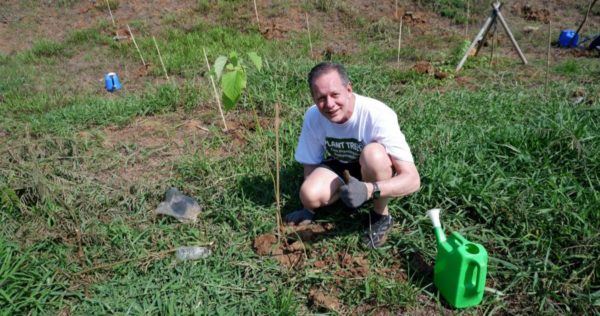
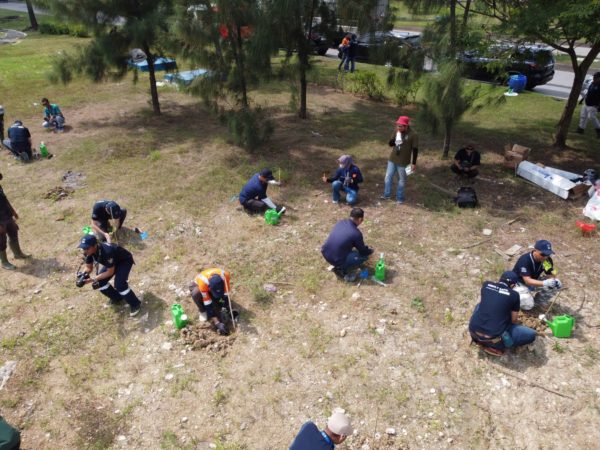
The tree planting took place near the buildings and factories of the GIIC Industrial area in Cikarang, contributing to the expansion of urban forests.

More Trees for Urban Forests 

Helping to address these challenges, Microsoft began the journey to create urban forests in 2022. As key industrial hubs, both GIIC and KIIC areas were once largely dominated by factories and infrastructures. Many areas lack tree covers and stretch of arid, compacted soil. During the dry season, the heat intensified – turning parts of the area into scorching landscapes, especially at midday. 

Four years later, the landscape has gradually transformed. These industrial zones are now increasingly woven with greenery, from shade trees lining the open land to fruit-bearing trees growing within the complexes. Together, these efforts expand the pockets of urban forests and reshape the industrial environment.  

This season, Microsoft continues to strengthen that commitment to further grow urban forest coverage. “From 2022 to 2025, Microsoft has planted around 62,000 trees in the industrial areas of Cikarang and Karawang to help establish urban forests. Today, we mark four years of tree-planting collaboration with Trees4Trees,” said Dania, Microsoft Community Engagement Lead. 

To build on this progress, she emphasized that this season, Microsoft is adding 13,000 more trees, bringing a total of 75,000 trees since 2022. “We hope to continue this effort in the years ahead, expanding the numbers each season and ensuring that the trees we plant continue to grow and deliver lasting benefits,” Dania added.  

Expanding Green
The rain even did not stop the volunteers’ spirit in planting trees.

Microsoft Commitment: Being a Good Neighbor for Community 

As the first step in expanding urban forest, Microsoft recently initiated a tree planting event, inviting its partners and community members to take part. “Around 100 volunteers who are our partners took part in the planting activity,” Dania explained. Of the total number of trees planned for this season, 1,100 trees were planted during the event – symbolizing not only environmental action, but also a shared commitment. 

“We invited everyone to plant trees together because we want to build a sense of shared responsibility, as one big family working together in creating a better environment,” said Dania. She said that the urban forest tree planting initiative also reflects Microsoft’s awareness of its presence within the industrial area, particularly with its data center operating there. “This is part of our commitment to being a responsible and good neighbor to the surrounding communities,” she continued. 

Planting Trees
(Above) Arina Dafir, Microsoft’s Community Affairs Manager – Southeast Asia, joined the tree-planting event. (Below) Together with its partners, Microsoft continues to grow urban forests.

Four Years of Commitment

Expanding Impacts, Planting with Local Community 

Khoirum Minan, Trees4Trees Project Manager, explained that the urban forest initiative focuses on strengthening soil and water conservation while contributing to carbon sequestration. Over time, those growing urban forests are expected to improve air quality, reduce heat, enhance water and soil health, and support local livelihoods.  

“Like in previous season, this year, we’re planting species suited to drought-prone industrial conditions, including fast-growing hardwoods such as cadamba, albizia, gmelina, and mindi, alongside fruit trees like jackfruit and mango,” he said. 

Four Years of Commitment
Microsoft engaged its business and community partners, including organizations and school representatives from nearby industrial areas to plant trees together during a dedicated planting event.

The tree-planting efforts also extend to community-owned lands in the surrounding industrial zones to broaden environmental and social impacts. The program will continue through April 2026, involving local farmers as planting partners, ensuring that the initiative not only restores the environment but also supports the surrounding communities.  

“We see this tree planting as an investment in the future,” Dania emphasized. “We plant trees today, knowing that in ten or twenty years, those trees will grow strong and give back, caring for us and providing lasting benefits for all living beings,” she added. 

Writer: V. Arnila Wulandani. Photo: Y. Dessenita

Growing Green: Microsoft’s Continued Urban Forestry Initiative

Microsoft tree-planting

Microsoft Tree Planting event

(Microsoft; Growing Green) It was only 8 AM, but already hot as an oven in the GIIC industrial area in Bekasi, just east of Jakarta. Sweltering days are par for the course around here, in one of West Java’s largest and busiest industrial centers, where buildings and factories are scattered all around, and trees are hard to come by.  

But all that is beginning to change. Microsoft Operations Indonesia has teamed up with Trees4Trees and One Tree Planted to launch a tree planting program that will bring shade to the industrial estate and a range of benefits to the surrounding landscape and communities.  

CSR Tree Planting event
(Above) Seedlings planted in 2022 have taken root and are beginning to grow (Photo: Kemas Duga Muis/Trees4Trees)

Balancing development with environment 

This program kicked off in 2022 – 2023, when 22,800 trees were planted. Following the success of that pilot project, 19,000 more trees are being planted in 2024.  

“Together with Microsoft, our goal is to enhance the greenery and create a healthier environment in industrial areas,” explains Pandu Budi Wahono, Trees4Trees’ Program Manager.  

Trees chosen for the program include gmelina and rain trees, which can provide some much-needed shade. Other, multipurpose trees like petai, durian, and jackfruit have also been chosen, as they can provide fruit and other resources for the local community. 

 tree-planting event

Read also: Regreening Jakarta’s Concrete Jungle through Urban Forest

Regreening the urban jungle 

In December 2023, 500 new trees were planted in GIIC by a team of volunteers made up of Microsoft staff, partners, and clients marking the starting of the tree-planting initiative. 

Microsoft Tree-planting
(Above and below) Volunteers from Microsoft plant trees under the hot sun in Bekasi (Photo: Trees4Trees/V. Arnila Wulandani)

photo session with microsoft team

“This tree planting event serves as a reminder for those of us, who work in the technology field, about the significance of environmental protection,” said Elizabeth Simatupang, who is the Data Center Operations Manager at Microsoft Operation Indonesia.  

She also revealed that volunteering had made her more aware of the many benefits trees can offer. “I hope the trees we’ve planted will produce more oxygen and be beneficial to the environment, aligning with our motto: Technology should not cost the Earth,” she added. 

Gavin Hodge is DCD Project Manager at Microsoft Operations Indonesia. This was his second time volunteering with Trees4Trees, and he felt energized to see so many people working to support the environment. 

“It is great to see so many people get involved,” said Gavin, referring to the various Microsoft partners and team members onboard with the project. “I hope big trees will stay here for a long time and remove carbon dioxide, making it a better place to live,” he added.  

Microsoft team
(Above) Gavin Hodge during the tree planting event (Photo: Trees4Trees/V. Arnila Wulandani)

A watershed moment for urban replanting 

Although the program  focuses on creating an urban forest, improving degraded land and providing tree cover, its goals go even further. The industrial areas are located downstream of the Citarum river, specifically alongside the Cipamingkis and Cikalapa rivers., The program aims to restore the watershed and return forest cover to the region, addressing a range of complex challenges triggered by developmental pressures. 

Microsoft tree-planting
(Above) An aerial view of the Cipamingkis River (Photo: Trees4Trees/Kemas Duga Muis)

Amung is a local farmer and one of the project partners, who helps out by growing trees for the planting activities. In recent times, he’s seen the dangers of deforestation and land degradation firsthand: “Recently, when the river burst its banks and flowed into my field, many of my plants were lost.” He blames excessive upstream development for the flood, noting that severe river siltation left the rainwater with nowhere else to go. 

The benefits of Microsoft’s extended planting program spread beyond the industrial estate and into the surrounding landscape, impacting lives and livelihoods in unexpected ways. In addition to providing shade and restoring the watershed, planting trees here can help prevent flooding and protect local farmers from potential ruin. Technology shouldn’t cost the Earth. Thanks to the latest initiatives by Microsoft and partners, development is headed in a more positive direction.  

Watch the video: Urban Forestry Tree-planting with Microsoft

Writer: V. Arnila Wulandani. Editor: Christopher Alexander

Regreening Jakarta’s Concrete Jungle through Urban Forestry

Regreening Jakarta’s Concrete Jungle
With support from Microsoft, and in collaboration with local farmers, schools, and communities, Trees4Trees will continue replanting urban areas around Jakarta.

In terms of urban area, Jakarta is the second biggest city in the world. And it’s still growing; areas on the outskirts are quickly swallowed by the urban sprawl, and the increasing number of industrial centers is already having an environmental impact. But in the satellite towns of Bekasi and Karawang, locals are finding ways to push back against the concrete tide: by planting more trees. 

Replanting urban forests offers all kinds of benefits. Trees combat pollution and lower temperatures. They provide habitats for animals and livelihoods for people. They filter drinking water, protect against flooding and prevent soil erosion. On a larger scale, urban forests are proven to mitigate the negative impacts of climate change by sucking carbon dioxide out of the atmosphere.  

Going Green in Greenland: Trees4Trees’ Replanting Program   

Recognizing the importance of urban forests, and with support from Microsoft and One Tree Planted, Trees4Trees kicked off a tree-planting initiative in the Greenland International Industrial Center (GIIC) in Bekasi and the Karawang International Industrial Center (KIIC) in Karawang. The program, which began in November 2022, has already covered an area of 25 hectares.  

Regreening Jakarta’s Concrete Jungle
(Above) Since November 2022, Trees4Trees has planted 17,778 new trees around Bekasi and Karawang

“With this project, our goal is to plant 25,000 trees in GIIC and KIIC,” explains Anto Wartono, Planning Manager at Trees4Trees. “We hope these trees will soon grow into urban forests.”  

According to Anto, Trees4Trees has already planted 17,778 trees around GIIC and KIIC. Around 8,000 more trees are expected to be planted in the area over the next few weeks.  

The program actually went beyond planting. To raise public awareness about the importance of green spaces in urban areas, Trees4Trees engaged with local women farmers and ran an environmental campaign in local schools and communities.  

Rehabilitating the Riverbanks 

One of the main goals of the project is to restore areas around rivers. In recent years, the riverbanks have been eroding away due to land conversion. Trees4Trees focused on areas either side of the Cipamingkis and Cikalapa rivers, which flow through the GIIC area in Bekasi and the KIIC in Karawang, respectively.   

Regreening Jakarta’s Concrete Jungle
(Above) The Cipamingkis River in Bekasi, where Trees4Trees has been active recently

In Jakarta, temporary shelters are a common sight on the city’s riverbanks. During the rainy season, rising water levels can lead to floods and landslides. Adding trees to the banks of rivers is an effective defense against these dangers. 

“Many riverbanks have been converted into residential areas and semi-permanent buildings,” says Anto, who has experienced plenty of obstacles to urban planting. “Unlike in rural areas, planting trees in urban areas is more challenging – there are only a few spaces we can use as green areas.”    

Greening Industrial Areas, Supporting Farmers 

The process of urbanization and land conversion is also squeezing farmers off their land. As part of the urban forest project, Trees4Trees has been working with displaced farmers, helping them establish plantations in the newly reforested areas. By planting trees with high economic value – like durian, avocado, and caqui – we are helping devise new and sustainable ways to support local livelihoods. 

“We have planted 3,085 trees in two villages around KIIC, Puseurjaya and Margamulya village,” says Anto. “While in the GIIC buffer zone, we have planted 2,300 trees in Pasirtanjung village by involving local farmers,” he added.   

Preserving Biodiversity  

Trees4Trees’ work in KIIC also covered the Telaga Desa conservation area; an educational park that provides a precious green oasis in Karawang. As part of the project, more than 3,000 trees were planted here. Trees species chosen for this purpose included kemang (white mango), buni (currant), pulai (blackboard tree), mundu (yellow mangosteen), genitri (rudraksha), puspa (needlewood), and gandaria (mango plum).  

Regreening Jakarta’s Concrete Jungle
(Above) Microsoft’s Gavin Hodge (left) helps plant trees in the GIIC in Bekasi

“These trees will grow 20 meters high in 5 years,” explains Gavin Hodge, the DCD Project Manager at Microsoft. He joined the activity in GIIC and KIIC area as a volunteer tree planter, and believes this project will offer a range of benefits. “(It’s) going to protect our environment and improve the estate, while also improving the situation for the community. So it’s good that Microsoft can be a part of it.” 

With support from Microsoft, and in collaboration with local farmers, schools, and communities, Trees4Trees will continue replanting urban areas around Jakarta. Every sapling holds enormous potential. In time, they could change the landscape in one of the world’s biggest urban areas.   

To find out more about our ongoing replanting programs, and to see how you can help, visit devtrees4trees.portopaper.com 

Writer: V. Arnila Wulandani. Editor: Christopher Alexander